Himachali Dham and Its Regional Menus
By 2050 XP · · 3 min read
Photograph: Ravi Daj / Wikimedia Commons / CC BY-SA 4.0
Himachali Dham is a feast, not the name of one curry. Rice is served with several dishes, and the menu changes from one part of Himachal to another. A Mandyali Dham in Mandi can begin with something sweet, while a Kangri Dham in Kangra usually keeps the sweet course for the end.
Traditionally, Dham brings people together at weddings, religious occasions and family celebrations. Botis, the cooks who specialise in preparing the feast, make the food for the gathering. Guests may sit in rows on the ground, with dishes served one after another on leaf plates called pattals.
If you encounter Dham on a restaurant menu, ask which regional version is being served. That tells you more about the meal than expecting the same thali everywhere.
Madra, khatta and the dishes served with rice
These names will help you understand a Dham menu:
- Madra is a yoghurt-based preparation, often made with chickpeas or kidney beans. Chana madra uses chickpeas; rajma madra uses kidney beans.
- Sepu badi has lentil pieces served in a spinach gravy. It is closely associated with Mandyali Dham.
- Khatta is the sweet-sour part of the meal. Tamarind and jaggery appear in some versions, but the main ingredient can differ, including black chickpeas or pumpkin.
- Meetha means the sweet course. Sweetened rice and boondi in syrup are examples, not two dishes that every Dham must include.
Dals and other gravies accompany the rice too. Treat these as names to recognise, rather than a checklist that decides whether a meal is genuine.
How Mandi, Kullu and Kangra menus differ
In Mandi, a traditional Mandyali Dham can open with boondi ka meetha, followed by sepu badi and further courses. If the sweet arrives first, it does not mean lunch has finished. Black lentils and khatta preparations are other dishes you may meet in this regional meal.
A Kullu Dham can include white-chickpea madra, chana dal, rajma, black lentils, khatta and sweet rice.
In Kangra, rice, lentils and madra form part of the traditional service, with khatta among the later dishes and a sweet course towards the end. This differs from Mandi's sweet opening. Menus and family customs vary, so let the host explain the order rather than asking for one fixed sequence across Himachal.
Ordering Dham or joining an invited feast
At a restaurant, ask what is included, whether the dishes come together or in courses, and whether rice refills are part of the serving. Those questions help you choose a full meal without assuming that a menu photograph shows today's plate.
Yoghurt and ghee feature in many preparations. If you avoid an ingredient, tell the cook before ordering and ask about the individual dishes. The word Dham does not provide a complete ingredient list.
At a private celebration, attend by invitation and follow your host's seating and serving arrangements. Accept a small portion if you want to taste a dish before taking more; you need not recognise every name to enjoy the meal.
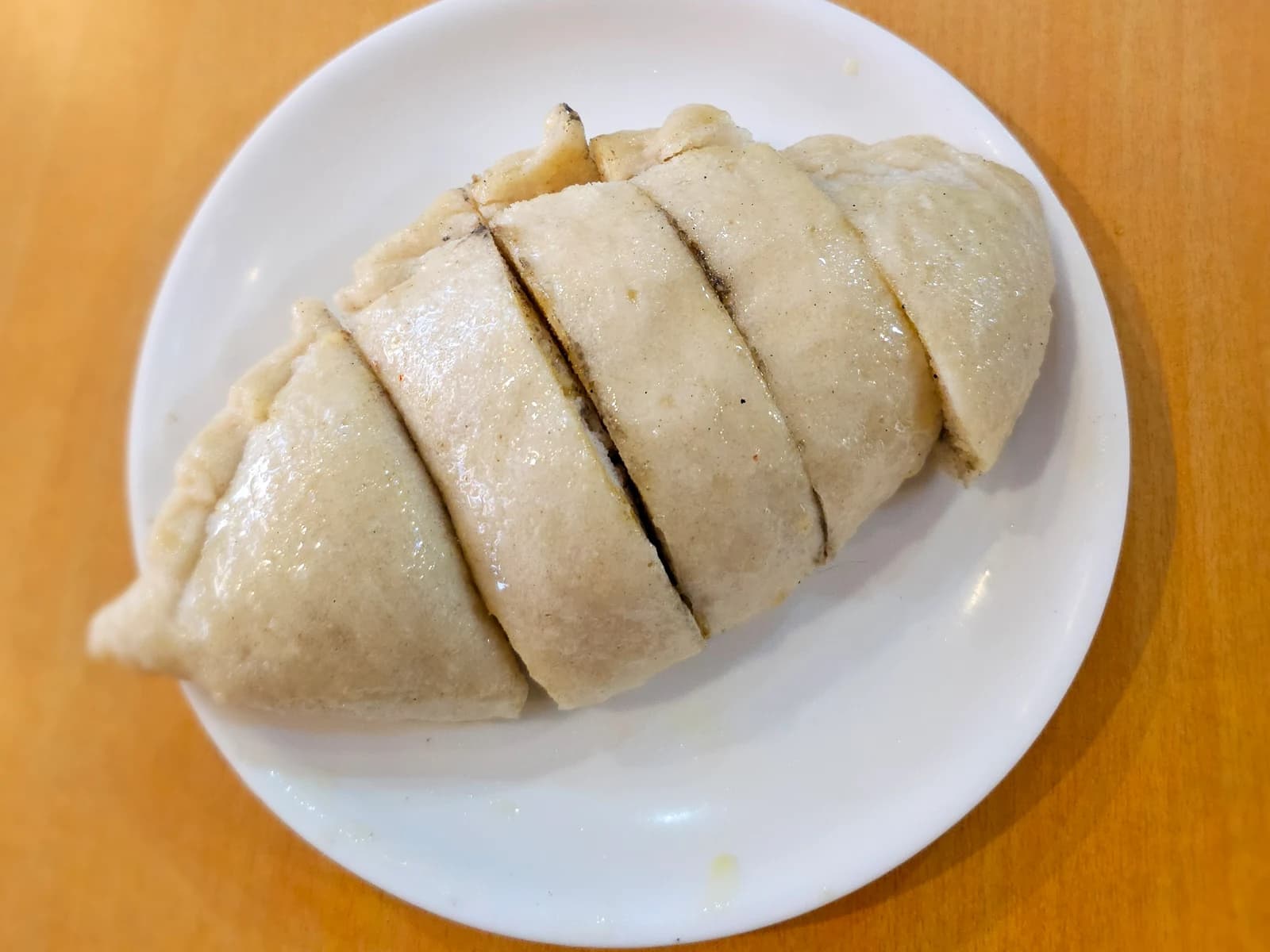
For a different Himachali food to try, siddu is a steamed stuffed bread, rather than another name for this feast.
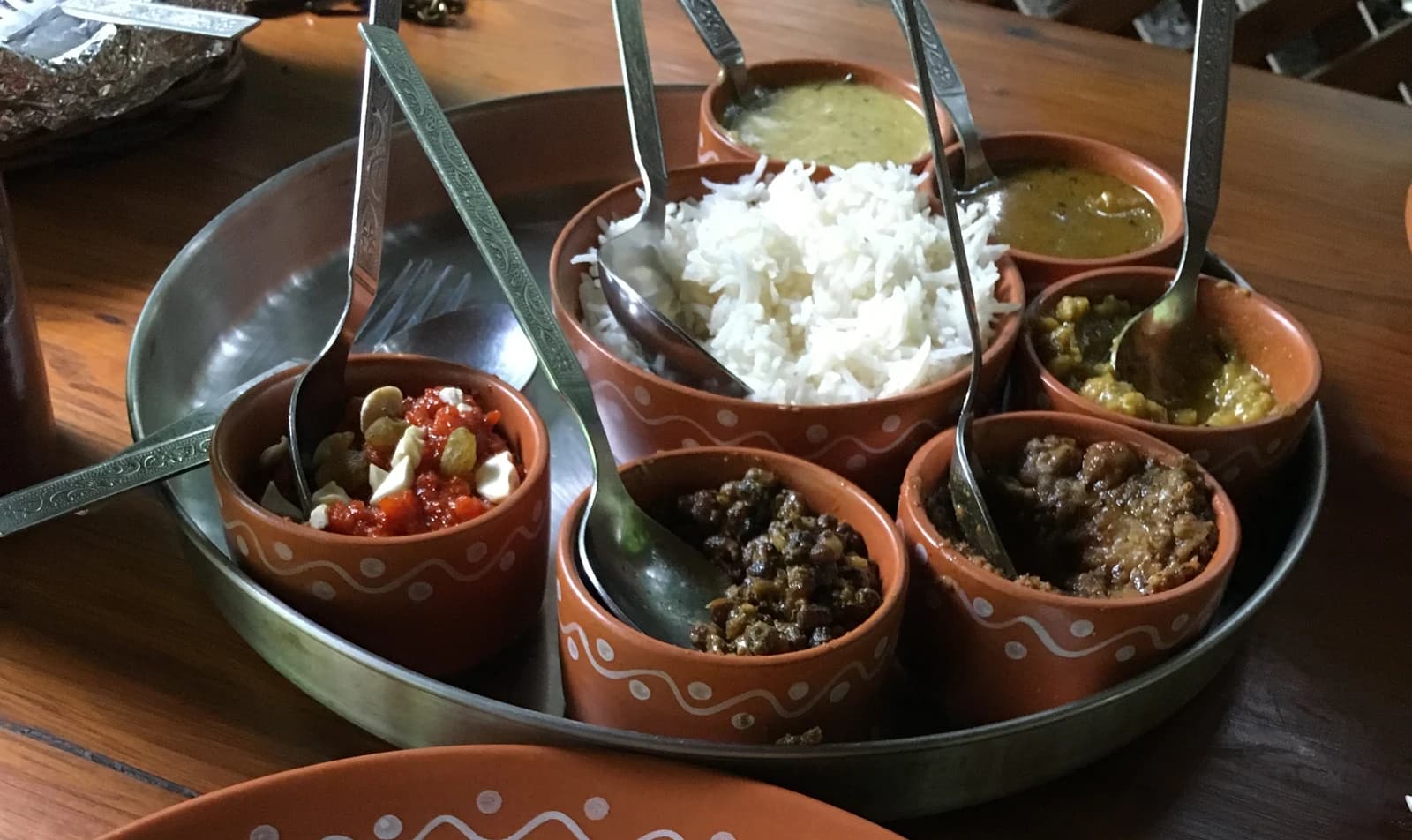
Photograph: a restaurant presentation of rice and dishes, photographed in Kasol by Ravi Daj on 27 July 2018. Original photograph, cropped, resized and converted to WebP for 2050 XP. The photograph and this adaptation are available under CC BY-SA 4.0.