Naggar - Temples and Himalayan Art Above the Beas
By 2050 XP · · 3 min read
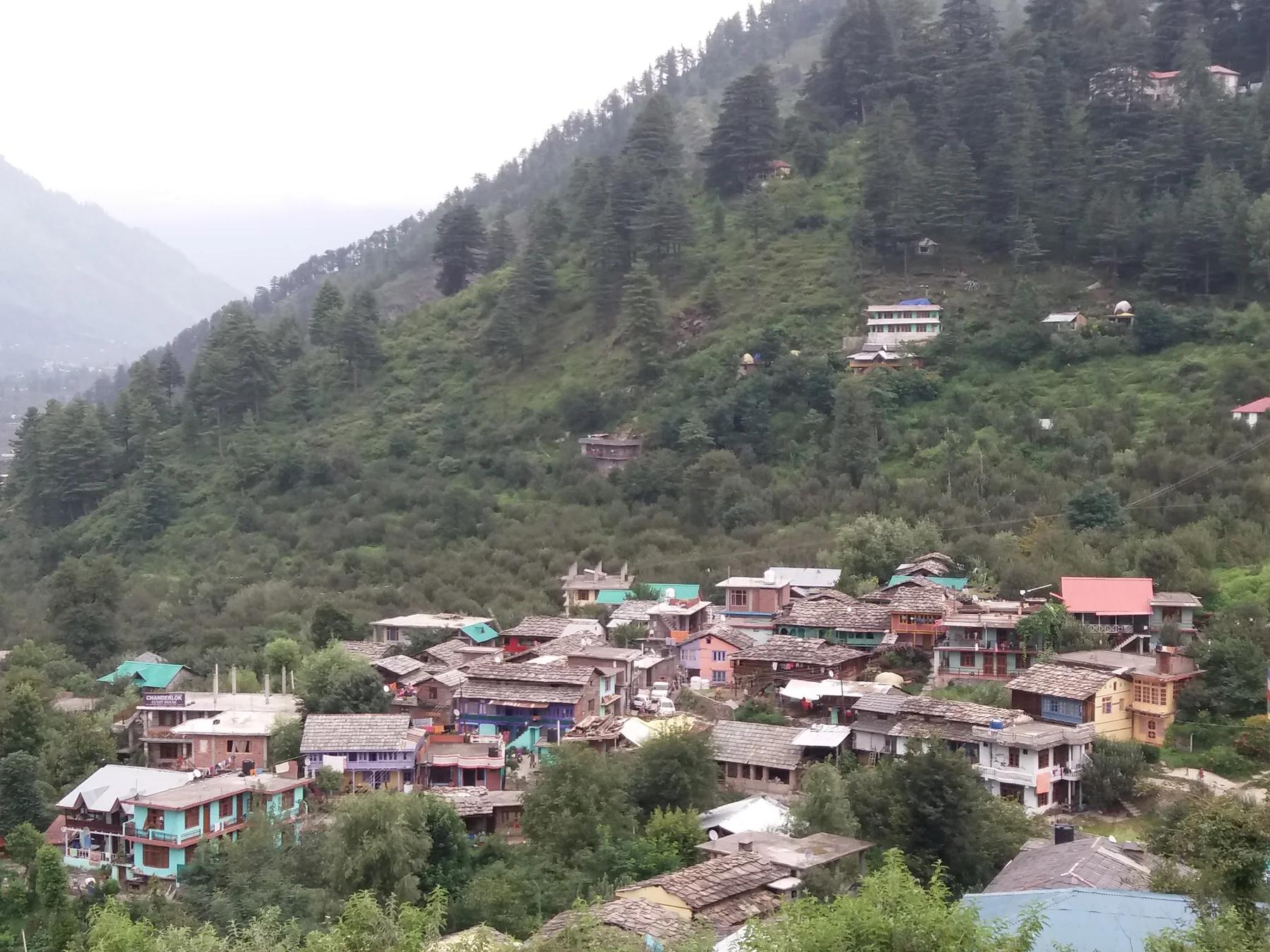
Photograph: © Yann Forget / Wikimedia Commons / CC BY-SA 3.0
Naggar is a hillside village above the Beas in Himachal Pradesh's Kullu district, known for its former royal castle, temples and the Roerich family's art. Houses occupy the slope below wooded hills, while stone shrines, carved timber and Himalayan paintings offer different ways to spend time here.
A village on the slope above the Beas
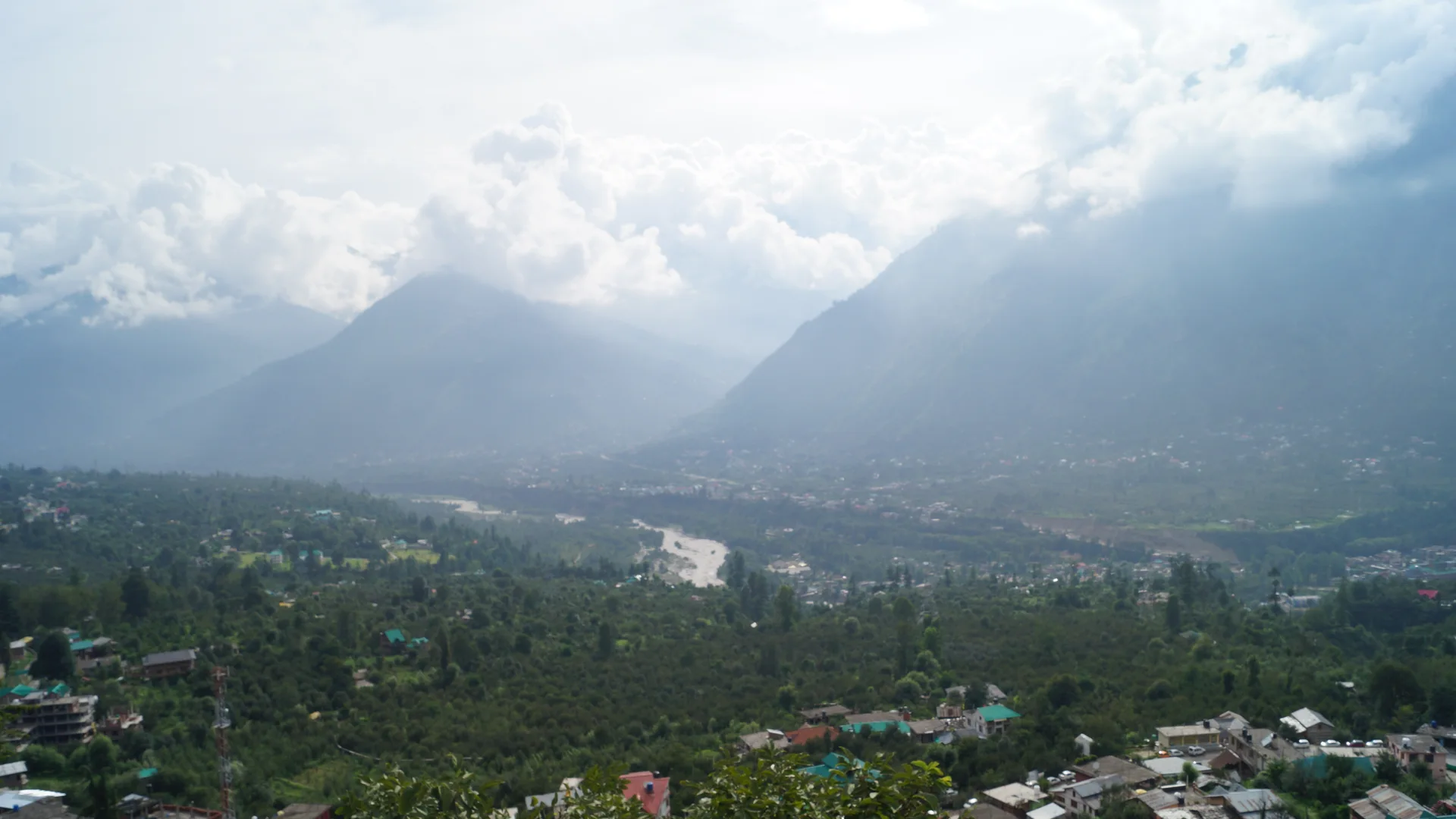
Naggar lies on the left-bank side of the Beas, with views across Kullu Valley. The bazaar, castle area and upper village belong to a hillside settlement rather than a riverside promenade. Set your destination to the castle, temple, estate or accommodation you actually want to reach.
If you are choosing a room here, ask for its actual entrance pin and how many steps separate the drop-off from the room. A Naggar address alone does not tell you whether you will arrive beside the door or need to continue uphill with luggage.
Naggar Castle and the earlier royal seat
Naggar was once the seat of Kullu's rulers. Its castle gives the village a visible connection to that history, with timber bands between layers of stone. This construction is known as Kath Kuni; the timber corners and layered walls are useful details to notice.
The story continues beyond the village. Kullu's royal seat later moved from Naggar to Sultanpur, now part of Kullu town. That history helps explain why the castle and Sultanpur's Shri Raghunath Temple matter in different ways.
If entering the castle is essential to your visit, confirm the current visitor arrangements with HPTDC. Ask which parts of the building are available to visitors on your chosen day.
Stone carving and wooden roofs in the village temples
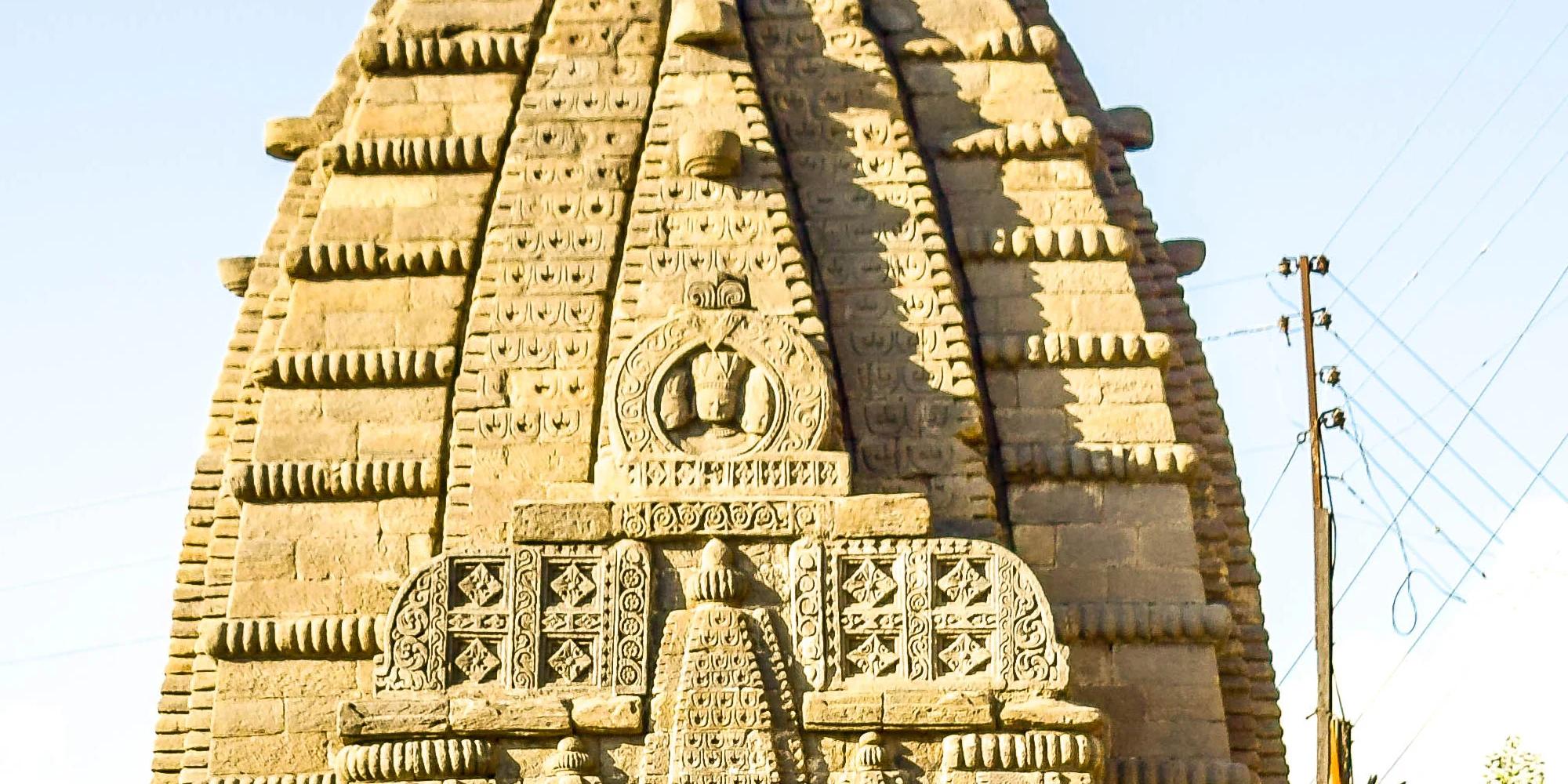
Gauri Shankar Temple, dedicated to Lord Shiva, stands below the castle near the bazaar. Its carved stonework offers a different building form from the timber-rich shrines associated with the valley.
At Gauri Shankar Temple, look for the curved stone tower and the smaller shrine-shaped carvings above its doorway. Nandi faces the entrance in the courtyard.
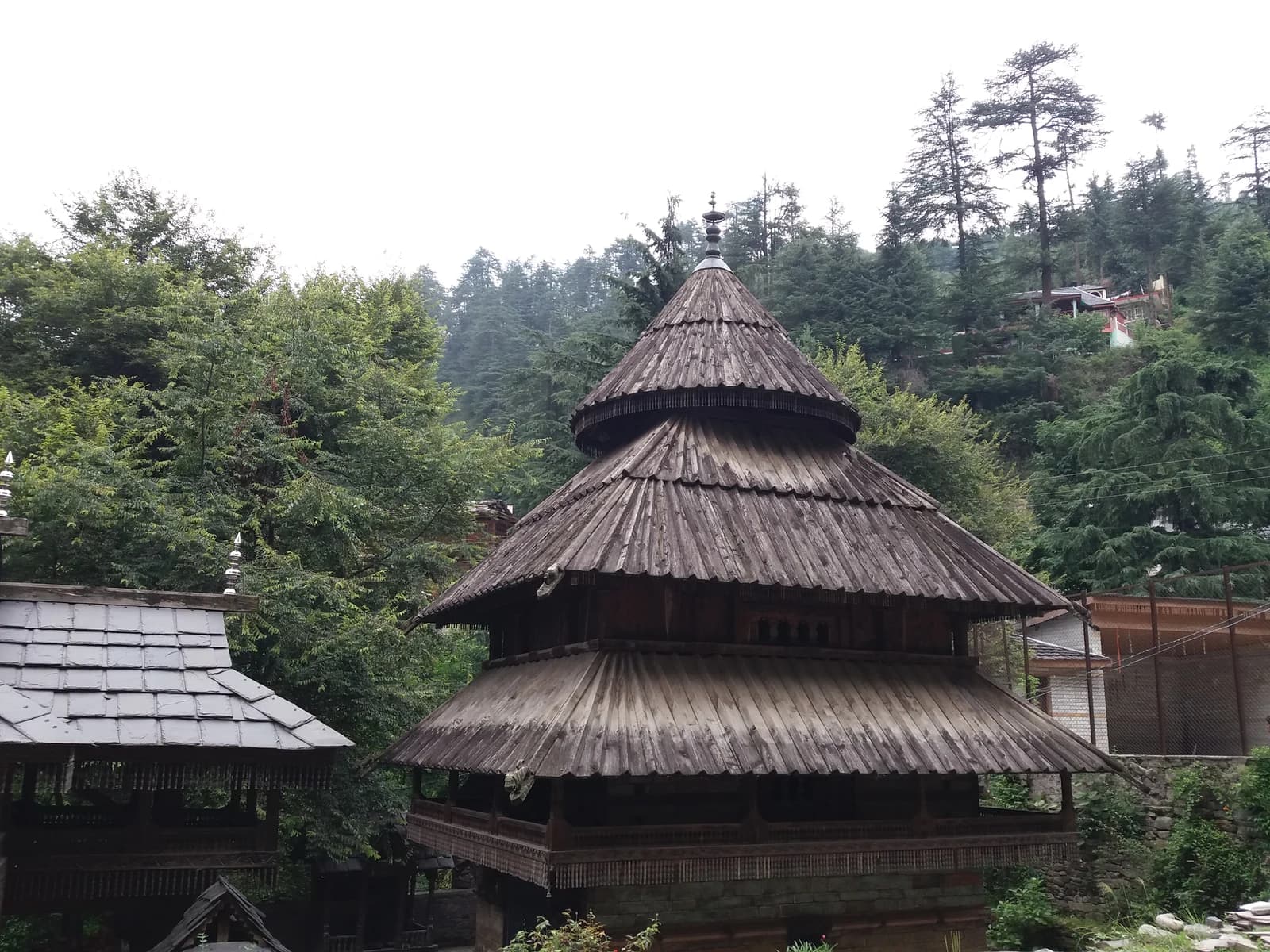
Higher in the village, Tripura Sundari Temple is recognisable by its overlapping wooden roof levels. The temple article looks more closely at the guardian carved beside its doorway. You can appreciate the exterior without assuming that every part of a shrine is open to visitors.
These are working places of worship. Follow the directions at each entrance, leave doorways clear and ask before photographing a ceremony or another person.
Himalayan paintings at the Roerich estate
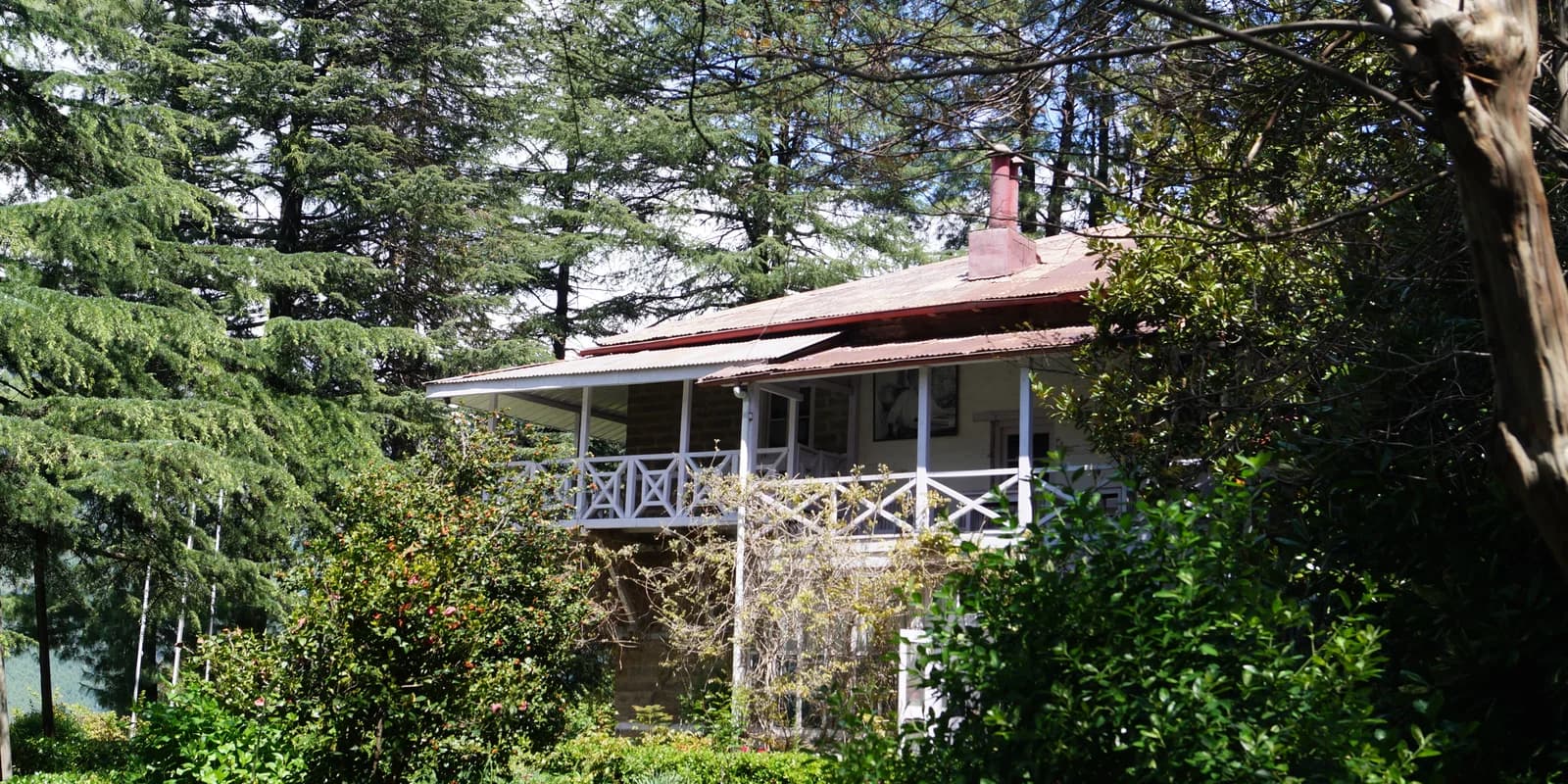
The Roerich Memorial House belongs to a separate estate above the castle area. Its gallery displays Himalayan paintings by Nicholas Roerich alongside work by his son Svetoslav. The house connects the paintings to the rooms where the family lived and worked.
The gallery occupies the ground floor; upstairs memorial rooms are viewed through windows from the surrounding balcony. This is a different experience from walking through every room of an open house. Our Nicholas Roerich Art Gallery guide explains the visit, and the estate's visitor information gives its current arrangements.
For an outing from Manali, use the Naggar day-trip guide to organise the journey and choose your stops. Keep the castle, temples and estate as individual visits, with time between them, rather than expecting one ticket or one courtyard to cover Naggar.
Photograph: View from Naggar, Kullu district, © Yann Forget / Wikimedia Commons / CC BY-SA 3.0, taken on 4 August 2018. Resized and converted to WebP for 2050 XP; the opening view is cropped to fit the screen. This adaptation is available under the same licence.