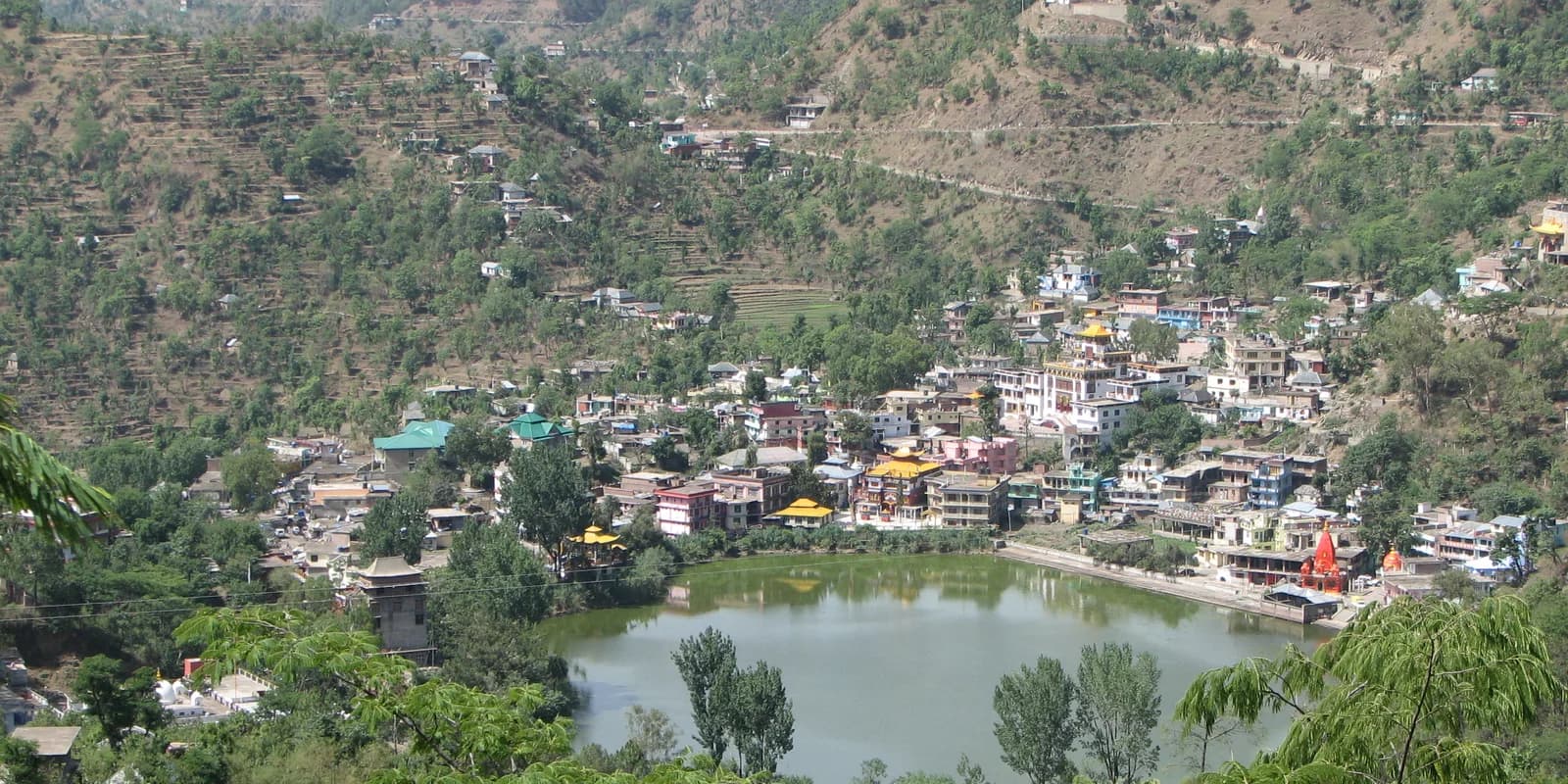
Guru Padmasambhava Above Rewalsar Lake
By 2050 XP · · 3 min read
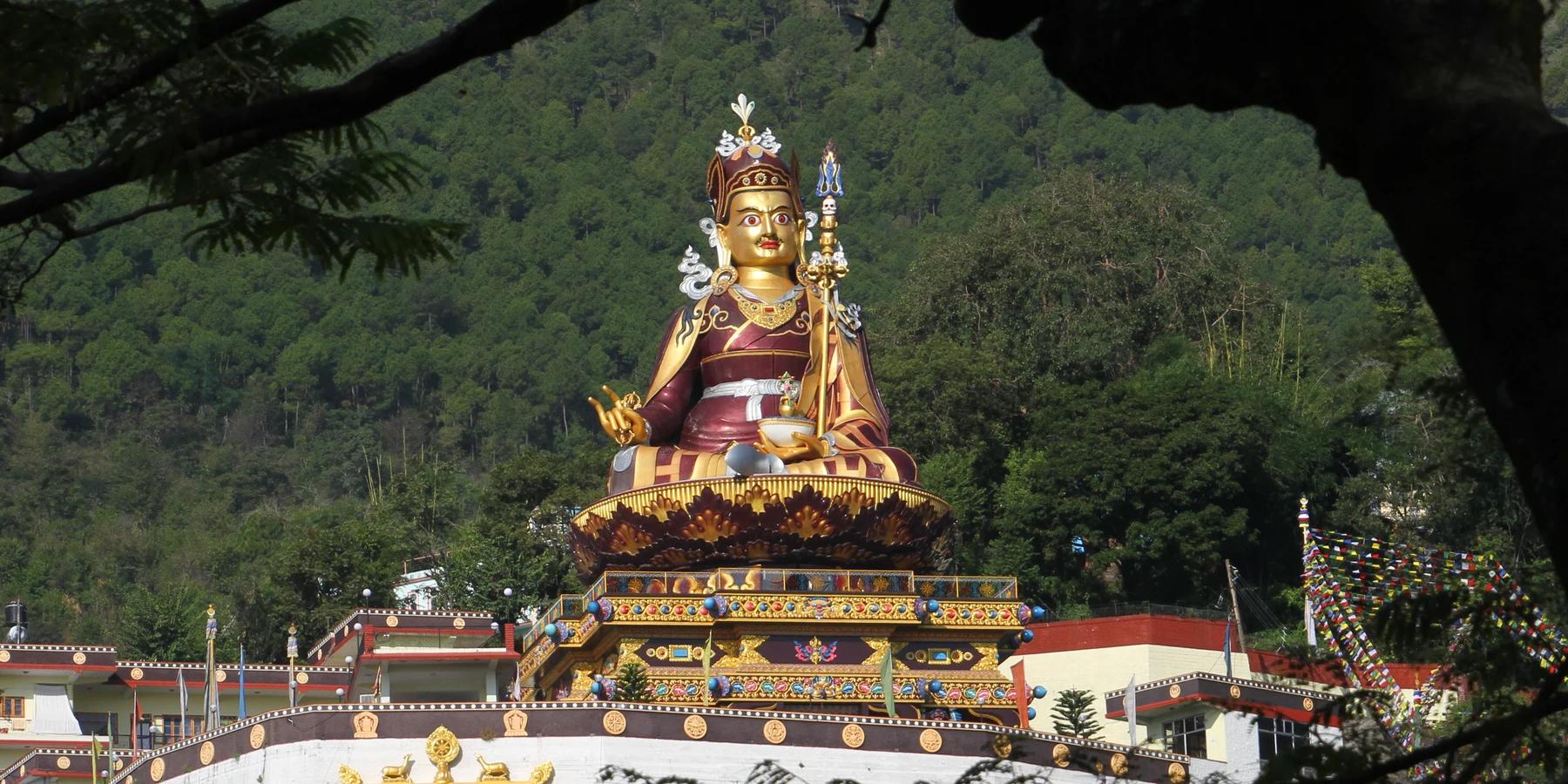
Photograph: Gerd Eichmann / CC BY-SA 4.0
The large seated figure above Rewalsar Lake is Guru Padmasambhava, also known as Guru Rinpoche. His gold-coloured face, maroon robes and lotus seat make the statue a prominent part of the town. Looking at the objects in his hands helps you recognise the teacher behind the image.
Who is Guru Padmasambhava?
Guru Padmasambhava is an important teacher in Tibetan Buddhism, closely associated with the spread of its teachings in Tibet. His name means Lotus-Born. The lotus appears again in the name Tso Pema, or Lotus Lake, used by Tibetan Buddhists for Rewalsar.
Knowing that Guru Padmasambhava and Guru Rinpoche refer to the same teacher helps when reading about the town's shrines. You will find both names associated with the large statue above the lake.
Look at the hands, staff and lotus seat
In the photograph, his right hand holds a vajra, a small pronged ritual object. His left supports a cup, with a vessel rising from it. A tall staff runs beside his left shoulder, while the pointed headwear ends in a white plume.
Follow the robe down to the crossed legs and the broad lotus seat. Its overlapping petals form a distinct layer between the seated figure and the decorated building below. The maroon-and-gold clothing, the objects held and the staff are useful details to notice together.
You do not need to understand every religious symbol to appreciate the image. Start with those visible features, then look back towards the lake to understand the statue's setting above the town.
Why Rewalsar is called Tso Pema
In the Buddhist tradition associated with Rewalsar, Guru Padmasambhava taught Princess Mandarava. Her father ordered the teacher to be burnt, but the fire became a lake and Guru Padmasambhava appeared unharmed upon a lotus. It is a sacred story through which Buddhist pilgrims understand the place.
The lotus seat and the name Lotus Lake connect the image with that tradition. Around the water, pilgrims also perform kora, a devotional circuit. Someone walking slowly beside the lake may be making a pilgrimage, so leave space for prayer and quiet movement.
Rewalsar is sacred to Hindu and Sikh visitors too. Its temples, monasteries and gurdwara have their own religious associations; the statue is one part of that shared setting.
Keep the hillside statue separate from the lake walk
The statue rises above the waterfront, rather than standing directly on the lakeside path. If you want to approach it, ask about the current entrance and the steps involved before adding it to your day. The view from beside the lake does not tell you how the final approach will suit everyone in your group.
At a shrine or monastery, keep voices low, leave entrances clear and ask before photographing an interior or people at prayer. Follow the instructions at the entrance about footwear and visitor areas.
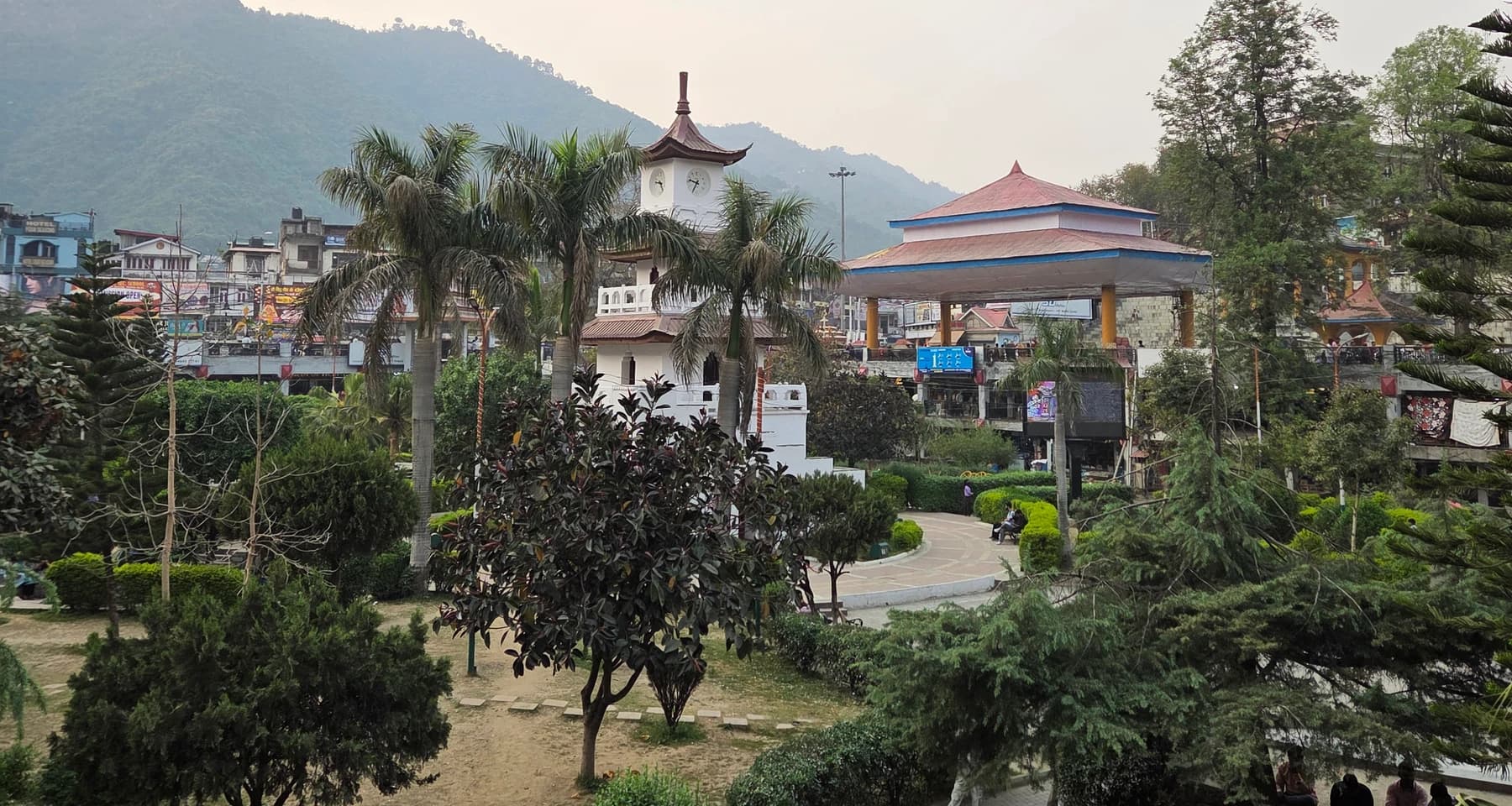
For the journey, use our Rewalsar Lake visit from Mandi, which allows separately for the drive and time beside the water. If you are choosing other stops in town before or afterwards, Mandi's stone temples and Indira Market belong to a different visitor setting.
Photograph: Padmasambhava statue in Rewalsar by Gerd Eichmann, taken on 9 October 2016. Cropped, resized and converted to WebP by 2050 XP. The photograph and this adaptation are available under CC BY-SA 4.0.