Trying the Pottery Wheel in Andretta
By 2050 XP · · 3 min read
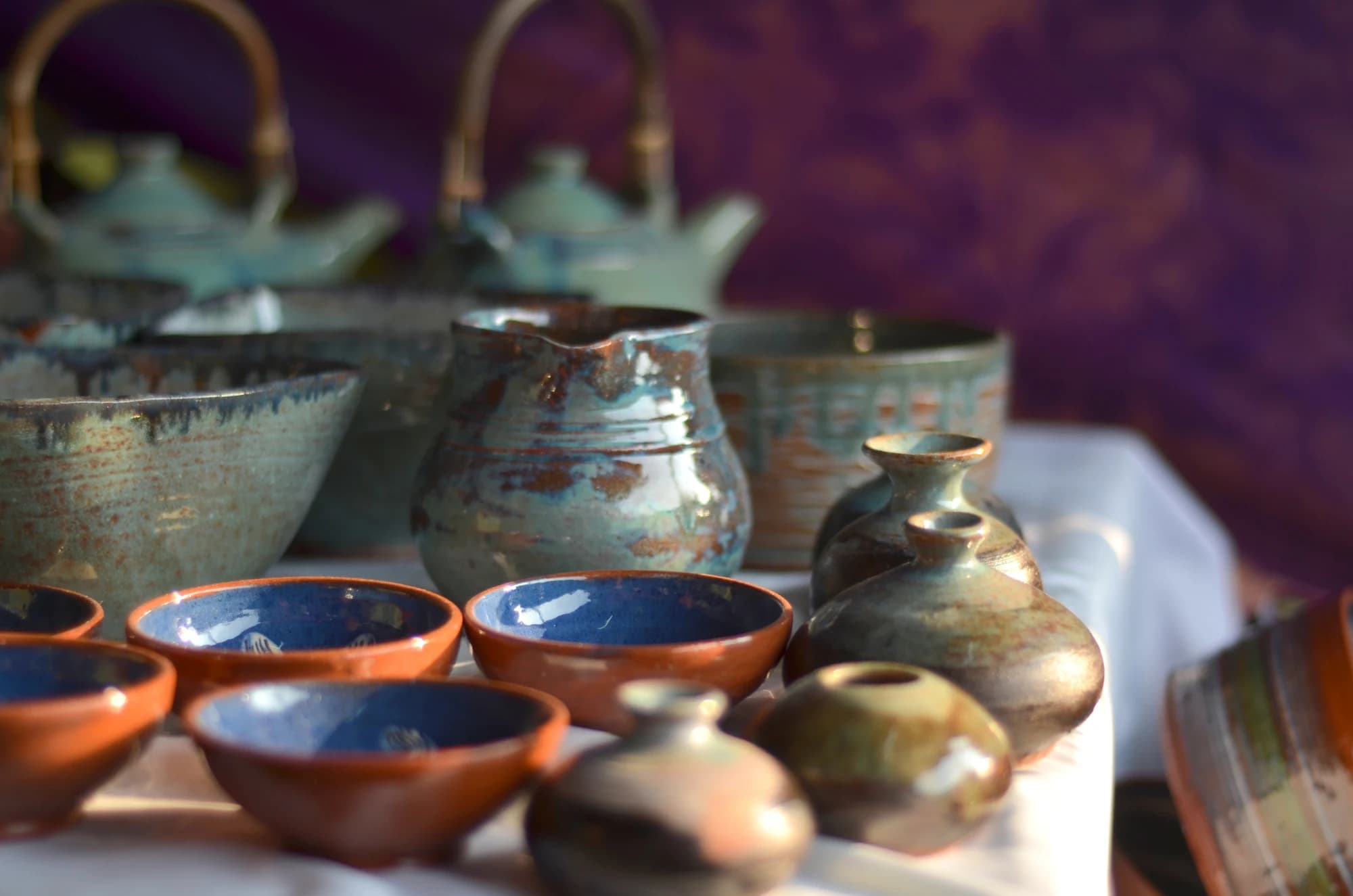
Photograph: Ekabhishek / CC BY-SA 3.0 / Delhi, 2014
At Andretta Pottery, in Andretta village near Palampur, a short introduction lets you try shaping clay on a potter's wheel with help from a potter. It is a different experience from browsing the finished bowls and jugs. You work with soft clay, while the tableware has already been decorated, glazed and fired.
If you would like to try the wheel, confirm a visitor session before making the journey. Ask what you will do yourself and what happens to the piece afterwards. A freshly shaped bowl is not yet a finished ceramic souvenir.
What to notice at the wheel
Watch how the potter keeps the clay centred as the wheel turns. Making an opening and drawing up the walls are separate skills; a bowl's height, width and thickness do not appear in one movement. During an introduction, follow the potter's guidance rather than expecting to make a complete tea set.
The studio also teaches longer courses covering wheel work, decoration, glazing and firing. A visitor session is an introduction to part of that process, not the same commitment. You can find the current visitor format on the Andretta Pottery visit page.
If you prefer looking to making, ask whether you can see the finished work and learn about its decoration without joining a practical session. Watching and handling clay need different arrangements; do not assume that one includes the other.
Slip decoration is coloured clay
Andretta's pottery is known for slip decoration. Slip is liquid clay, which can be coloured and applied to the surface of a pot. It is not simply a pattern painted over a finished glaze. The studio's designs draw on regional decoration, including rangoli patterns.
Look at the lines on a bowl or plate as well as its overall colour. Ask which details were made with slip and which effects come from the glaze. These are different parts of the making process, even when both contribute to the finished surface.
The photograph above shows Andretta-made pottery displayed at Dastkar Bazaar in Delhi in 2014. The blue interiors of the bowls and pale glazed jugs illustrate finished work, not what every visitor will make or what is currently in the studio's showroom.
A wet bowl still needs drying and firing
Clay has to dry before it is fired. Firing in a kiln changes it into hard ceramic material; it is not the same as leaving the bowl in the sun. Glazing and its firing are further work, not a finishing step you should expect to complete during a brief turn at the wheel.
If keeping your piece matters, ask before the session whether it can be retained, who would finish it, and whether later collection or delivery is possible. Do not plan around taking home usable tableware that afternoon unless the studio has confirmed exactly what is being provided.
Ask before picking up unfinished work or photographing a potter closely. A piece that looks ready on a shelf may still be waiting for another stage.
For another Palampur-area activity, compare black and green Kangra tea at a tasting. Norbulingka Institute in Sidhpur, Dharamshala introduces Tibetan painting, silk work and carving. These are separate outings, not parts of the pottery session.
Photograph: Andretta pottery at Dastkar Bazaar, Delhi by Ekabhishek, taken on 16 February 2014. Resized and converted to WebP for 2050 XP; the opening view is cropped to fit the page. The photograph and this adaptation are shared under CC BY-SA 3.0.