Kullvi Pattu
By 2050 XP · · 3 min read
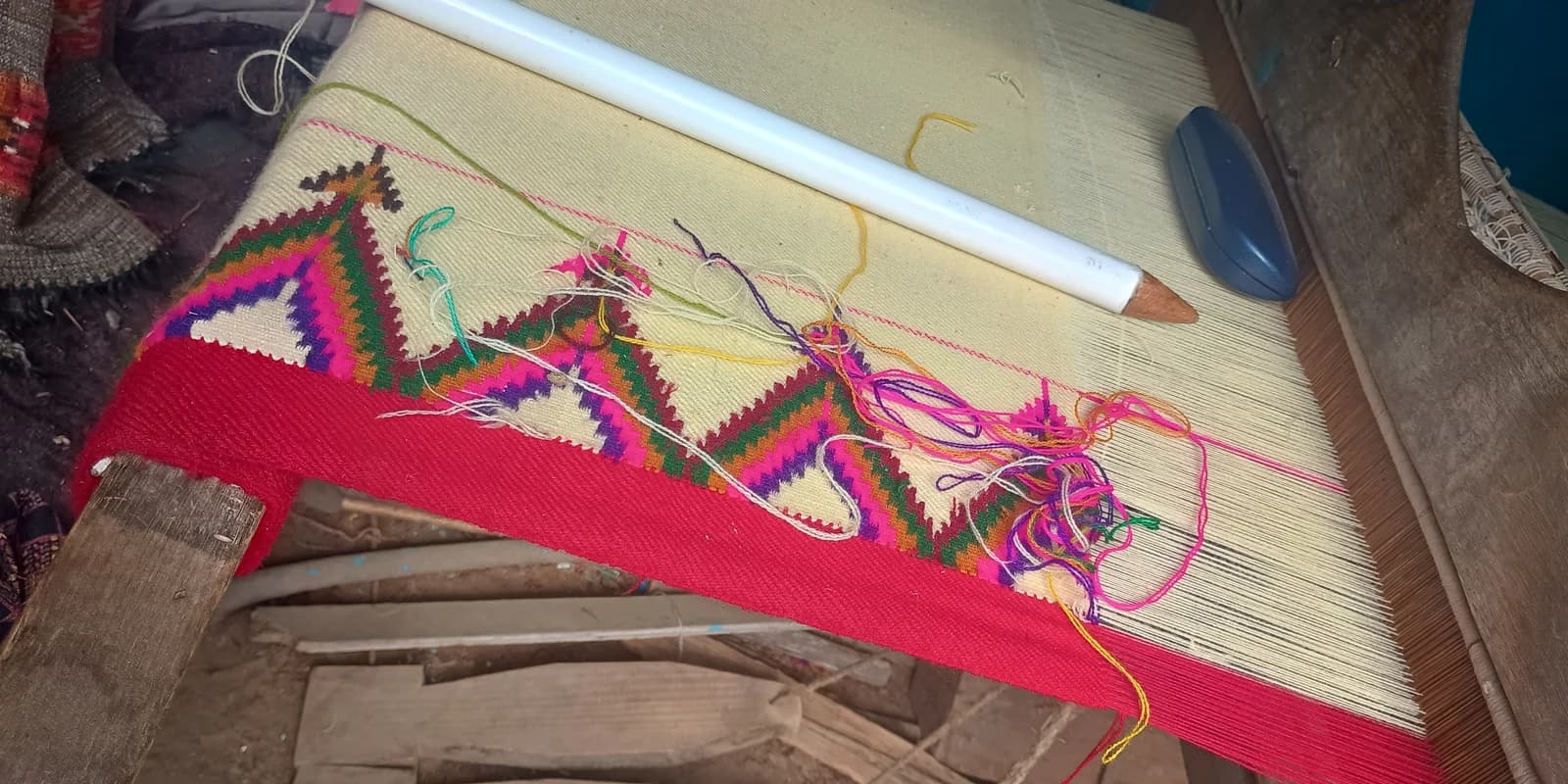
Photograph: Rajani Gairshail / CC BY-SA 4.0
Kullvi pattu is a traditional woollen wrap associated with women's dress in the Kullu region. It is worn around the body, rather than simply placed over the shoulders like a shawl. Its coloured woven borders are worth looking at closely: they are part of the cloth, not just a decoration added to a finished outfit.
If you hear the name during a stay in Manali, ask to see how the garment is worn as well as how it looks folded. That makes the difference between a pattu and a shoulder wrap much easier to understand.
A border still on the loom
The photograph above shows a pattu being woven in Kullu district. Across the cream cloth, red, pink, purple, orange and green yarn form a repeating angular border. Below it is a broad red band. Beside the pattern, you can see loose coloured threads and the closely spaced threads of the loom.
This is an unfinished piece. The loose yarn belongs to that stage of the work; it is not a reason to assume the finished garment will look untidy. Look at how the coloured shapes sit within the cloth, then notice the wooden frame around it. The photograph lets you see something a folded textile in a display may hide.
It does not tell us the fibre content of every thread, how long this particular piece took to weave or the meaning of its pattern. Those are good questions for the person who made it, rather than details to guess from a photograph.
Look at the garment, not only the colours
Pattu belongs to a wider wool-weaving tradition in Himachal. In Kullu women's dress, the way the cloth wraps around the body matters as much as the border. A brightly patterned shawl and a pattu can look related without being the same garment.
When someone offers to show you a piece, ask which part becomes visible when it is worn. You may find it easier to follow the design once the cloth is opened out. Ask before handling it, and leave loom tools where they are.
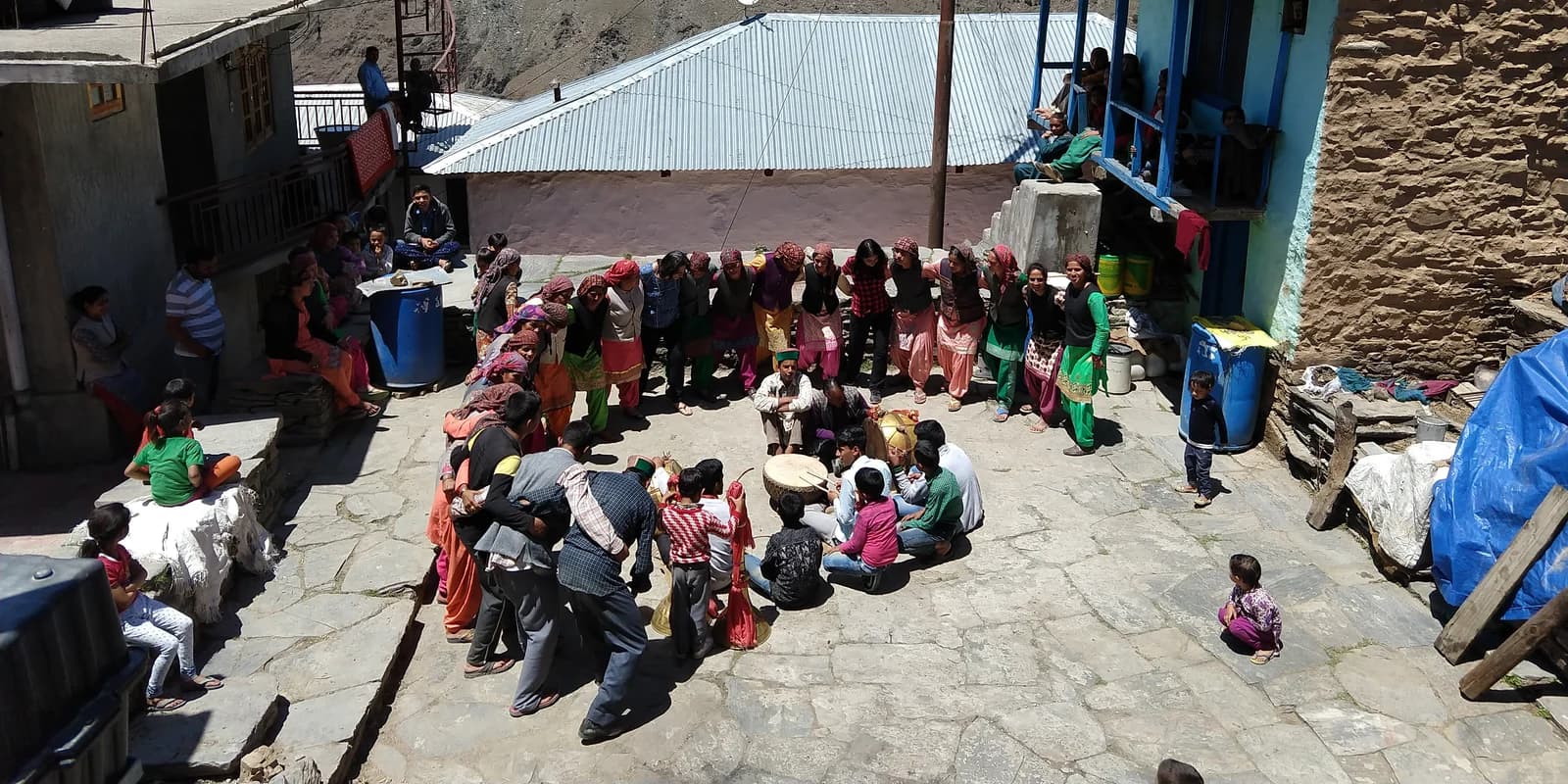
If you are watching Nati, take an interest in the clothing without expecting every dancer to wear the same outfit. The dance and the garment are different subjects, and a performance is not a catalogue of everyone’s everyday dress.
There is no need to dress up to appreciate the weaving. A question about how a border was made can be a more comfortable way to learn than asking someone to pose. If you would like a close photograph of a wearer or their work, ask first and leave room for them to say no.
Photograph: Kullvi Pattu Weaving in Kullu district,8 by Rajani Gairshail, taken on 22 February 2026. Cropped, resized and converted to WebP for 2050 XP. The photograph and this adaptation are available under CC BY-SA 4.0.