Chamba - An Old Capital beside the Ravi
By 2050 XP · · 5 min read
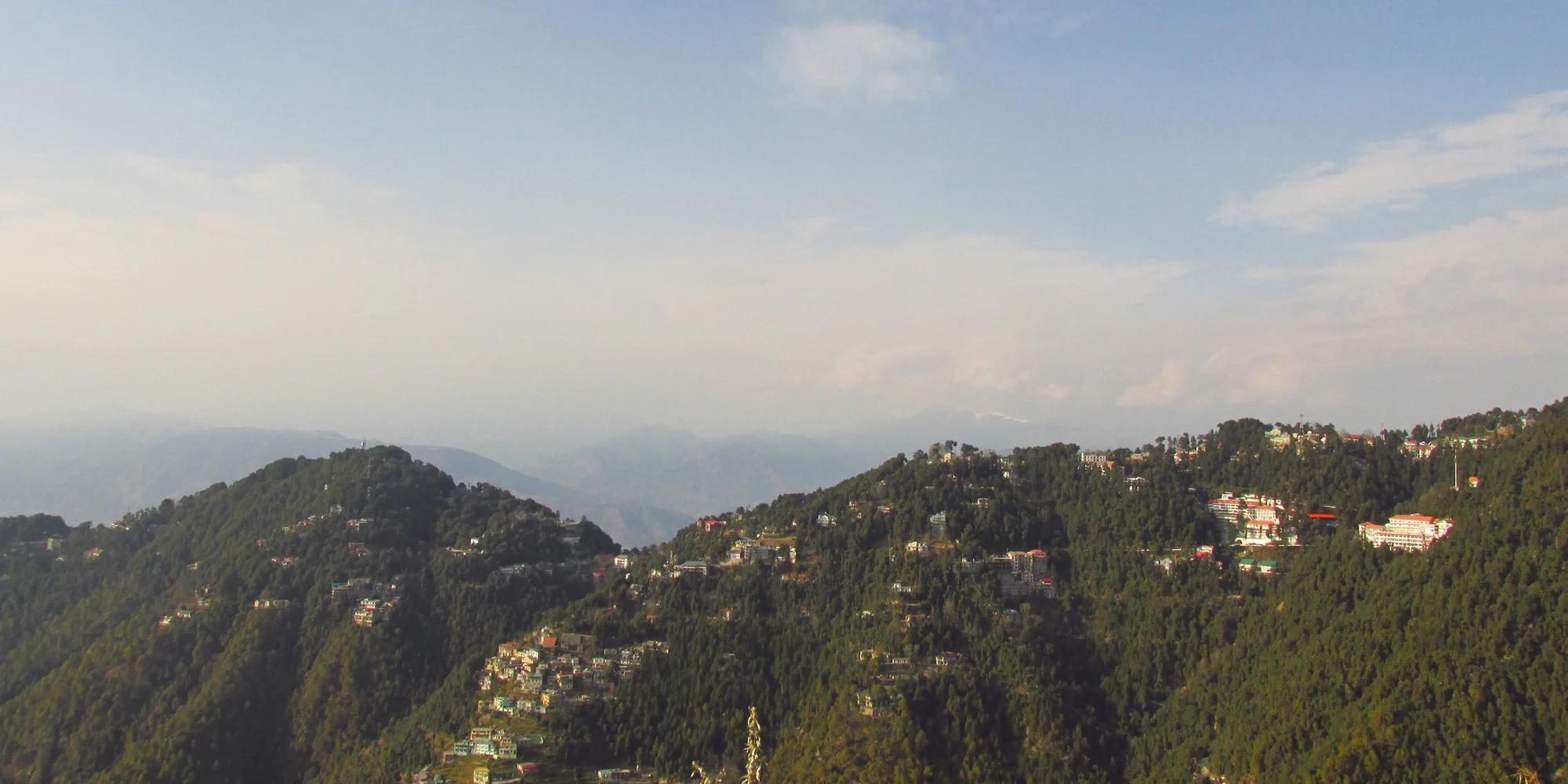
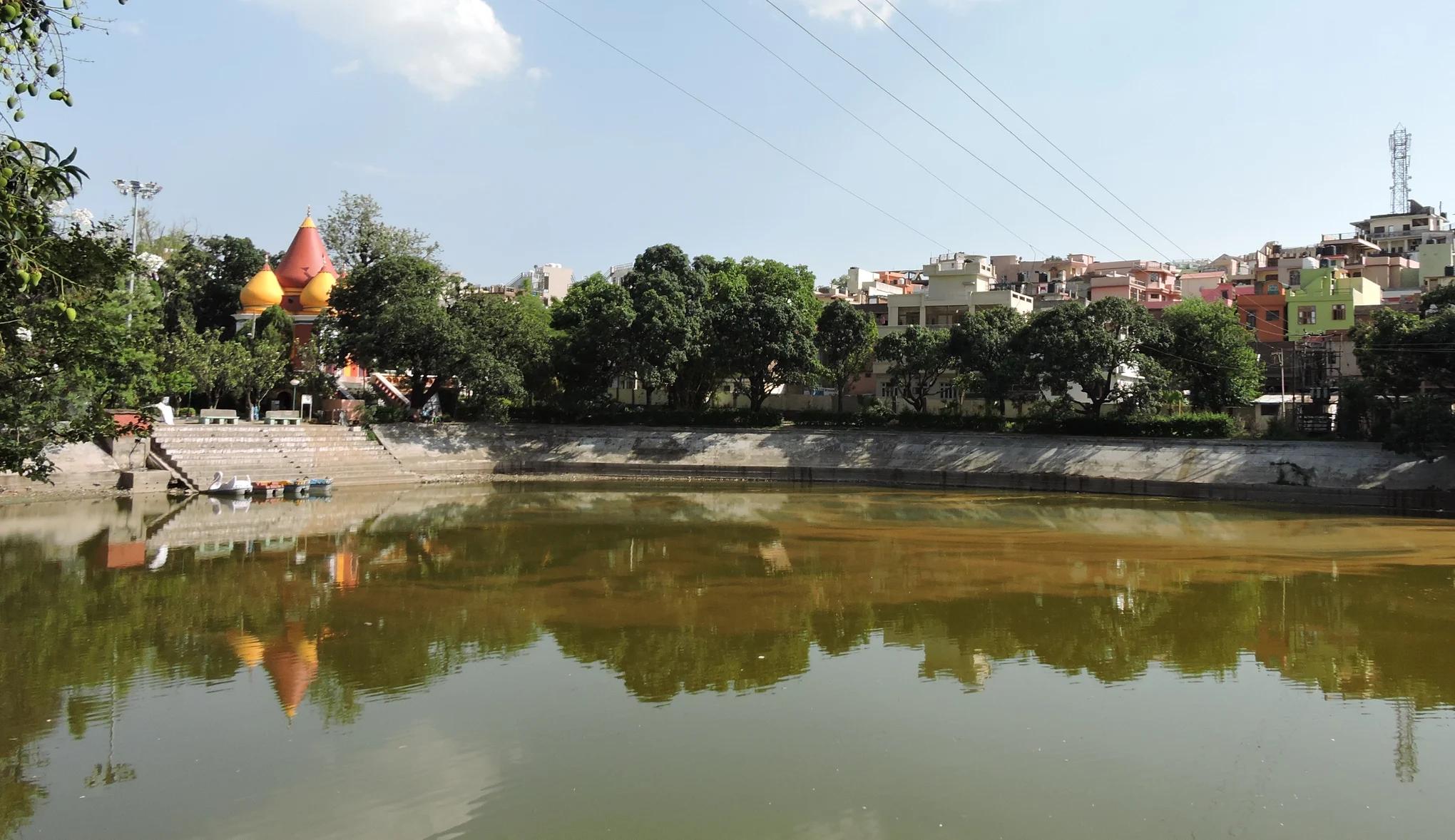
Photograph: Khemraj Jaryal / CC BY-SA 4.0
Chamba is an old hill-state capital beside the Ravi River in Himachal Pradesh, with temple lanes rising above the broad open ground of the Chaugan. Its appeal lies in the town itself: stone shrines still used for worship, a museum filled with the art of the former kingdom, and embroidered cloths whose scenes reward a closer look.
If you enjoy understanding a place through its buildings and crafts, give Chamba more than a pause between drives. The temples, paintings and textiles have connections that become easier to see when you spend time with them. You can choose a few things to explore properly, leaving the wider district for separate outings.
A capital with its history still in use
Raja Sahil Varman moved the capital of his kingdom from Bharmour to Chamba in the tenth century. Later rulers continued to build and support temples, commission paintings and add to the town. The buildings you see today belong to different periods of that long history.
There is another reason to slow down at the shrines: these remain places of worship. Leave room for someone arriving to pray, and follow the instructions about footwear and photography at each entrance. The historic setting is part of everyday religious life.
Find your bearings around the Chaugan
The Chaugan is the broad green on the lower terrace of the town. Markets and public buildings around it make this a useful place to begin getting your bearings. Above it, the town becomes a closer arrangement of lanes, homes and temples.
The green has served several purposes over time, including royal assemblies, recreation and public celebrations. Its generous space is a striking change from the close-built lanes above it. Looking at the two together helps you see how Chamba accommodated both large gatherings and the daily life of a hill town.
The lawns are rested for maintenance, and entry can be restricted. Respect any barriers and enjoy the surrounding streets instead of planning your visit around time on the grass.
Chamba isn't the only old hill capital that grew around a Chaugan. If that layout interests you, see how Nahan's Chaugan, palace lanes and old ponds fit together in the Shivalik foothills.
Look up at the Lakshmi Narayan temples
The Lakshmi Narayan complex gives you a particularly clear way to see Chamba's layers of history. The principal temple dates to the tenth century, while later rulers added shrines and embellishments. The Radha Krishna shrine, for example, was added by Rani Sarda in 1825. A single complex brings buildings from widely separated periods together, with shrines dedicated to Lord Vishnu and Lord Shiva as well as Radha Krishna.
Look from the carved stone walls towards the tops of the towers. Wooden supports and projecting slate roofs sit above the stonework. They helped protect the buildings from snowfall, bringing a practical response to the mountain climate into the temple design.
Follow the stone upwards, then notice where the wood and slate extend beyond it. The projecting roofs give the towers a different outline from stone temples without this additional shelter.
See the paintings, then look again at the embroidery
At Bhuri Singh Museum, the town's royal history becomes more personal. Raja Bhuri Singh gave his family's paintings to the museum, which opened in 1908. Its wider collection includes sculpture, textiles and copper plates carrying historical records.
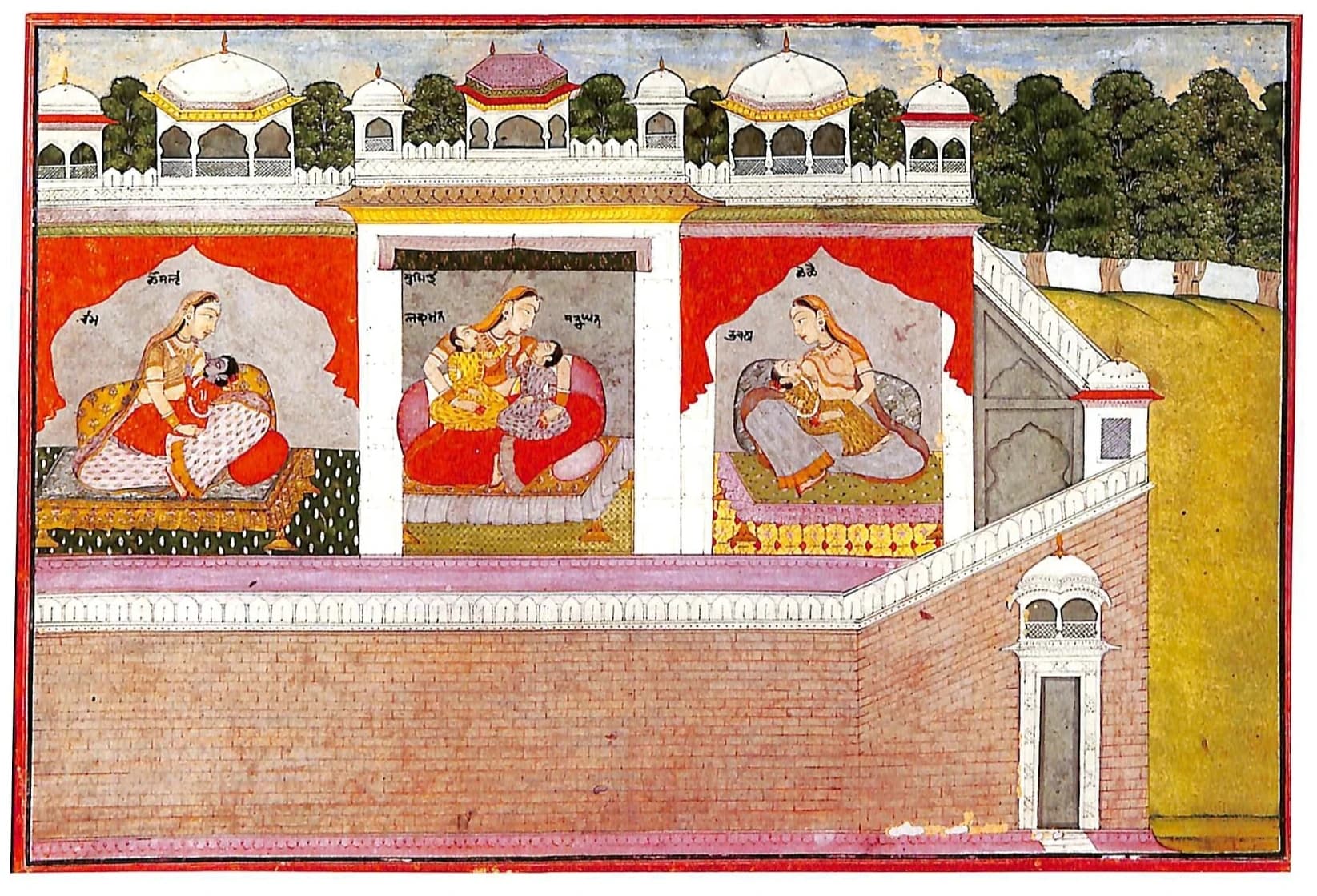
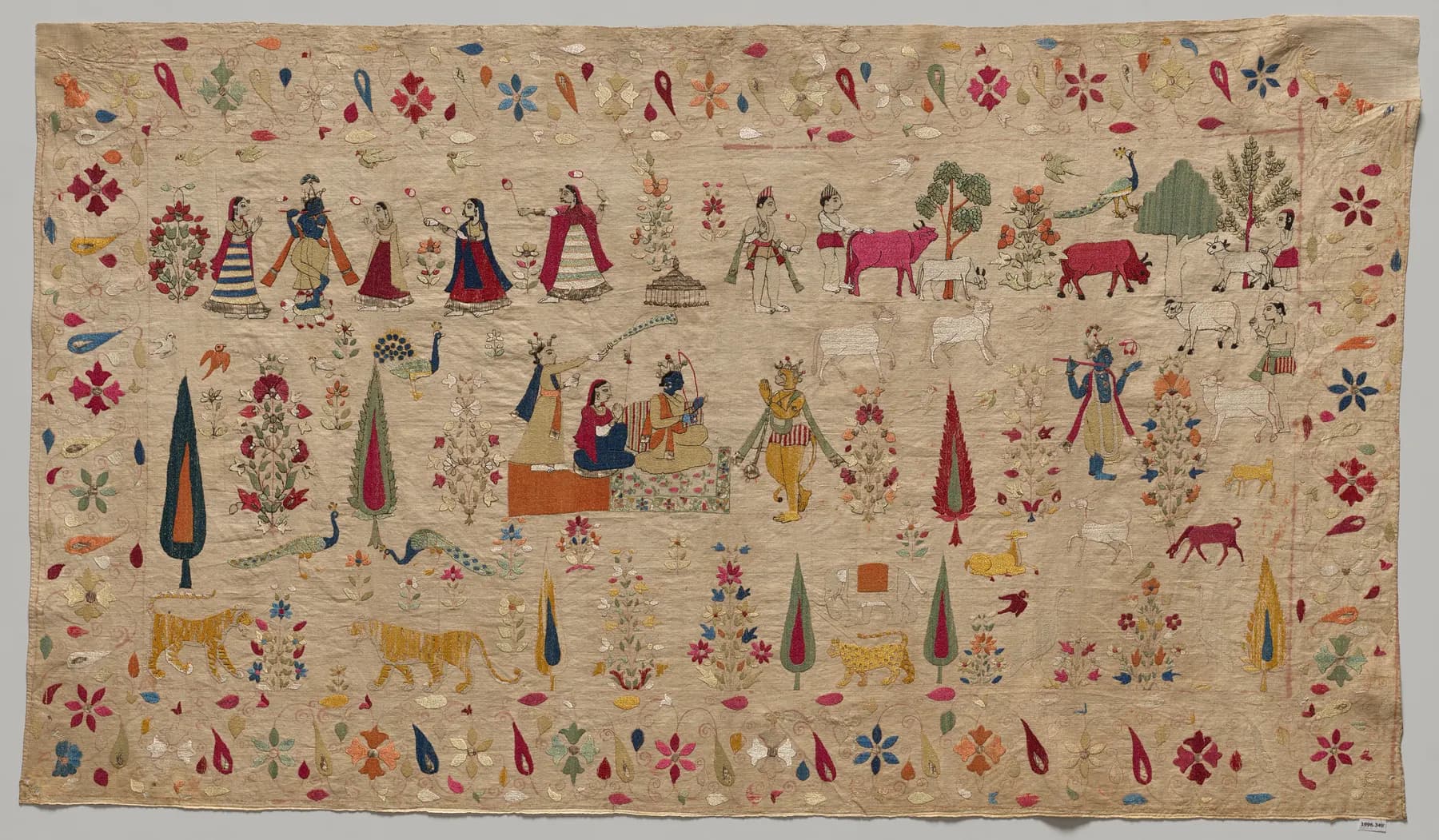
Paintings and embroidered rumals are an especially rewarding pair to consider. A Chamba rumal begins with a design drawn on cloth; silk stitches then fill the figures, plants and borders. The connection with miniature painting is in the making of the work, as well as in the scenes it depicts.
After looking at a painting, try following a figure's outline on a rumal. Notice how thread fills a garment or a flower, where paint would fill the same shape on paper. Our article on Chamba rumal embroidery explains the double-sided stitching and the details to look for.
These cloths have also been ceremonial covers and gifts, including at weddings. That use helps explain the care given to their designs. A rumal could make the presentation of a gift an occasion in itself.
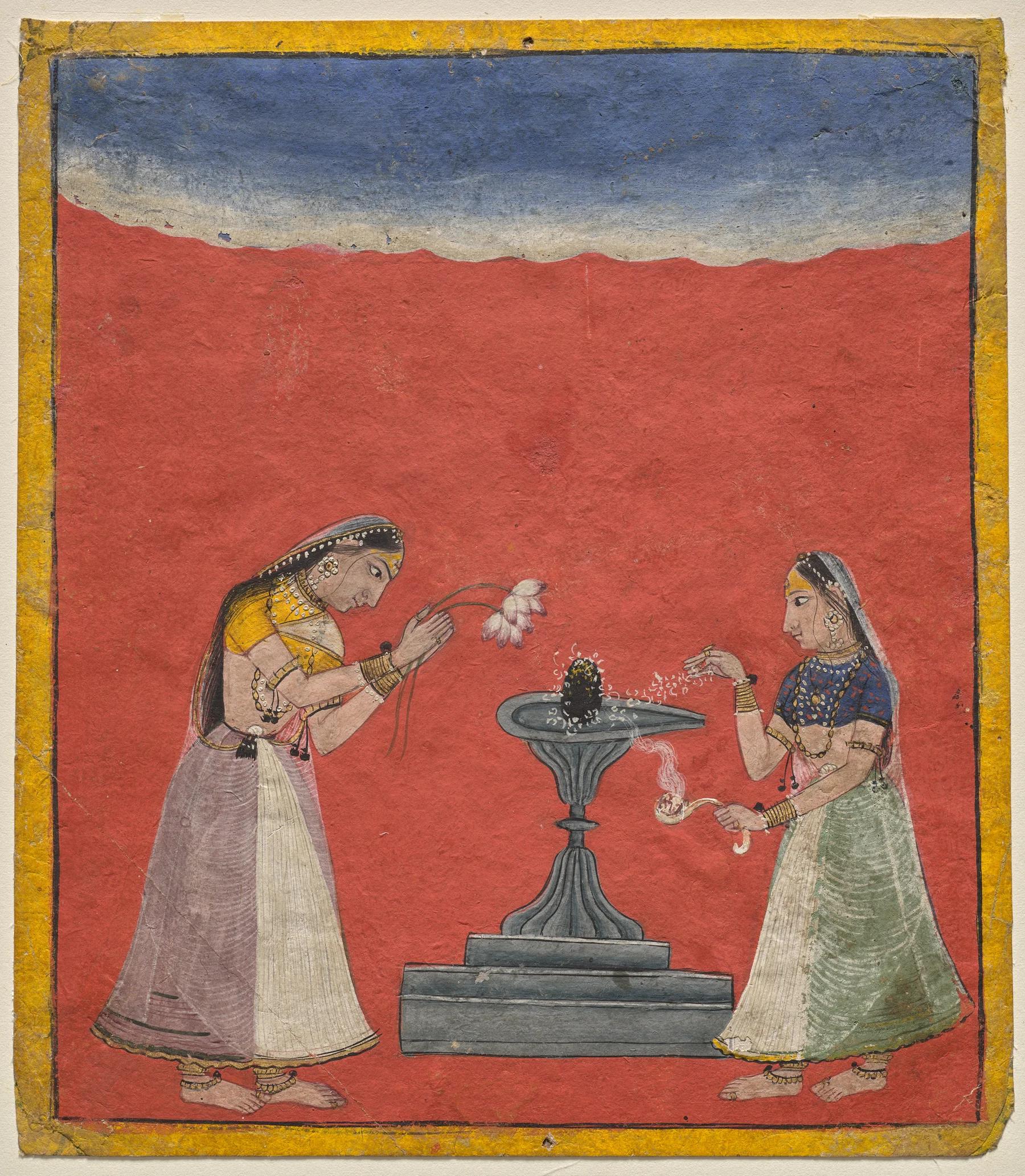
Music supplied another subject for the court's painters. Chamba's Ragamala paintings turn musical moods into scenes of love and devotion, with examples you can explore online before a museum visit.
Let the museum's labels guide you to the particular works on display. Its collection is broader than what can be shown at any one time; the value of the visit does not depend on finding one specific painting or textile.
Minjar brings another side of the town into view
The Chaugan is also associated with Minjar Mela, Chamba's annual fair. The minjar is a silk tassel representing the shoots of paddy and maize. Cultural programmes and processions make the public ground part of a much larger gathering.
People wear the tassel during the fair, carrying that symbol of the crops into the town's celebrations. The festival's procession also reaches the Ravi. These associations make Minjar part of Chamba's relationship with its surrounding countryside, as well as a time for performances and markets.
If the fair is the reason for your journey, confirm that year's announced programme before making arrangements. You do not need a festival visit to enjoy Chamba's temples and art; the fair gives the town a different rhythm rather than supplying its only attraction.
Give the town time before adding the district
For a first visit centred on heritage, a full town day is a comfortable starting plan. Choose the Lakshmi Narayan temples and the museum as your main interests, with time around the Chaugan and its surrounding streets. Someone who particularly enjoys paintings may prefer a longer museum visit to another temple stop.
Keep Dalhousie’s church squares and wooded hills, Khajjiar and Bharmour outside that town-day plan. They belong to the wider district and require separate journeys. If one of those places is also important to you, give it time of its own rather than cutting the museum or temple visit short.
For a weekend with one full day, compare staying in Chamba town with staying in Dalhousie before choosing where to spend both nights.
Frequently asked questions
Is Chamba the same place as Dalhousie or Khajjiar?
No. Chamba is a town in Chamba district; Dalhousie and Khajjiar are separate destinations within that district. Check whether an attraction is in Chamba town before adding it to a town visit.
How much time should we allow for Chamba town?
Allow a full day if you want to spend time at the temples and museum as well as around the Chaugan. This is a suggested pace, with room to follow your interests. It excludes travel to and from Chamba and separate outings elsewhere in the district.
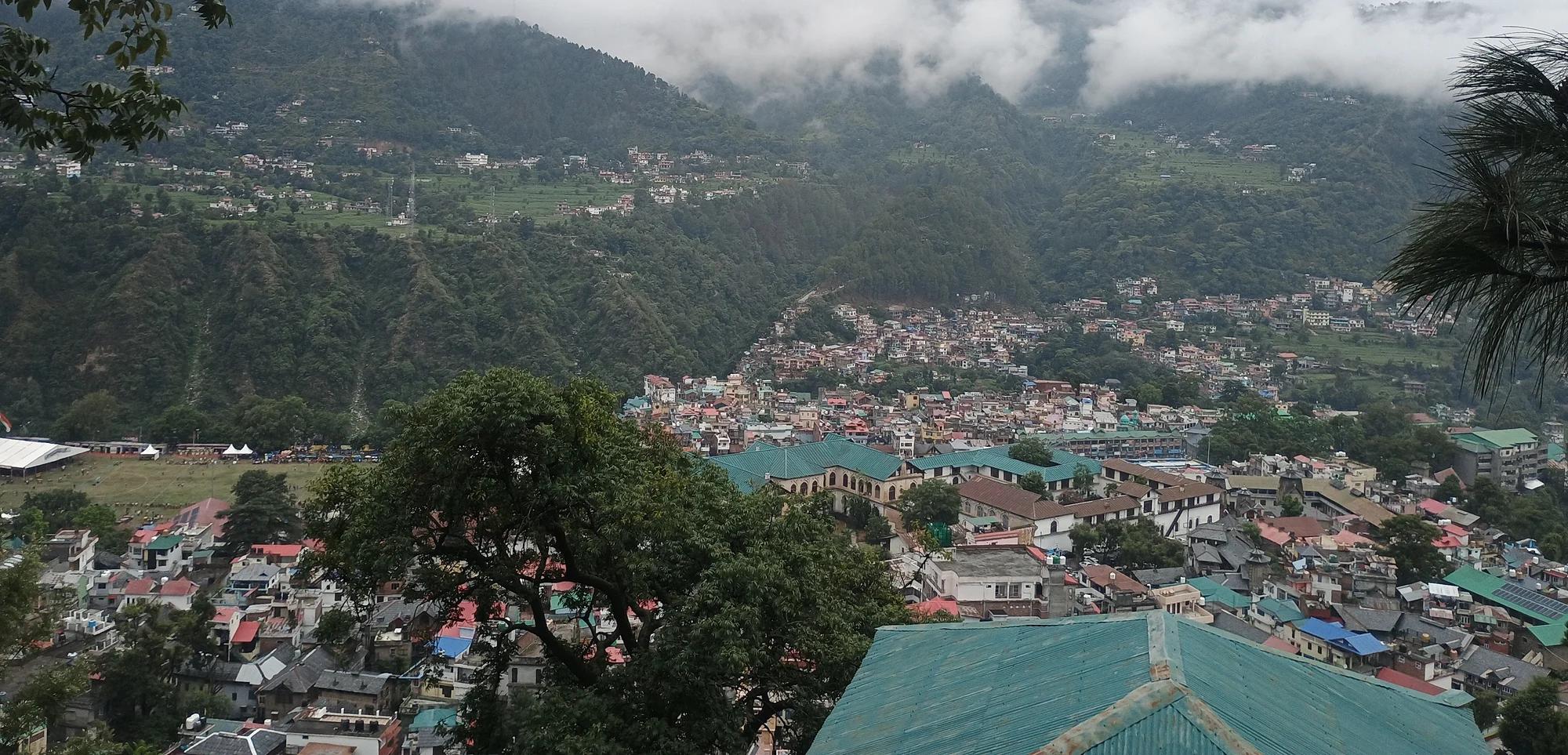
Photograph: View of Chamba town by Khemraj Jaryal, taken on 29 July 2024 from Suhi Temple. Cropped, resized and converted to WebP for 2050 XP. The photograph and this adaptation are available under CC BY-SA 4.0.