How Chamba's Ragamala Paintings Turn Music into Stories
By 2050 XP · · 5 min read
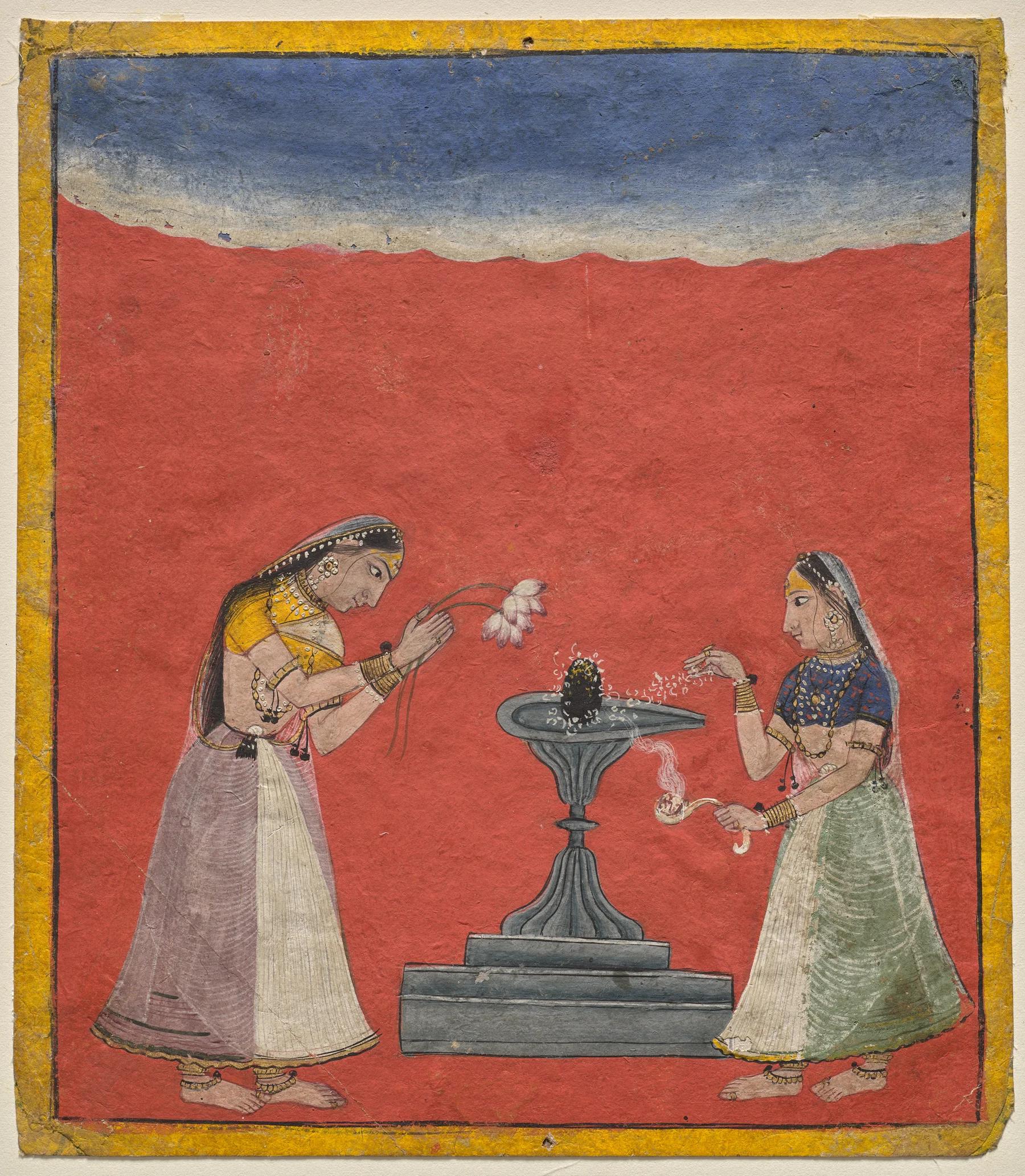
Illustration: Pahari painting, c. 1700 / Cleveland Museum of Art / CC0
Chamba's Ragamala paintings give music a human setting: a prince studies his reflection, or a woman gently strokes a white buffalo. These are musical subjects, even though neither scene needs to show a concert. The people, their gestures and their surroundings convey the feeling associated with the music.
For someone meeting Pahari miniature painting on a Himachal journey, that connection can be puzzling. A label may name a raga while the picture shows something quite different from musicians. Understanding the scene makes that unfamiliar name a beginning, rather than the point at which you move on.
A musical name becomes a person and a scene
A raga is a form of Indian music with its own character. In Ragamala painting, artists gave that musical character a visible life. Love, longing and devotion could become a person waiting, looking or worshipping, rather than a musician performing.
Some series arrange their subjects as musical families. You may see a female personification called a ragini, or a ragaputra, a son within that family. The names help identify a painting's place in the series; they do not mean that the people are portraits of an actual royal family.
These pictures belonged to courtly collections. Small paintings could be kept as individual leaves in an album or portfolio. Their scale invites attention to a hand, a face or a plant, details that can be easy to pass over when the whole picture is small.
The Chamba prince who looks into a mirror
In Madhava Ragaputra, painted in Chamba around 1690-1700, a young prince sits on a low throne with a bolster behind him. One hand holds a small round mirror. The other is raised towards his face, as if he is responding to what he sees. An attendant stands nearby with a fly whisk.
The mirror gives you a way into the scene. Follow the prince's attention towards his own reflection, then compare his raised hand with the attendant's quieter presence. The painting holds a moment of absorption rather than a sequence of events.
The Metropolitan Museum's Madhava Ragaputra record lets you examine the work online. Its musical subject becomes easier to understand once you have noticed what occupies the prince: the feeling is carried by his attention and gesture, without a singer or an instrument explaining it for you.
A woman, a white buffalo and an absent lover
A second Chamba painting from around the same period, Ragini Virati, shows an enthroned woman caressing a white water buffalo. An attendant stands behind her. The gentle contact between woman and animal gives this scene a very different feeling from the prince's encounter with his reflection.
There is more to it than an unusual animal beside a throne. In the museum catalogue Divine Pleasures, the tree entwined with climbing plants is interpreted as an allusion to separated lovers. That detail changes the scene: affection is present, but so is the suggestion of someone absent.
Look at the Ragini Virati painting with the prince's picture in mind. Both use a small courtly setting, yet they ask you to follow different relationships. One person's attention turns towards himself; the other's reaches towards another living creature. You do not need to identify every musical family to notice that difference.
Devotion can be the musical subject too
The painting reproduced below belongs to the broader Pahari tradition, from the hill kingdoms of northern India. It dates to around 1700; its precise court is not identified. It is not one of the two Chamba works described above.
Devagandhari Ragini of Hindol Raga, around 1700, Northern India, Pahari kingdoms. Cleveland Museum of Art, accession 2018.87. Anonymous artist; CC0.
Two women face a Shiva linga, an abstract form of Lord Shiva. The woman on the left holds lotuses; the woman on the right offers petals and incense. Their hands and offerings draw your eye towards the centre.
Here the mood is devotional. Compare that shared focus with the prince's mirror and the woman's touch in the Chamba paintings. Ragamala can give music an intimate or a devotional setting; a picture of worship need not be separate from its musical meaning.
Take the story back to a museum visit
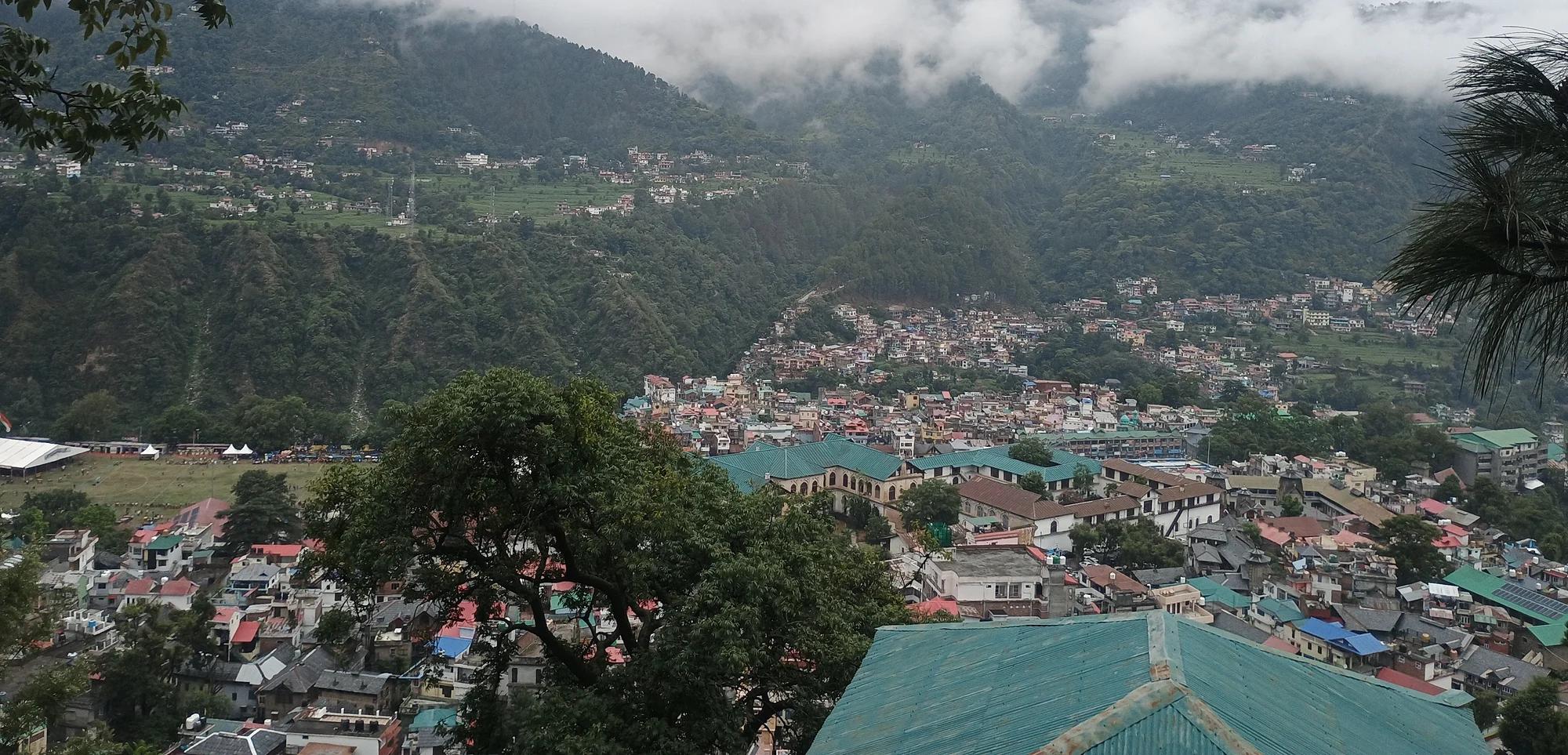
At Bhuri Singh Museum in Chamba, paintings sit within a wider collection of the former kingdom's art and historical records. Let the label identify the particular work you are looking at. A musical name and a scene from the Ramayana offer different ways into a picture.
For a musical painting, begin with the people: where do they look, what do their hands do, and what holds their attention? Then return to the name. The scene is something you can understand before learning a whole system of musical terms.
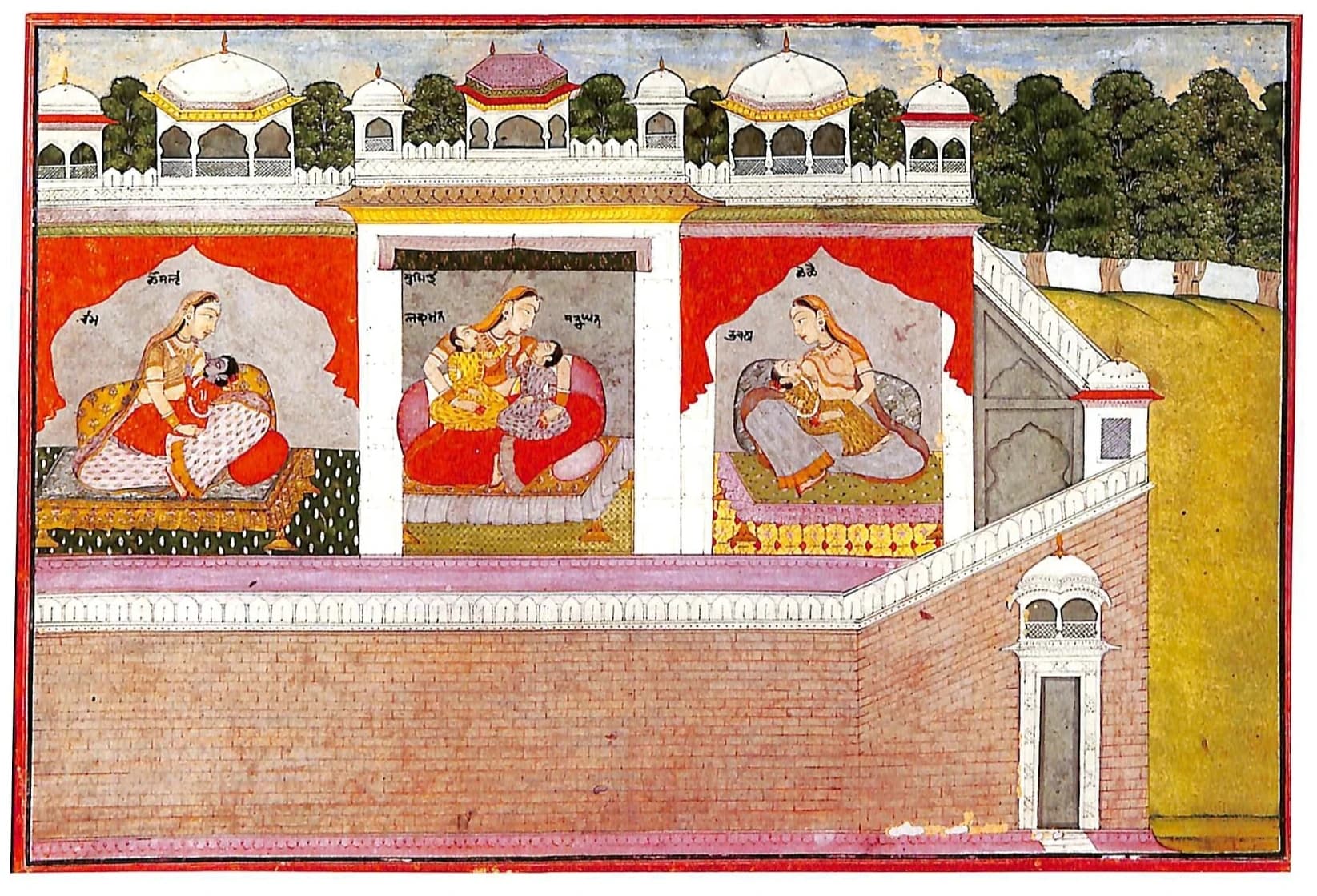
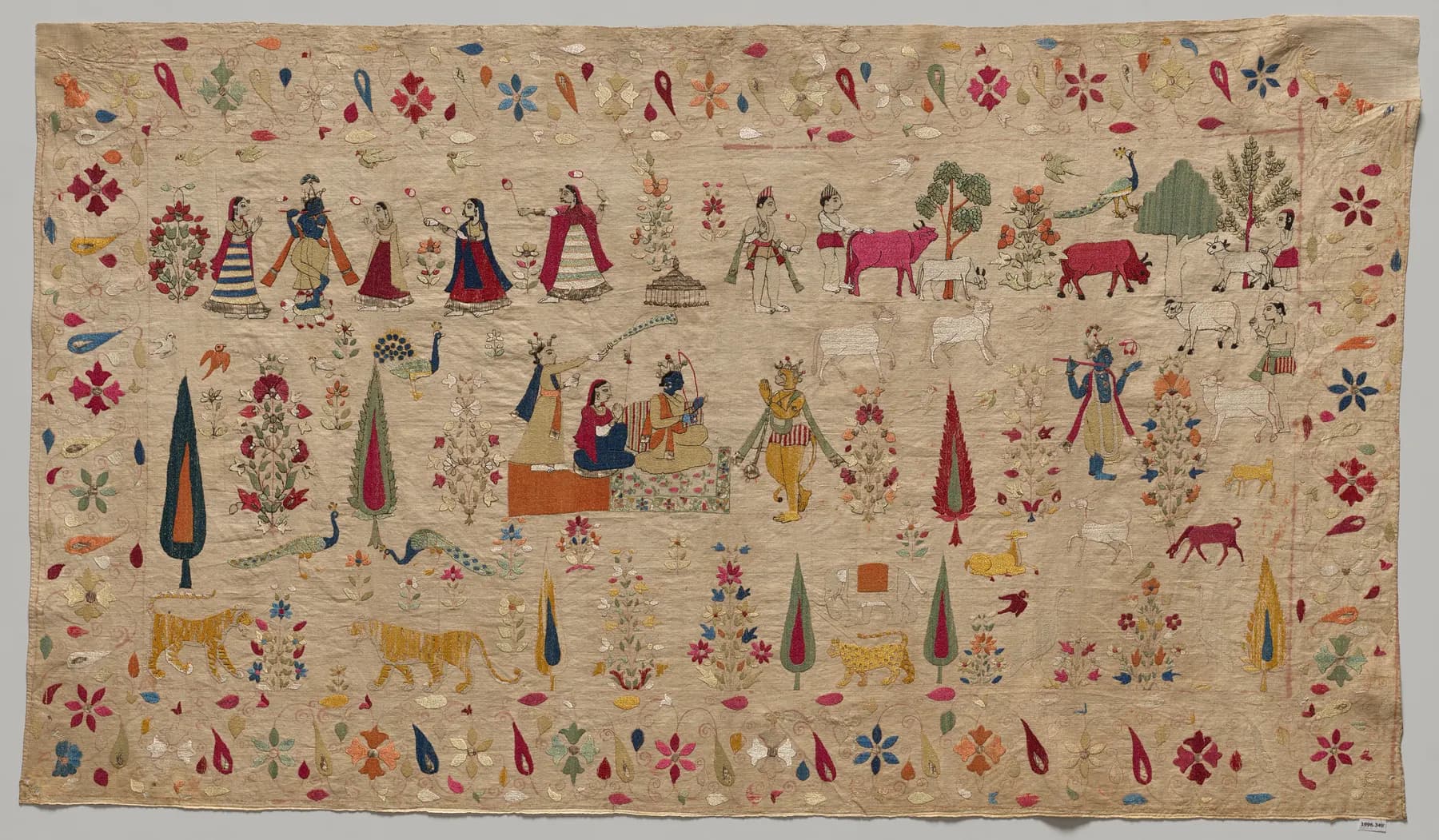
The temples, museum and embroidered rumals of Chamba give you several ways to spend time with the town's artistic heritage. In the museum, you can also compare a painted figure with one formed in silk stitches on a rumal.
Frequently asked questions
Are Ragamala paintings pictures of musical performances?
They can show musicians, but a performance is not necessary. People, animals, plants and acts of devotion can convey the feeling associated with a musical subject.
Can I see these three paintings at Bhuri Singh Museum?
No. The prince and buffalo paintings are in the Metropolitan Museum's loan collection, while the devotional painting belongs to Cleveland Museum of Art. Their collection records list them as not on view. They are reproduced or linked here to explain the tradition, not to advertise a current gallery display.
Artwork: Cleveland Museum of Art, Women worshiping a Shiva linga, accession 2018.87. Purchase and partial gift from the Catherine and Ralph Benkaim Collection; Severance and Greta Millikin Purchase Fund. CC0 open-access image, resized and converted to WebP for 2050 XP. The opening image is cropped; the full composition appears above.