McLeod Ganj - Tibetan Arts Above the Kangra Valley
By 2050 XP · · 4 min read
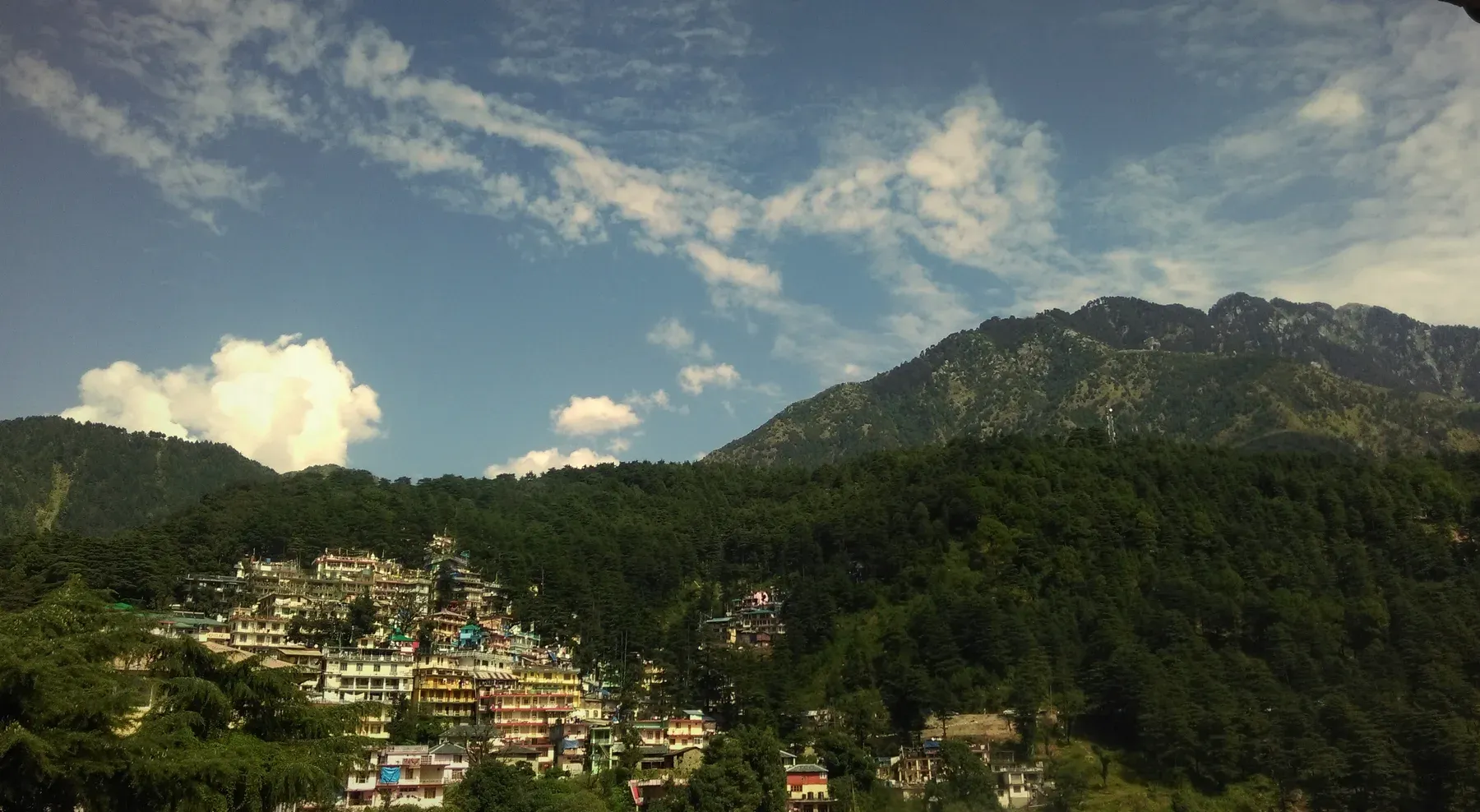
Photograph: Officialkt / Wikimedia Commons / CC BY-SA 4.0
McLeod Ganj is the hillside neighbourhood in upper Dharamshala where Tibetan cooking, worship and the arts are part of daily life. Temple Road leads from the main square towards the Main Temple. Elsewhere in the neighbourhood, students learn the singing and dance of Tibetan opera. Give the streets around the square time of their own, then choose which part of that wider cultural life you want to explore.
The streets around the main square
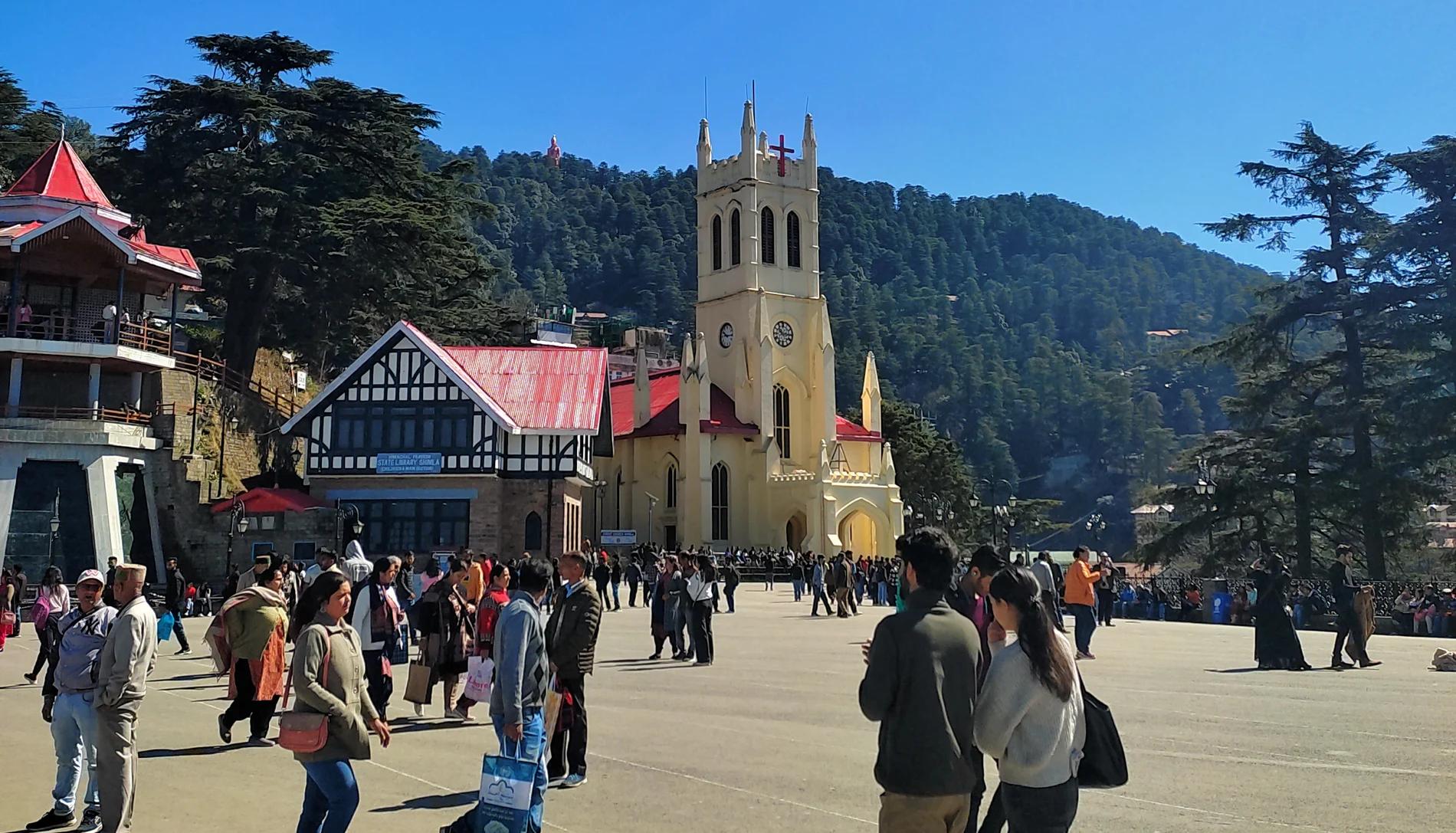
McLeod Ganj is built across a slope. At the main square, buildings crowd close to the road. The opening photograph shows how abruptly the houses give way to the woods above them. The square is a useful meeting point because several streets come together here, including the street towards Bhagsu and the one towards the Main Temple.
Temple Road gives you time to look at shopfronts and stop for a meal. If you see thukpa and thenthuk offered side by side, the noodles are what set the two bowls apart. A bowl of soup makes a good pause between the square and the temple. For help choosing the area where you will sleep, see where to stay for Tibetan food and Kangra art.
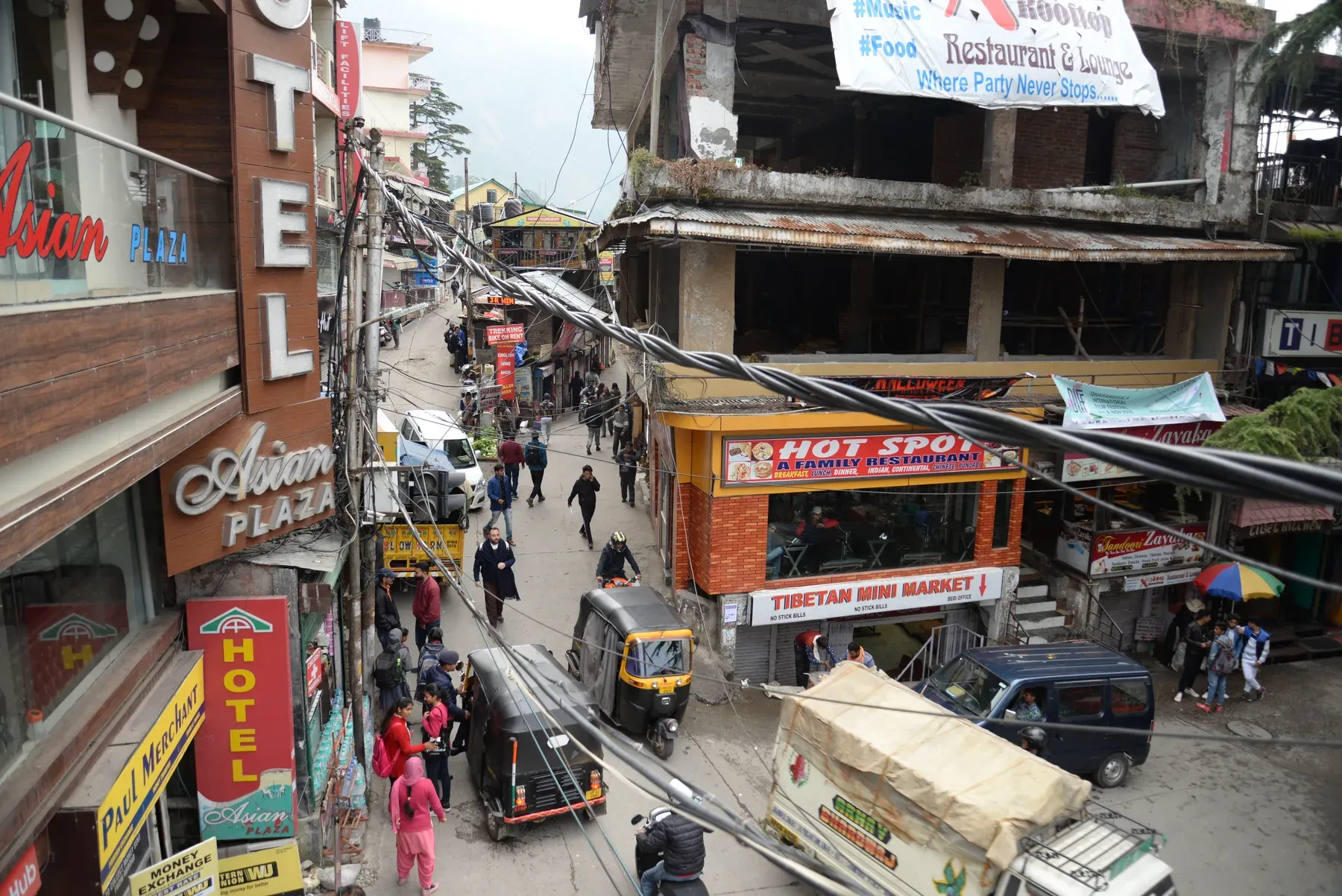
The buildings around McLeod Ganj's main square, looking along the road towards Bhagsu in November 2018.
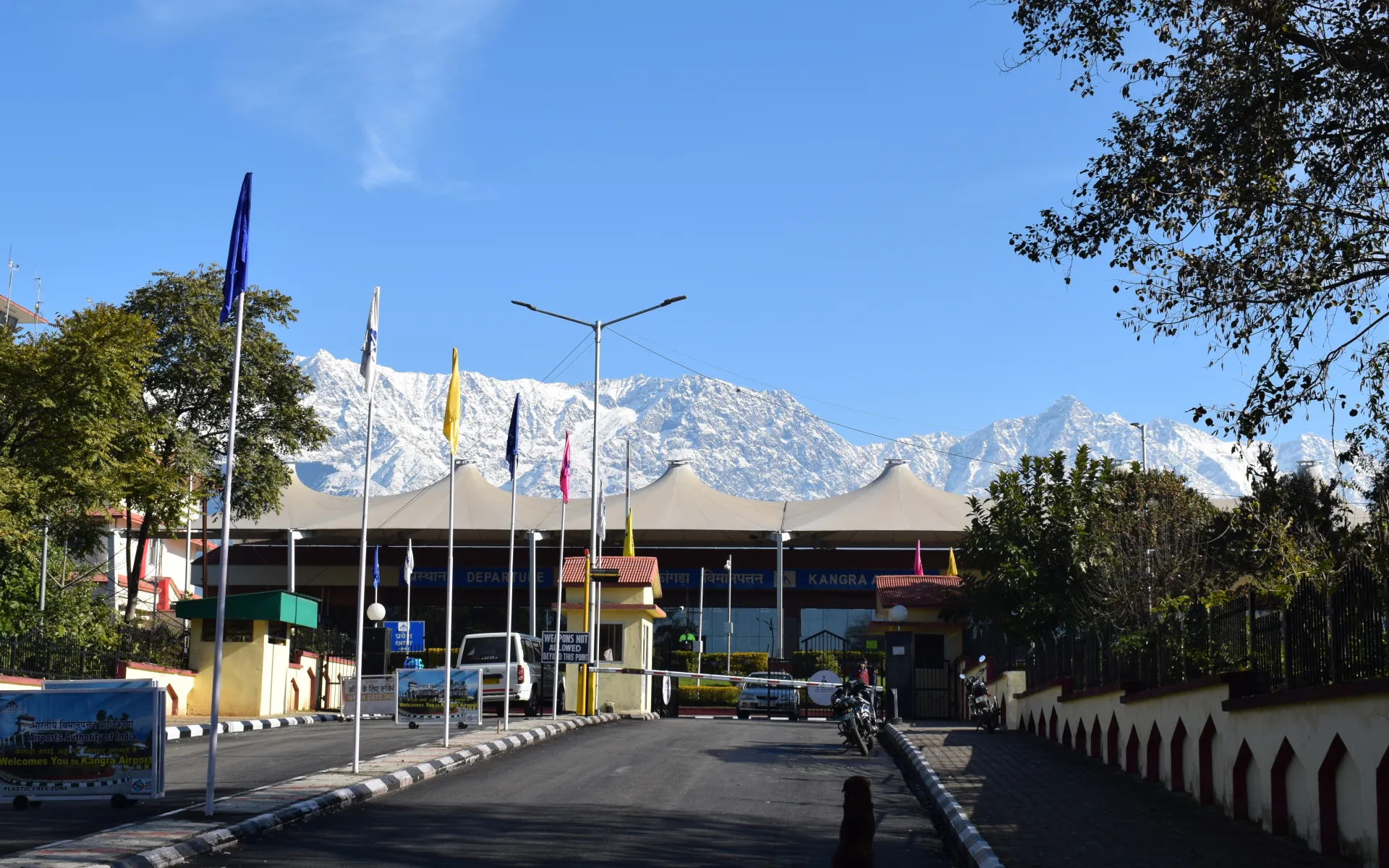
If your visit starts with a flight into Gaggal, plan the ride and the last stretch to your room before you set out with bags. The square is good for getting your bearings once you've put them down.
The Tibetan arts that took root here
In April 1960, His Holiness the 14th Dalai Lama arrived in Dharamshala and settled at Swarg Ashram above McLeod Ganj. The Tibetan community developed institutions that helped pass on language, religion and the arts while living away from Tibet. The Main Temple became a landmark for that community. Just as important to the story of the town is the work of teaching new generations.
At the Tibetan Institute of Performing Arts, students learn music and dances from different regions of Tibet. The institute was founded in 1959 in Kalimpong and is now based in McLeod Ganj. Its opera brings singing, dance and dialogue into the same performance. Costume makers support that work, making elaborate outfits for shows such as the Shoton opera festival. If a performance features in your visit, leave time to watch how the performers use their dress and movement to tell the story.
Two places to see a different side of Dharamshala
The Tibet Museum first opened to visitors at the Main Temple complex in 2000. Its newer home opened in 2022 at Gangchen Kyishong, near the Library of Tibetan Works and Archives. That history explains why an old map and the museum's own address may send you to different places. Give the museum its own visit if you want time with the photographs and personal accounts. The Tibet Museum and Norbulingka outing explains what you can see at both.
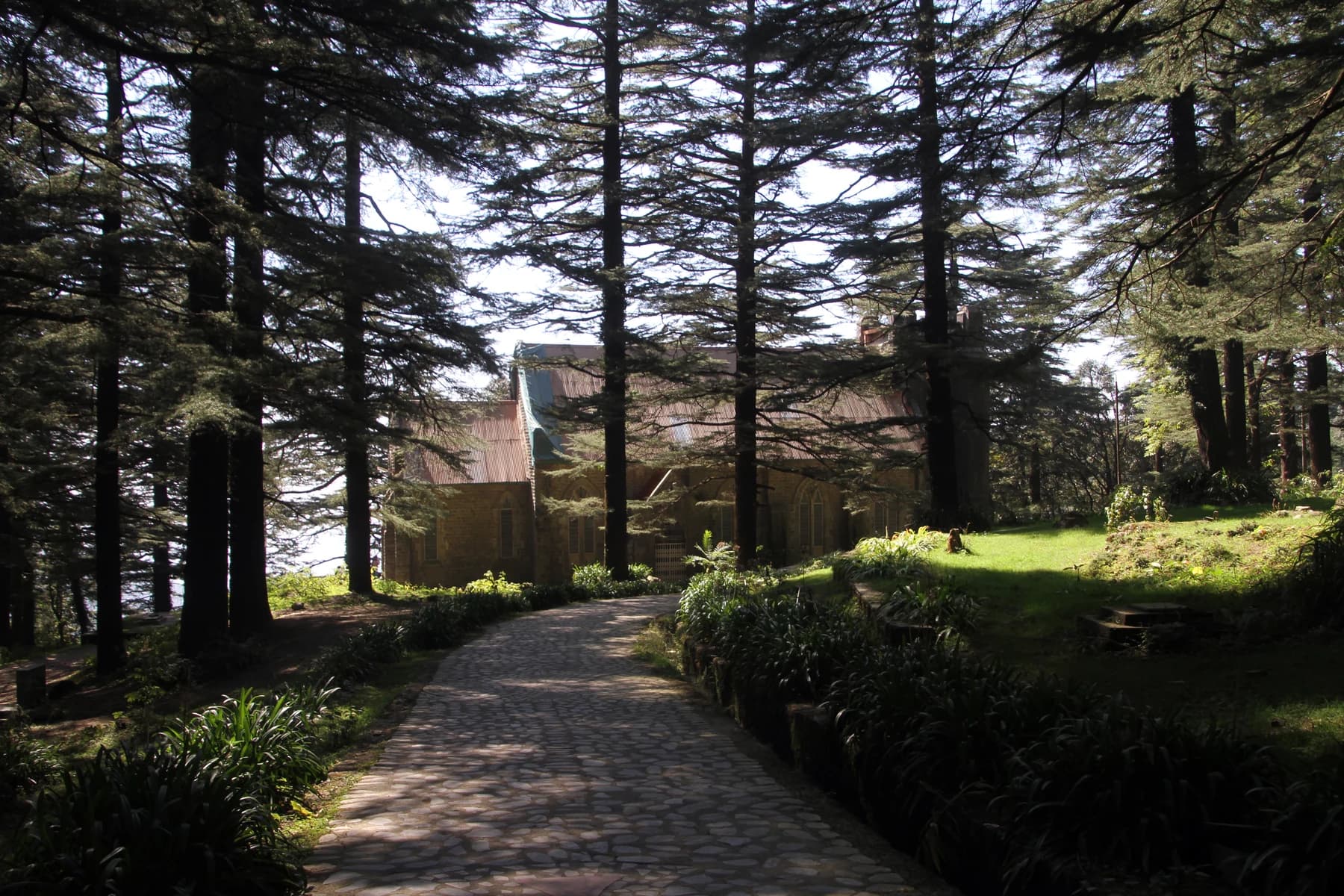
At the wooded edge towards Forsyth Ganj, St John in the Wilderness gives you a glimpse of an earlier chapter of the hill town. Its stone walls sit among deodars, and two tall stained-glass panels frame the church's interior. It is a worthwhile separate stop if you would like to see how different the surroundings become away from the square.
Frequently asked questions
Which address should I use for the Tibet Museum?
Use The Tibet Museum, Gangchen Kyishong, Dharamshala for the exhibitions. Use Main Temple, Temple Road, McLeod Ganj when you mean the temple complex.
Is McLeod Ganj worth visiting without a trek?
Yes. Give yourself time around the square and Temple Road, then choose the Tibetan history at the museum or the church and its wooded setting. Those places tell you different parts of Dharamshala's story.
Photographs: McLeod Ganj on its hillside by Officialkt, 27 September 2015, and McLeod Ganj's main square by Wojciech Kocot, 2 November 2018. Resized and converted to WebP. The opening photograph is cropped. The originals and adaptations are available under CC BY-SA 4.0.