A Day for the Tibet Museum and Norbulingka in Dharamshala
By 2050 XP · · 5 min read
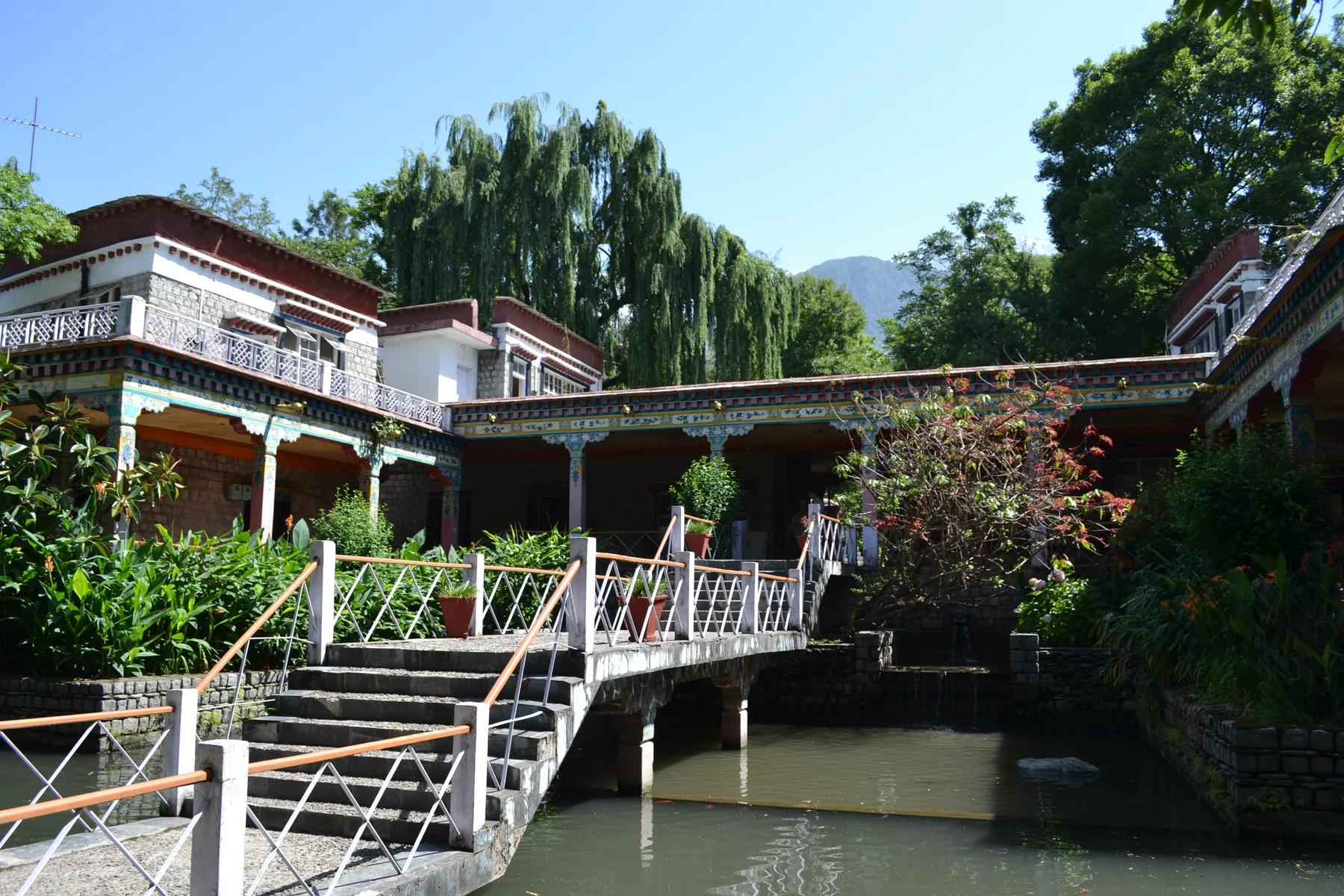
Photograph: Japleenpasricha / CC BY-SA 4.0
You can give the Tibet Museum a morning and continue to Norbulingka Institute in the afternoon for a full cultural day in Dharamshala. The museum is at Gangchen Kyishong, below McLeod Ganj; Norbulingka is a separate institution in Sidhpur. Allow a road journey between them and choose a day when the museum is open.
The two visits complement each other. The museum tells Tibetan stories through objects, photographs and personal accounts. At Norbulingka, painting, sewing, carving and metalwork show how artistic traditions are being passed on. Keeping the day to these two places leaves room to read, look closely and pause over what interests you.
Choose the day before choosing the stops
The Tibet Museum's lunch break makes a morning visit the simplest starting point. Its normal hours are 9 am to 5 pm, with a closure from 1 to 2 pm. It is closed on Saturdays, as well as Tibetan festivals and other listed holidays. Check the museum's visitor calendar when choosing your date.
For Norbulingka, distinguish time in the gardens and visitor areas from time watching a particular craft. A campus opening does not mean every studio is working that day. If seeing a specific craft is the main reason for going, establish that arrangement with the institute before settling the date.
An unhurried day could look like this:
- 9:30 am to noon or 12:30 pm: Tibet Museum, allowing time to read and follow the displays.
- Lunch, then the road journey: keep the middle of the day free for a meal and the move to Sidhpur.
- Early afternoon to around 4:30 pm: Norbulingka, choosing the studios and visitor areas available that day, with time for the temple, doll museum or gardens.
Add your journey from and back to your accommodation separately. If you only have a half-day, choose the institution that interests you more instead of halving both visits.
Give the Tibet Museum time to tell its stories
The museum's permanent exhibition follows Tibetan culture, history and life in exile through objects, documents, photographs, film and personal testimony. It tells these stories through Tibetan voices, moving between the lives of individuals and the experience of a wider community.
Begin with the material on culture: dress, food, religion and literature. Then follow the historical displays and the sections on His Holiness the 14th Dalai Lama, leaving time for the accounts of journeys out of Tibet and the rebuilding of communities in exile. Some of these are difficult stories. There is no need to hurry through them to reach the next stop.
An object and a personal account can illuminate one another. Read who owned or donated something and why it matters, then consider the story beside it. That gives you more to follow than the date of an event alone.
The museum is on the second floor of the T-Building, near the Library of Tibetan Works and Archives. If steps or access to an upper floor would affect your visit, ask the museum about the actual arrangements beforehand. Do not assume that its location within an administrative campus describes the entrance you will use.
Continue by road to Sidhpur
From the Tibet Museum at Gangchen Kyishong to Norbulingka's entrance in Sidhpur, the road journey is about 8.7 km via Dharamshala-Palampur Road. Allow 30 to 45 minutes for the move by car, including finding your vehicle and reaching the entrance. Traffic and pickup arrangements can add time.
Arrange the drive from the Tibet Museum to Norbulingka with pickup at the museum and a drop at the institute's entrance. The driving allowance is for a car; using local buses would need a different plan, with time for connections and waiting.
Look for the work behind Norbulingka's finished art
At Norbulingka, start with a craft you would like to understand. A thangka is a Tibetan Buddhist religious image, often painted, but it can also be assembled from silk. Woodcarving and statue-making involve different materials and tools again.
If a studio is open to visitors, follow one part of the process instead of trying to see every department. A drawn outline, a piece of coloured silk or the spaces cut into a wooden design can help you understand the finished work. Our article on Tibetan craft at Norbulingka explains those processes in more detail.
The Deden Tsuklagkhang Temple brings several of the institute's arts together. Its Buddha statue was made by the statue-making team, while painters created the murals. Looking at the completed work after a studio visit gives the materials and techniques a setting and a purpose. This is also a place of worship, so leave space for prayer and follow the instructions for visitors.
The Losel Doll Museum offers another way into Tibetan culture through dress. Its figures represent regional clothing as well as official, monastic and opera costumes. Compare the clothing in its different settings rather than expecting one outfit to stand for every Tibetan community.
Leave some of the afternoon for the water gardens, too. You do not have to turn every part of the campus into another scheduled stop.
If you want to make something, change the plan
Norbulingka's practical art workshops start at one day, with longer study also available. Taking a course is a different commitment from watching work during a visit. It needs its own arrangements with the institute and does not fit as an automatic extra after a museum morning.
If learning a craft is your priority, give Norbulingka that day and visit the Tibet Museum on another open morning. If you mainly want to understand what you are seeing, keep the two-stop plan and enjoy the distinction between the museum's stories and the institute's work.
For choosing your room around a longer stay, our Dharamshala and McLeod Ganj stay guide considers the upper and lower town separately. You can keep the same room for this outing; the two visits do not require an accommodation move.
Frequently asked questions
Can we follow this plan on a Saturday?
The Tibet Museum is closed on Saturdays. Choose another open day for the combined visit. Norbulingka has its own visitor and studio arrangements, so do not transfer the museum's weekly calendar to the institute.
Is the Tibet Museum the same as Kangra Art Museum?
No. The Tibet Museum is at Gangchen Kyishong and focuses on Tibetan history and culture. Kangra Art Museum in Kotwali Bazaar is a separate regional collection with miniature paintings and other objects. Use the full museum name when arranging your drop.
Can we book a practical workshop and see both places in one day?
Norbulingka's practical workshops begin at one day, so allow a separate day if you want to study a craft. The afternoon in this plan is for a visit, not an included lesson or a guaranteed demonstration.
Photograph: Norbulingka Institute's water garden by Japleenpasricha, taken on 2 June 2014. Resized and converted to WebP for 2050 XP; the header is cropped to fit the screen. The photograph and this adaptation are available under CC BY-SA 4.0. It shows Norbulingka, not the Tibet Museum.