Seeing Masroor's Temples from the Sacred Pool
By 2050 XP · · 3 min read
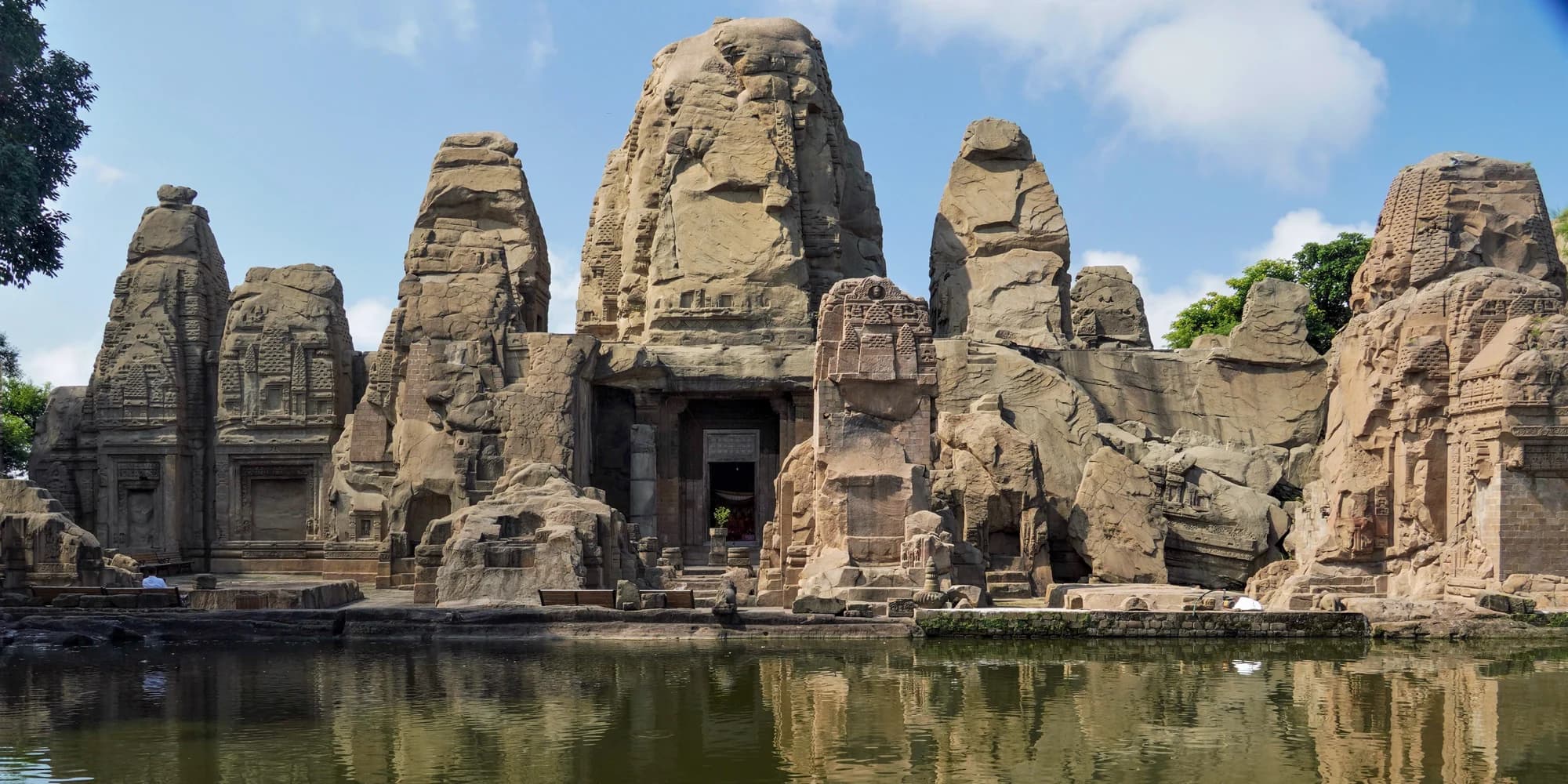
Photograph: Dhruvaeng; edited by UnpetitproleX / CC BY-SA 4.0
Start on the far side of the sacred pool at Masroor. From there you can see the tallest temple tower, its smaller neighbours and the rock they share. The Hindu temples stand in Masroor village in Kangra district, where sculptors cut the shrines and towers from a sandstone outcrop. The main shrine houses Lord Rama, Goddess Sita and Lord Lakshmana.
Read the row of towers from across the pool
The tall central tower, or shikhara, gives you a point to start from. The smaller towers narrow as they rise too, repeating the central shape. This is part of the North Indian Nagara tradition of temple architecture. The view across the water lets you see the towers together before the doorway carvings draw your eye down.
The builders cleared away rock around the shrines to leave the temple group standing out from the hillside. Try following the exposed rock below the towers with your eye. Broad surfaces give way to the small ledges and bands that shape a shrine. The contrast helps explain why the towers read as separate buildings from across the pool even though they were carved from the same outcrop.
Look for a doorway with solid stone behind it
A finished-looking frame does not always lead to a room. At some of the subsidiary shrines, carvings decorate the stone around the opening, but the space behind was never fully excavated. Look at both the decorated frame and the depth behind it. That pairing makes it easier to imagine how the carvers worked and how much was still left to take out.
Other gaps come from things that have been lost. In front of the main shrine stood a pillared hall whose roof is missing. The main doorway now faces the open space where that roof once stood. You cannot tell from every broken edge whether it was left unfinished or damaged later. The contrast between a carved frame with solid rock behind it and the missing hall roof is a better clue.
Pause at the main shrine
Notice the floral carving and figures around the main doorway, including the figure of Lord Shiva above it. Inside, the worship of Lord Rama, Goddess Sita and Lord Lakshmana continues. Give worshippers room, and check the arrangements at the entrance before entering or taking an interior photograph. From the public visitor spaces you can still see how the doorway, central tower and pool sit in line.
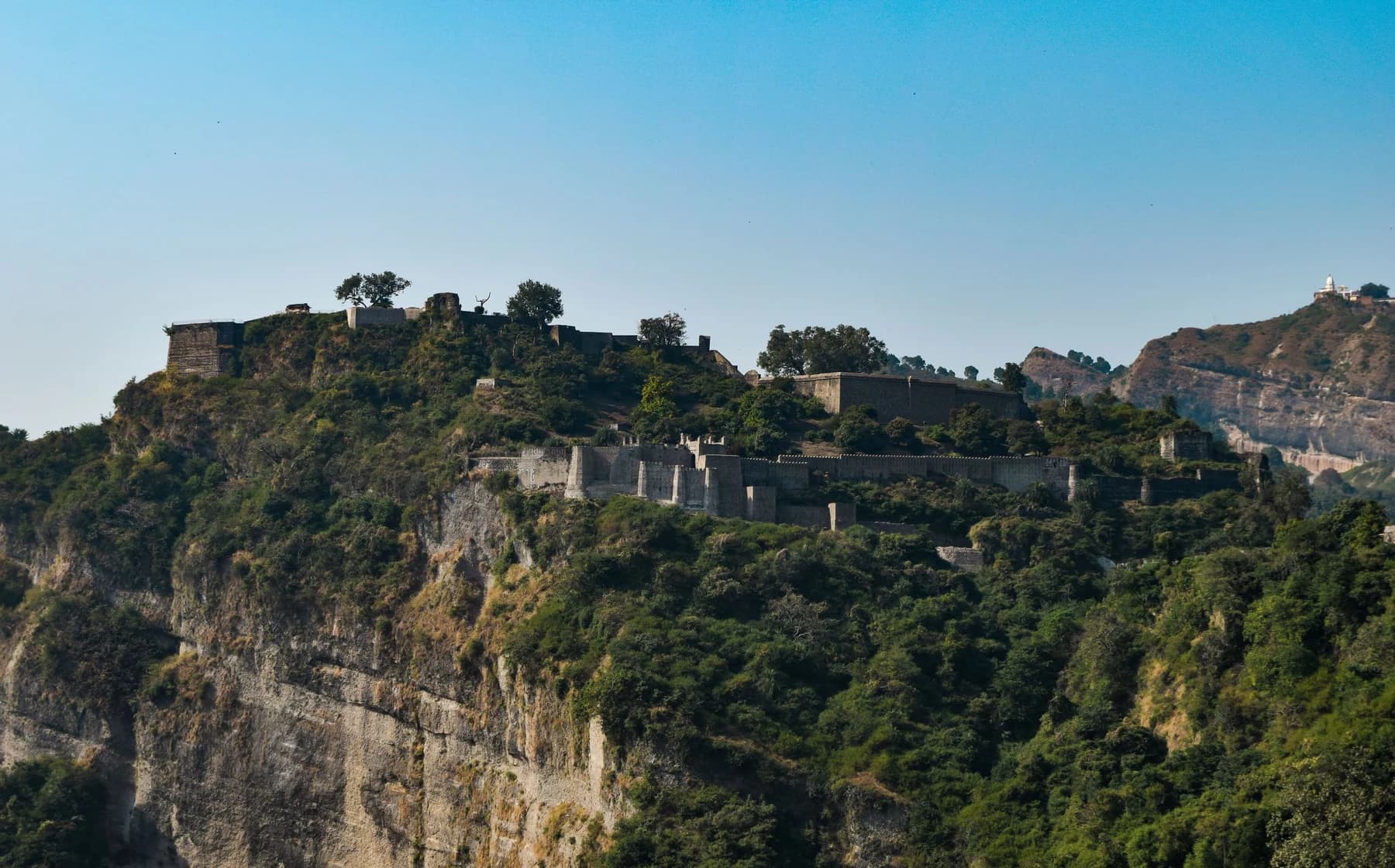
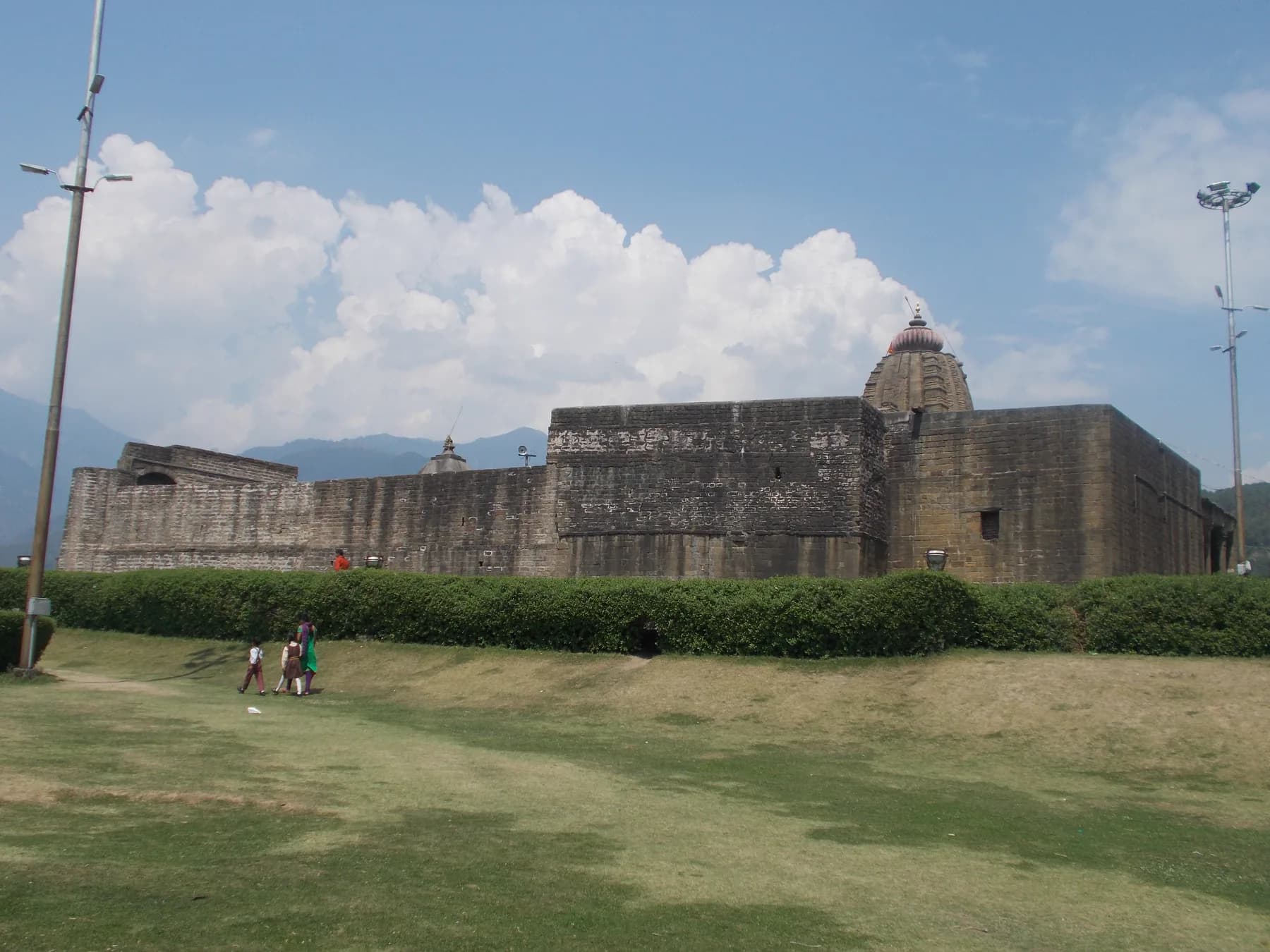
For another visit in the district, Baijnath Shiva Temple has a pillared hall that survives, giving you a useful point of comparison. If you are based in Dharamshala, Kangra Fort and Masroor can share a full day with time for separate visits and the road between them.
Frequently asked questions
What does rock-cut mean at Masroor?
The sculptors removed stone from the outcrop to shape the buildings and open up rooms. Look where the towers meet the rock below them. You can see how the shrines stand out from the rock they were made from.
Is the reflection the main reason to visit?
The pool is useful even when the water is moving. It gives you room to see the central tower and the smaller shrines in one view. The photograph shows the pool in September 2021, when the surface was still enough to reflect much of the facade.
Photograph: Full view of Masroor temple by Dhruvaeng, taken on 18 September 2021. UnpetitproleX corrected the tilt and adjusted shadows in the source revision. Resized and converted to WebP for 2050 XP; the opening view is cropped to fit the page. The photograph and this adaptation are shared under CC BY-SA 4.0.