Kangra Fort from Its Gates to the Temple Courtyard
By 2050 XP · · 4 min read
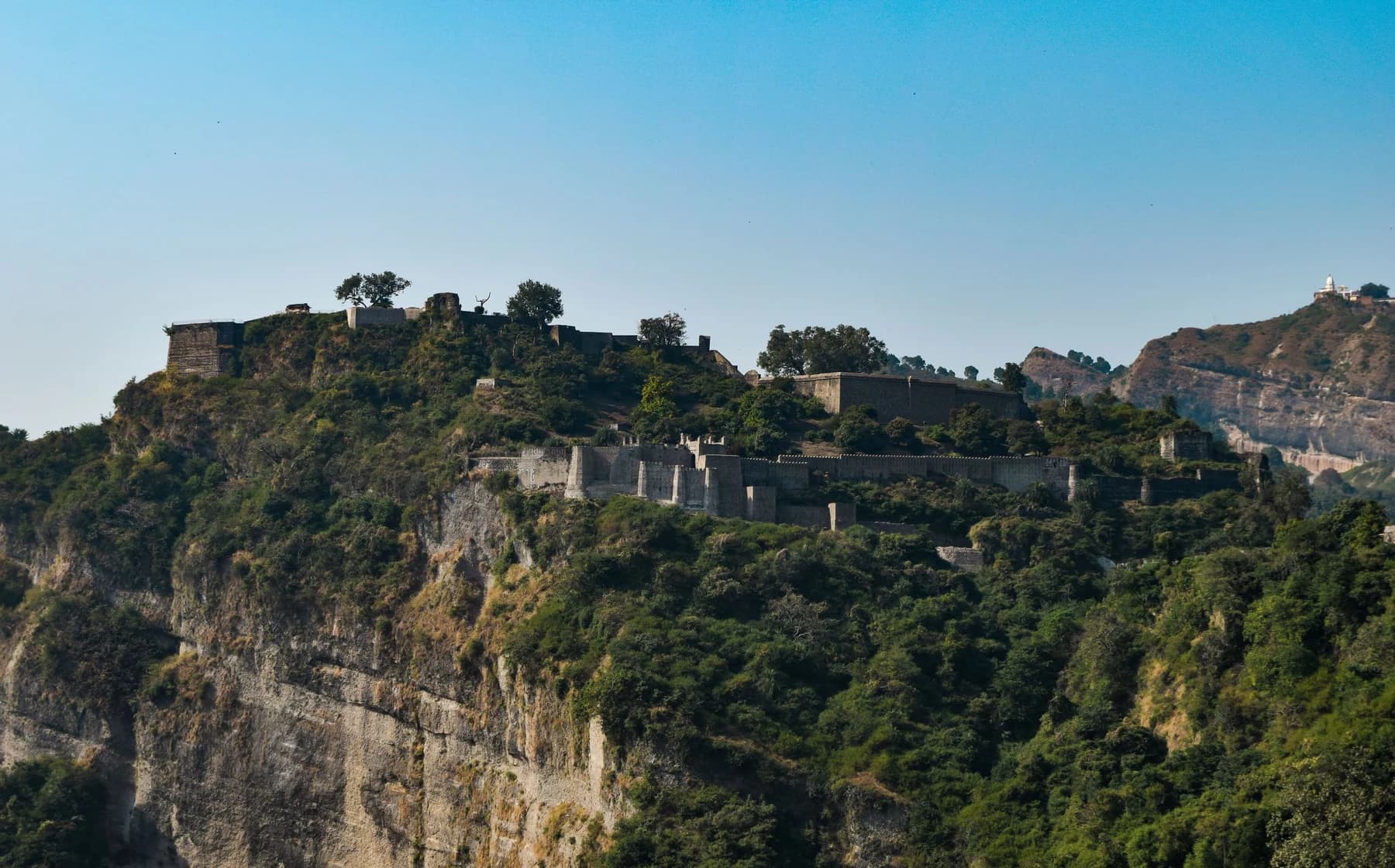
Photograph: Ajay Kumar / Wikimedia Commons / CC BY-SA 4.0
Kangra Fort in Old Kangra takes you through defensive gateways to a courtyard of Hindu and Jain shrines. Its walls, guard spaces and carved temple entrances tell different parts of the story. The fort protected a seat of power, but it also enclosed places of worship.
The visit makes more sense when you look for that change of purpose. Lower down, the gateways control a passage through the walls. At the sacred courtyard, carved figures give an entrance a different meaning.
For the rebuilt shrine and the streets where people buy offerings, leave time for Kangra's temple bazaar in town.
Follow the gateways through the fort
The approach begins at Ranjit Singh Darwaza, followed by Ahni and Amiri Darwazas, then Jahangiri Darwaza. Darwaza means gate. These names help you follow the fort's different entrances without having to memorise a long list of rulers.
They also preserve signs of changes in control. Ranjit Singh's entrance bears a Gurmukhi inscription naming the Sikh ruler. The Ahni and Amiri gateways belong to the Mughal period, while Jahangiri Darwaza carries the emperor Jahangir's name.
Look at the spaces around a gateway as well as the opening itself. Guard chambers formed part of the Ahni and Amiri entrances. These were places where a passage could be watched and controlled, rather than decorative arches standing alone.
The changing levels matter too. Paths and steps connect the entrances, making this a walk through a hilltop complex. Use the visitor route marked at the site; the historical order of the gates does not mean every passage is open today.
Ganga and Yamuna mark a different entrance
At Darshani Darwaza, the carved figures flanking the entrance represent the river goddesses Ganga and Yamuna. Look below the figures for their accompanying creatures: Ganga is associated with a crocodile-like makara, while Yamuna appears with a tortoise.
Those small details help distinguish two damaged carvings that might otherwise be difficult to recognise. You are also moving towards a different part of the fort. This gateway leads to the sacred courtyard, where the attention shifts from guarded approaches to temples.
Spend time with the temple remains
The courtyard includes shrines dedicated to Lakshmi Narayan, Shitla Mata and Ambika Devi, alongside Jain shrines associated with Adinath. Religious buildings of more than one tradition occupied space within the fort's defences.
Some of the structures survive as ruins. At the Lakshmi Narayan temple, carved figures and floral details remain part of the stonework. A broken wall can still hold a carefully shaped panel or doorway; looking at one of those details gives you more to follow than the outline of the ruined building alone.
This is still a place with religious significance. Give worshippers space and follow the instructions at each shrine rather than treating the whole courtyard as an unrestricted archaeological display.
The earthquake changed what a visitor sees
The earthquake of 4 April 1905 severely damaged the fort, its temples and walls. A British garrison had occupied it before the earthquake; afterwards, its military use ended.
That history helps explain the contrast between the strong outer walls and the broken structures within them. The earthquake caused extensive damage long after the sieges and changes of rule that gave the gateways their names.
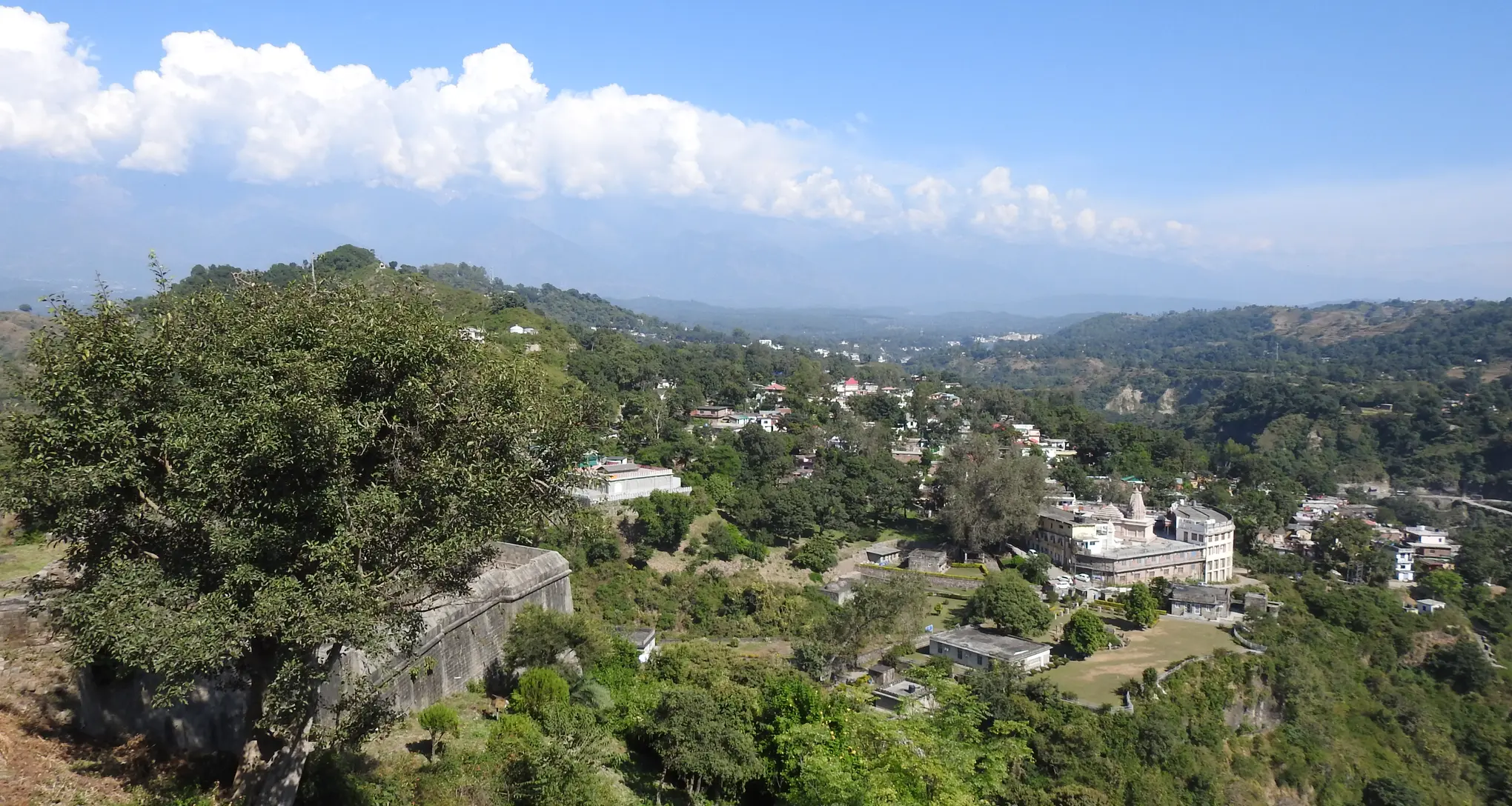
Look back at the fort's position as well as its buildings. The walls rise from a steep rocky hillside, with successive entrances and changes of level inside. Enjoy that setting from the designated visitor paths, without climbing damaged masonry for a view.
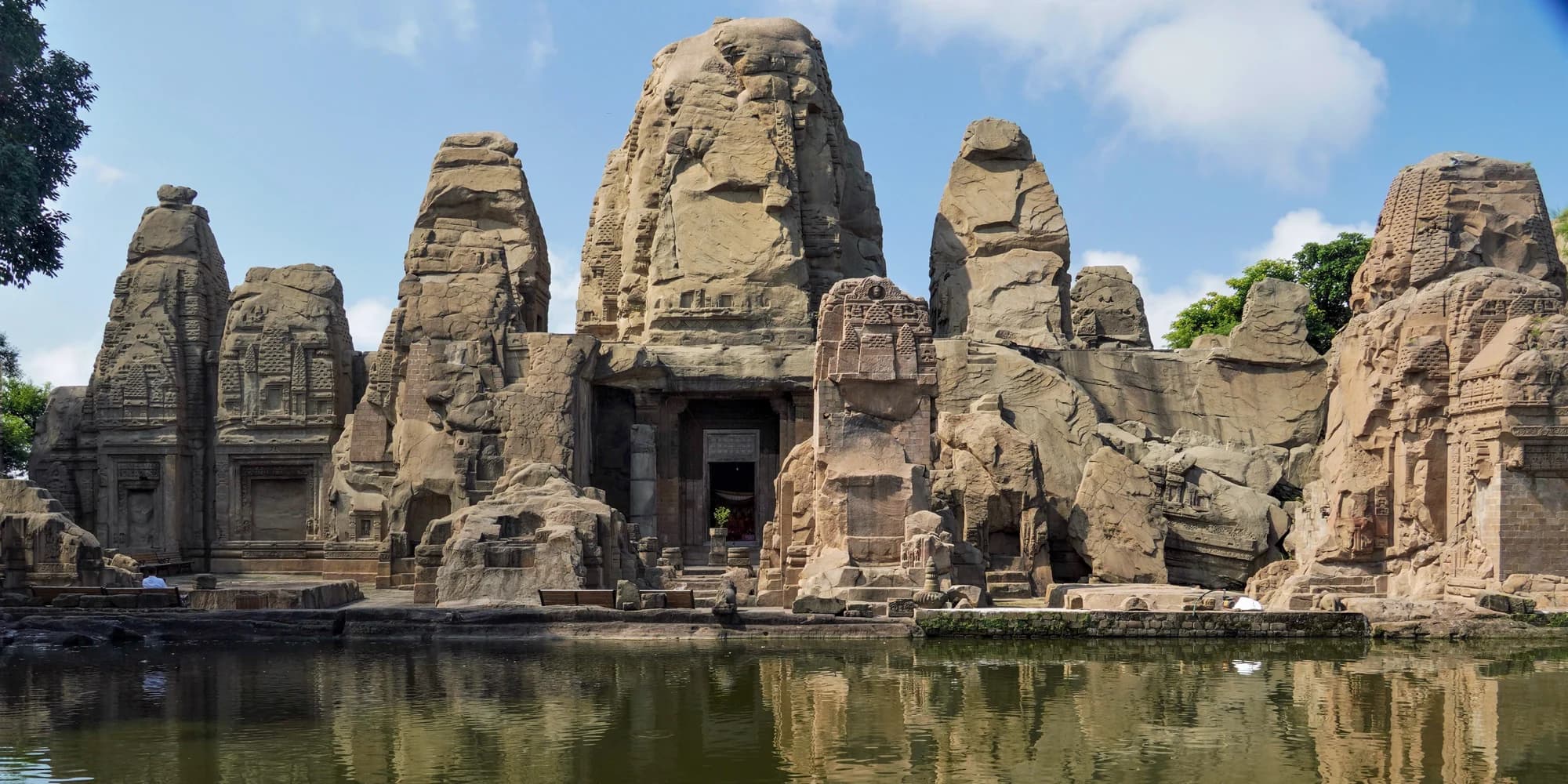
If you are based in Dharamshala, allow a full day to see the fort and Masroor together. The temples have towers cut from a rock outcrop, and there is a separate drive to reach them.
Frequently asked questions
Is Kangra Fort the same place as Kangra Art Museum?
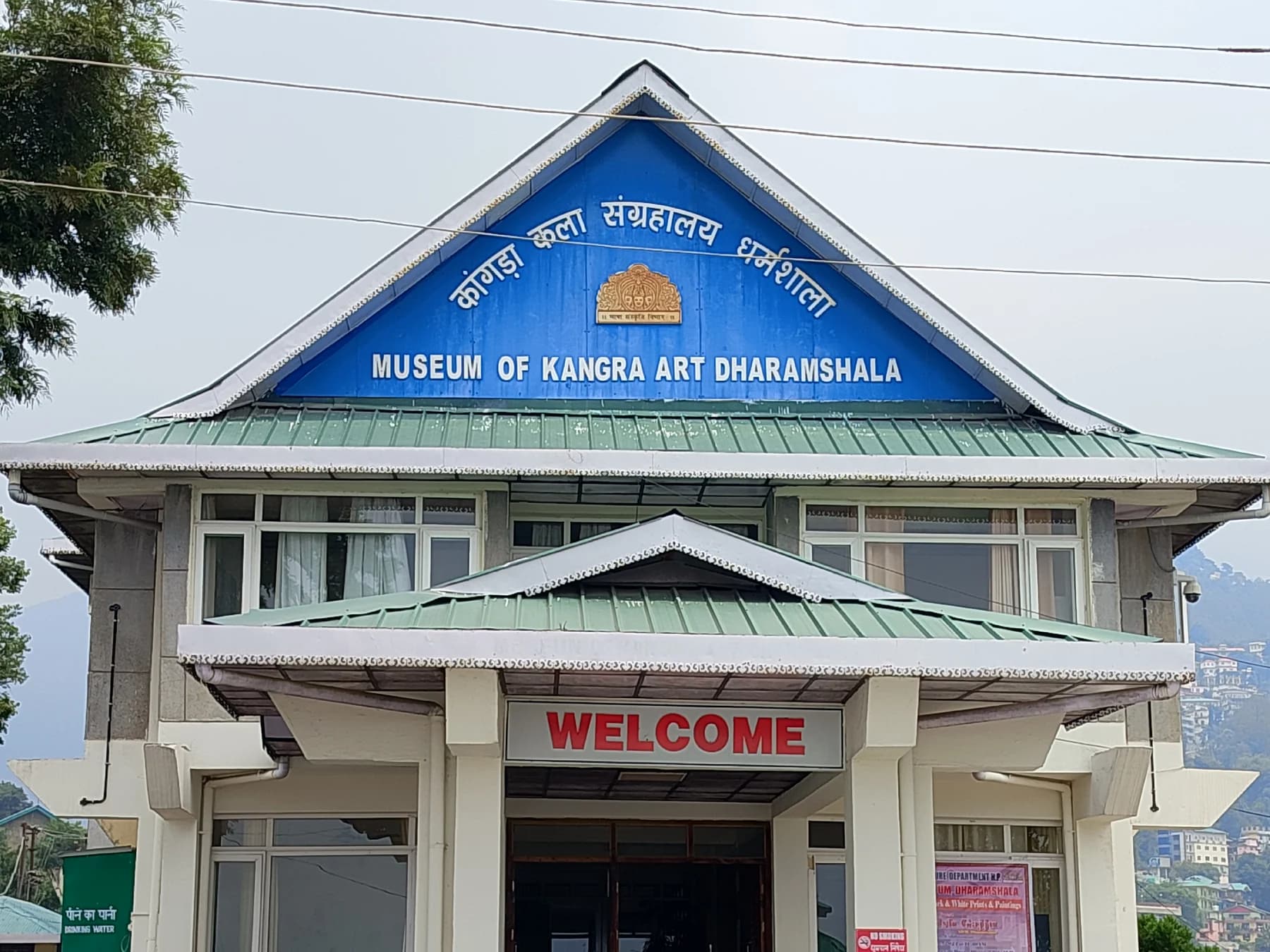
No. The fort is in Old Kangra. Kangra Art Museum is in Kotwali Bazaar, Dharamshala, and has miniature paintings, sculpture and regional craft.
Is there an intact palace to explore inside Kangra Fort?
No. The palace buildings are ruined. The visit centres on surviving gateways, walls and temple spaces, with paths and steps between levels.
Other heritage interests around Kangra
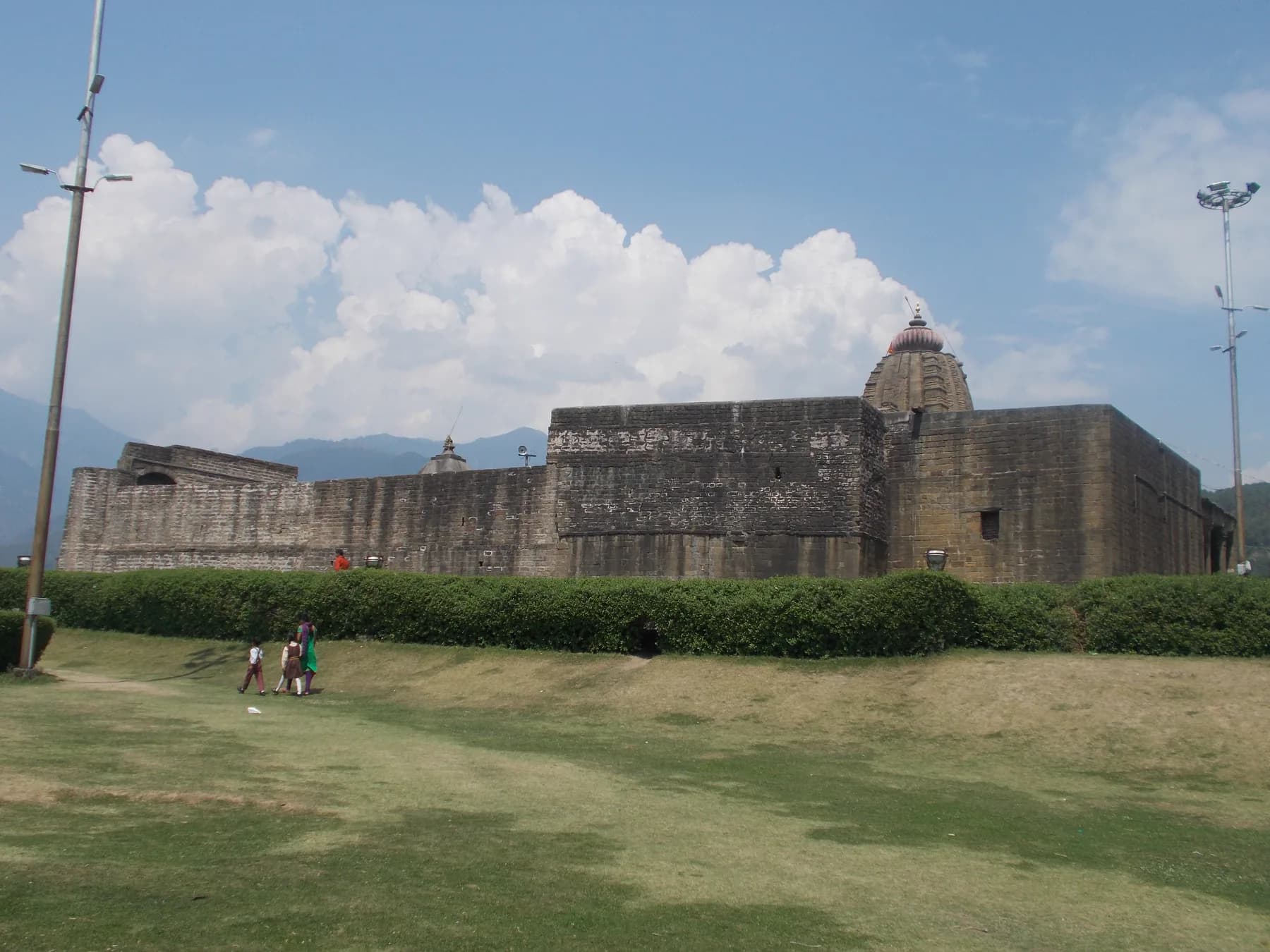
For a collection of paintings and regional objects, Kangra Art Museum in Dharamshala offers a different kind of visit. Baijnath Temple, in Baijnath town, centres on worship of Lord Shiva and carved stone architecture; it is a separate outing from the fort.
Check the current visiting arrangements with the Archaeological Survey of India before setting out. If steps are difficult for someone in your group, ask about the actual approach through the complex rather than assuming a hilltop ruin has a level visitor route.
Photograph: Kangra Fort View, Ajay Kumar, 28 October 2016. Resized and converted to WebP for 2050 XP; image shared under CC BY-SA 4.0.