Ask About the Wool Before Choosing a Kullu Shawl
By 2050 XP · · 3 min read
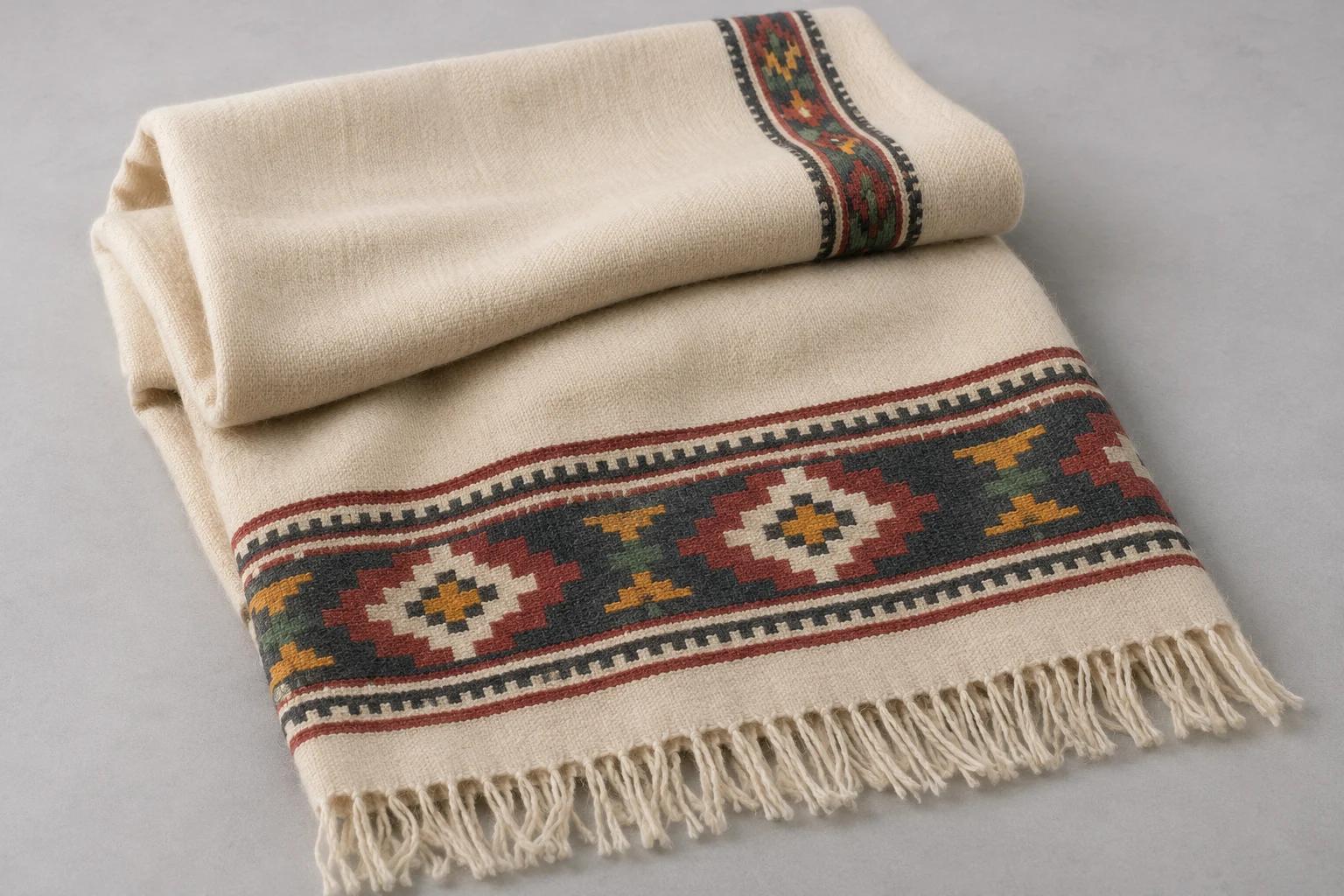
Illustration: 2050 XP / AI-generated textile illustration
When choosing a Kullu shawl, ask about its fibre composition as well as its pattern. Local wool, Merino, Angora, pashmina and blends can all enter the conversation, and the colourful border alone will not tell you which material you are holding. Keep the material, the maker and the way the cloth was woven as three separate questions.
Ask what the cloth contains
A shawl's regional name and its fibre composition tell you different things. Kullu's weaving includes several kinds of wool, while synthetic yarn and cotton also appear among the materials used. A familiar pattern does not establish that a piece is pure pashmina, pure sheep wool or any other single fibre.
Ask for the composition of the main cloth and the border. If the answer is a blend, ask which fibres are blended and in what proportions. For an item described as pashmina, find out whether that describes the whole shawl or one part of a blend before comparing it with another piece.
Keep the stated material details with the purchase. That gives you something more useful to refer to later than a remembered colour or a broad description such as soft wool.
Understand what the Handloom Mark tells you
The Handloom Mark is a Government of India scheme for identifying handwoven products. Its QR-coded labels help identify the producer. You can read more about the mark and its labels through the Textiles Committee's Handloom Mark information.
Keep the material description alongside that information. Handweaving describes how the cloth was woven; you will still want to know what fibres it contains and where it was made. Ask for the maker's name as well as the name of the shop or factory.
Open the shawl and look at its borders
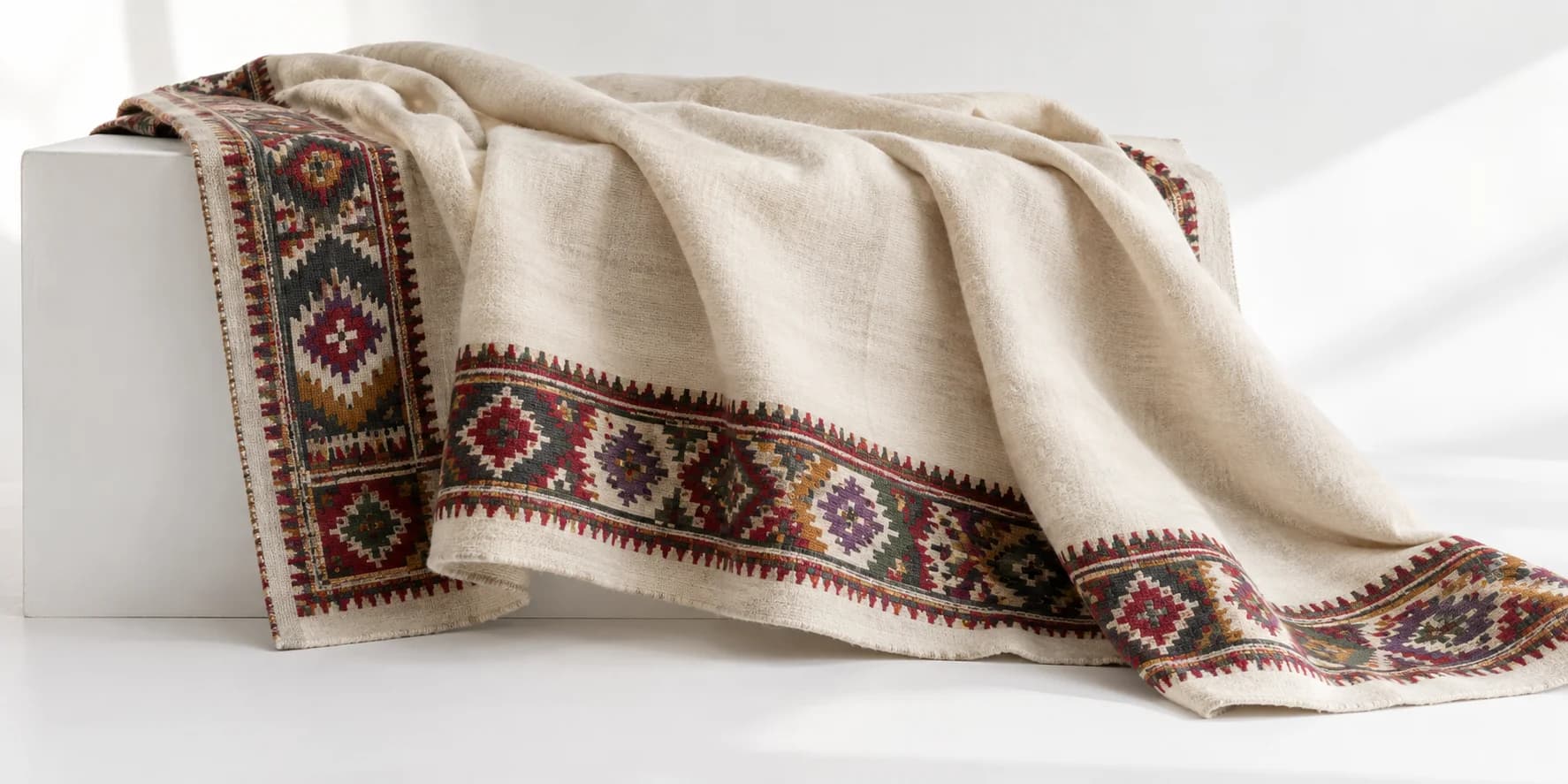
Take a moment to see the whole piece, with permission to unfold it. Look at the plain cloth, both ends, the edges and the fringe. Consider how much of the patterned section will remain visible when you wear it.
Kullu weaving includes more than one way of making and finishing borders. Decorative patti, meaning a narrow woven strip, can be made separately and stitched onto a larger piece. Dastkari Haat Samiti's account of weaving a Kullu shawl shows these strips alongside the wider weaving process.
Use the construction as a reason to ask how the piece was made. Turning it over is helpful, but a quick glance at the reverse cannot answer every question about its material, maker and origin.
Choose a garment you will actually wear
A shoulder shawl and Kullvi pattu are different garments, even when their patterned cloth looks related. Pattu is associated with a wrap worn around the body. If you want something to place over your shoulders, check the dimensions and how it drapes in that position.
For a gift, think about the recipient's preferred size and how they will care for it. Ask the maker or seller for care instructions for that particular material, and keep them with the fibre details.
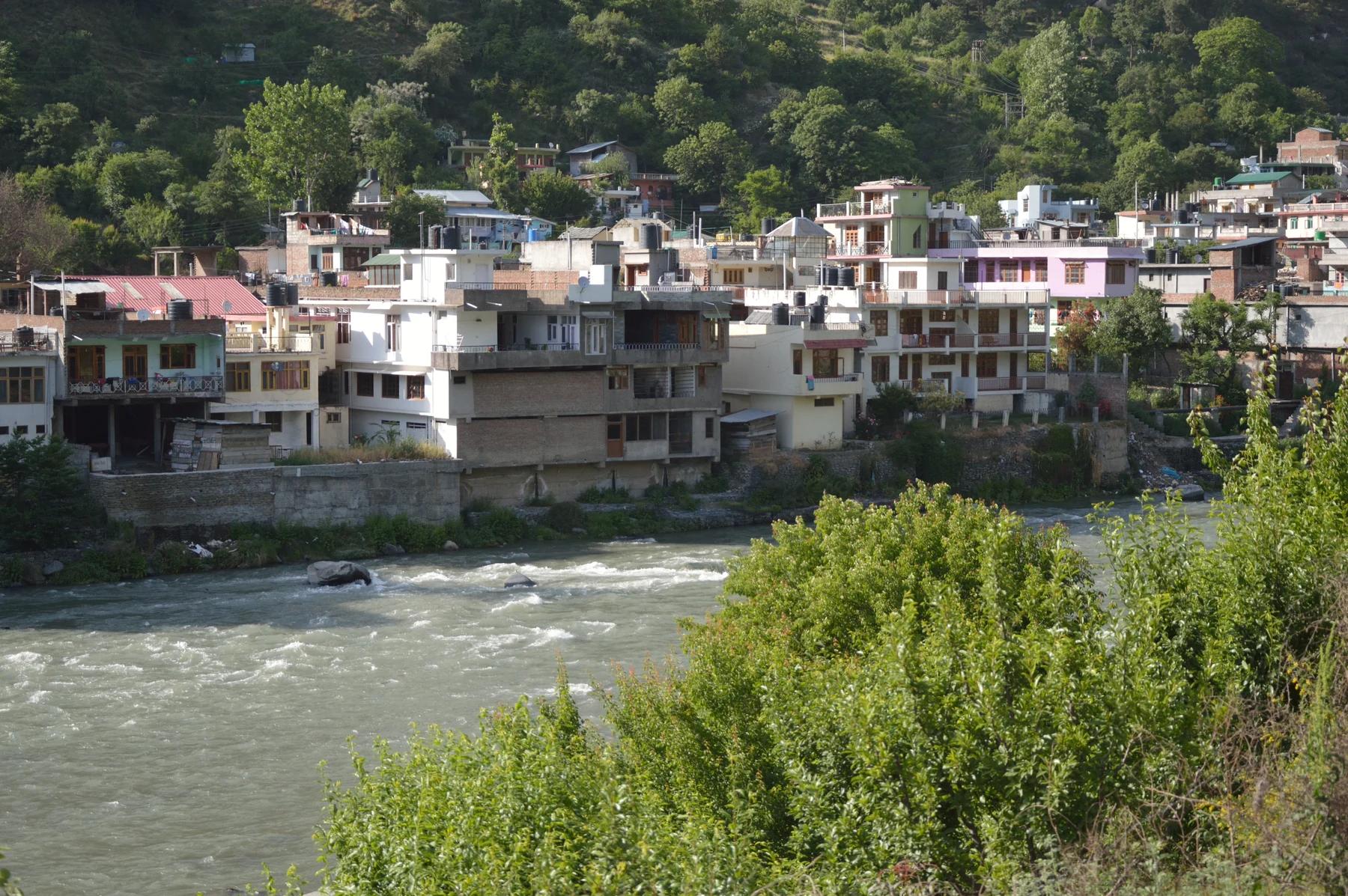
Explore Sultanpur and Dhalpur in Kullu if you would like to see more of the town.
Frequently asked questions
Are all Kullu shawls made from pashmina?
No. Kullu shawls use a range of materials, including different wools and blends. Ask for the composition of the individual piece rather than treating the name Kullu shawl as a statement that it is pashmina.
Does the Handloom Mark mean a shawl is pure wool?
The mark identifies handwoven products and its QR-coded label helps identify the producer. Read the material information separately to find out whether the piece contains pure wool or a blend.
Is pattu another name for a shoulder shawl?
Kullvi pattu refers to a traditional body wrap, while a shoulder shawl is worn differently. Ask which garment you are being shown and open it out to understand its size and intended use.
Illustration created for 2050 XP using AI image generation. It represents a folded shawl with a geometric border; it does not depict a verified product, maker or certification label.