Paintings and Copper Plates at Bhuri Singh Museum
By 2050 XP · · 3 min read
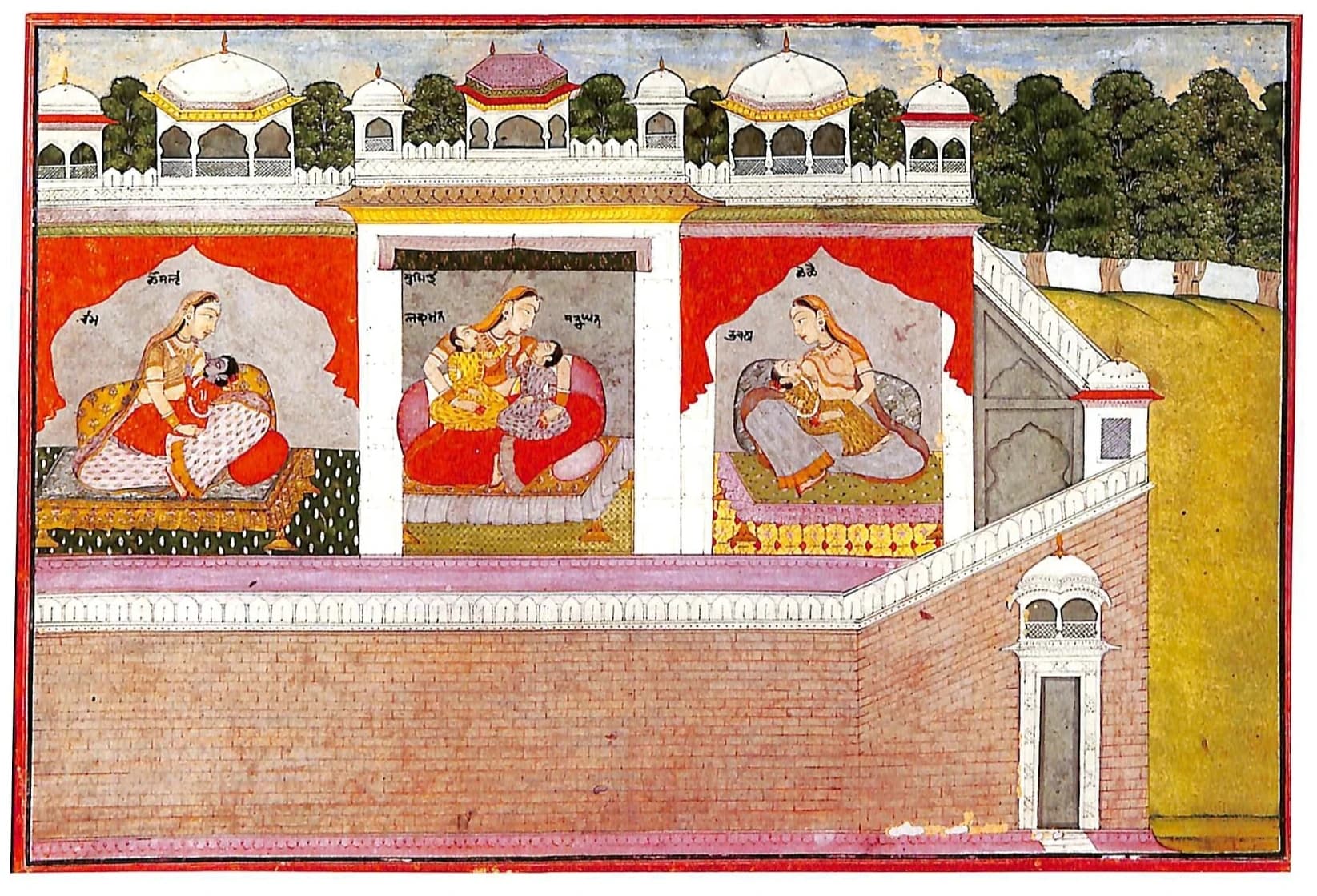
Illustration: Attributed to Laharu of Chamba / Bhuri Singh Museum, 1908 D.69 / public domain
Bhuri Singh Museum in Chamba town, Himachal Pradesh, is worth considering if you enjoy paintings and want to understand the history behind them. Its collection includes Pahari miniature paintings, copper plates inscribed with land grants and treaties, and embroidered Chamba rumals. Together, they show the art supported by Chamba's rulers and the written records of their administration.
You do not need to recognise every painting style or read an old script to enjoy the museum. Choose a painting to examine closely, then look for the explanation accompanying an inscription.
A museum that began with a royal collection
The museum opened in 1908 and takes its name from Raja Bhuri Singh, who donated his family's paintings. The scholar and archaeologist J. Ph. Vogel helped establish it after studying inscriptions across the former Chamba state.
That beginning helps explain the range of objects here. This is not only a painting collection: manuscripts, coins, carvings, sculpture and textiles also form part of the museum's holdings.
Look at the story inside a miniature painting
Pahari miniature painting developed in the hill states of the western Himalayas. Bhuri Singh Museum holds works associated with Basohli, Chamba, Guler and Kangra traditions, including subjects from the Ramayana and other devotional literature.
Begin with the painting's title. It gives you a subject to follow before you start identifying individual figures. Then notice how the artist arranges people, buildings and landscape within the small picture. A doorway, a garden wall or a change of background can separate one group from another.
The eighteenth-century Ramayana folio below depicts the birth of Lord Rama and his three brothers. Attributed to Laharu of Chamba, it belongs to Bhuri Singh Museum's collection. Three rooms hold the mothers and children; palace walls and trees surround them. Follow the repeated arches, then compare the different cushions and garments in each room.
Rama and his three Brothers are born, attributed to Laharu of Chamba, eighteenth century. Bhuri Singh Museum, accession 1908 D.69. This reproduction illustrates the collection; ask whether the original is on display when you visit.
Copper plates record land grants and treaties
The copper plates are historical documents, not dining plates. Writing inscribed on the metal records matters such as grants of land and treaties. Looking at them after the paintings introduces another part of Chamba's history: how rulers recorded decisions, rather than how artists represented a story.
Read the accompanying explanation for the date, the ruler's name and the purpose of the record. The collection includes inscriptions in Sharda and Takri scripts, as well as paper documents in Persian. You do not have to decipher the lettering yourself; understanding what a particular document records is a useful starting point.
Compare the paintings with Chamba rumal embroidery
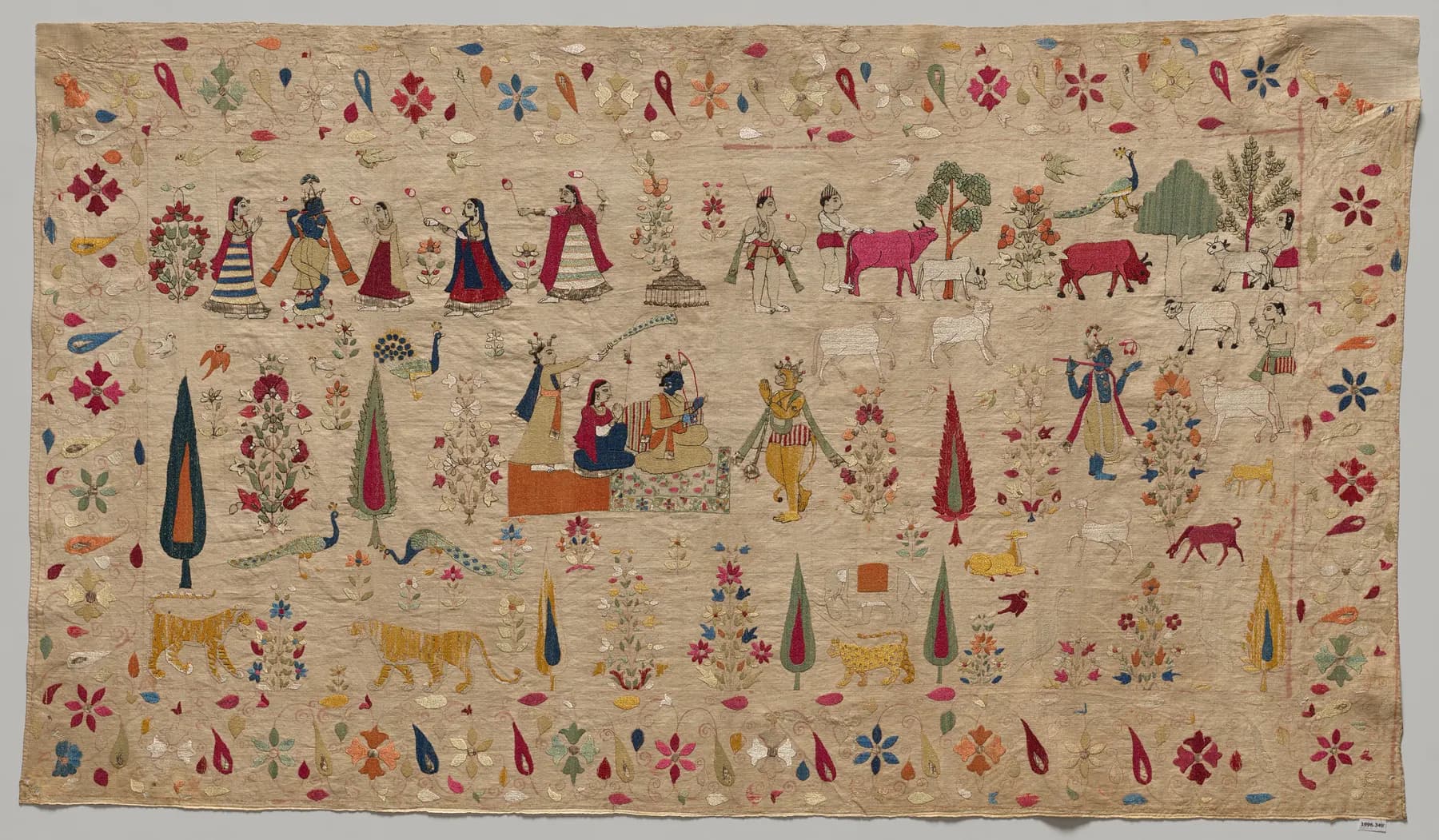
If rumals are on display, look for figures and floral details like those in the paintings. Pahari painters drew designs for these embroidered cloths, linking the two crafts. In a rumal, coloured silk stitches form the picture rather than paint on paper.
Our article on the double-sided embroidery of a Chamba rumal explains the stitching in more detail. Enjoy the side visible in its museum mount; a visit does not necessarily offer a view of the reverse.
Before visiting Bhuri Singh Museum
Check visiting arrangements with Bhuri Singh Museum before setting out, especially if there is a particular painting or textile you hope to see. A work belonging to the collection may not be on display. Ask about photography before taking pictures inside.
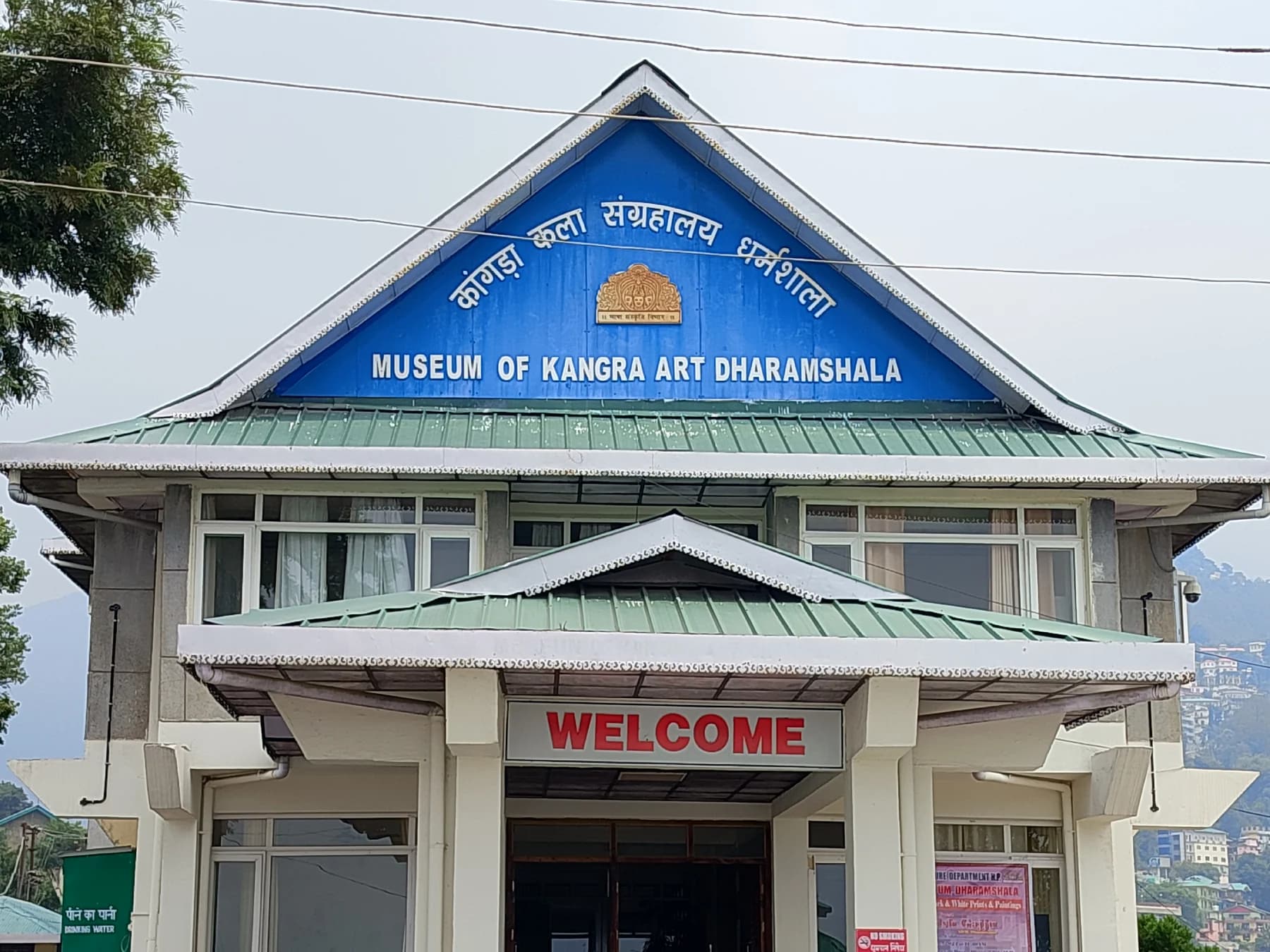
For a separate visit in Dharamshala, Kangra Art Museum's miniature paintings offer another introduction to Pahari art. That museum is not in Chamba town.
Artwork: attributed to Laharu of Chamba, Bhuri Singh Museum. Public-domain reproduction from B. N. Goswamy's Pahari masters, scanned by Gazal world. Image and collection record. Converted to WebP for 2050 XP; the opening image is cropped and the full composition appears above.