Look at Both Sides of a Chamba Rumal
By 2050 XP · · 3 min read
Photograph: Cleveland Museum of Art / CC0
A Chamba rumal is an embroidered cloth from Himachal Pradesh, known for a design that appears on both sides. Traditionally worked in coloured silk on cotton or fine muslin, it can show a devotional scene, figures, animals and flowers. Rumal means handkerchief, but these textiles have also been used as ceremonial covers and gifts, rather than only as everyday handkerchiefs.
If someone shows you a loose rumal, ask whether you may see the reverse. That is where the double-sided embroidery becomes easier to understand. In a museum, enjoy the side on display; do not expect to turn the textile over or ask for a frame to be opened.
How the double-sided stitching works
The picture begins with a drawn design on the cloth. Silk thread then fills the shapes using a double satin stitch, worked so the embroidered scene appears on the front and reverse. The two faces can look remarkably similar, rather than leaving a reverse that shows only the working threads.
Look closely at a small filled area, such as a garment or a flower. Notice the direction of the threads and how the edge of that shape is defined. Then follow a figure's outline. These details help explain how a picture is built with a needle, not printed onto the fabric.
The double-sided effect is a feature to understand, not a way to authenticate a textile from a single photograph. If the back is hidden by a mount, you simply cannot judge it from that view.
Reading the embroidered scene
Chamba rumals are closely connected with the region's Pahari miniature-painting tradition. Many depict subjects from Hindu devotional stories. Start with the title or label before trying to name the figures: a flute, a gesture or an animal may help you follow the scene, but an unfamiliar detail is a reason to ask, not guess.
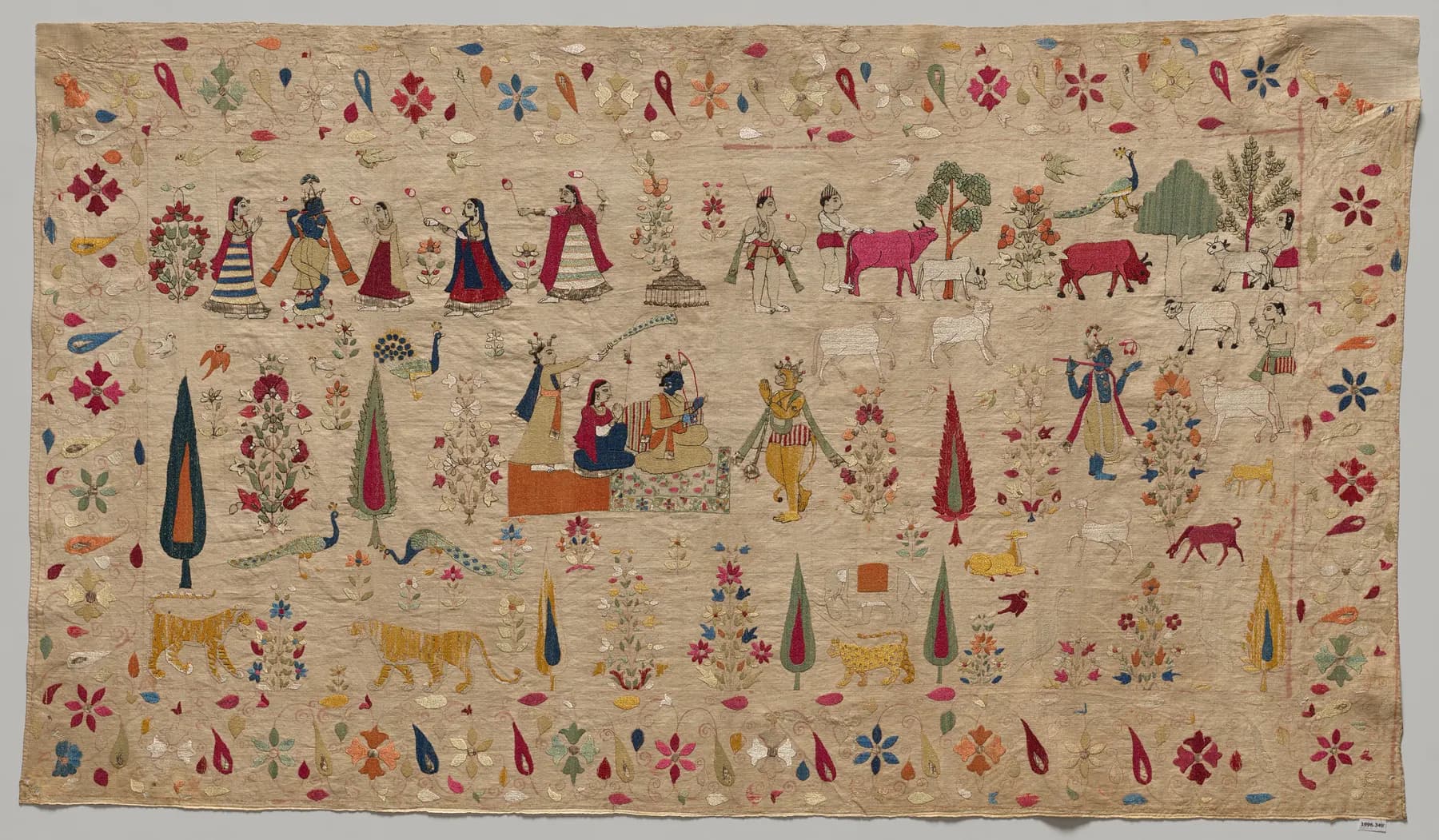
The historic rumal below includes scenes of Lord Rama and Lord Krishna. Near the centre, Hanuman pays his respects to Rama, Sita and Lakshmana. Elsewhere, figures, cattle, birds and trees occupy the cloth within a floral border.
Rumal with Rama and Krishna scenes, 1700s, from Chamba. Silk and silver wire on cotton. Cleveland Museum of Art, accession 1996.349.
After looking at the main figures, follow the border. Compare its flowers with those inside the scene, and notice how the plants and animals fill the spaces between people. Seeing the whole cloth also makes it easier to follow how the smaller scenes are arranged within that border.
Seeing Chamba rumals in Chamba town
Bhuri Singh Museum in Chamba town has Chamba rumals in its collection, alongside Pahari paintings and other regional objects. If you are already visiting Chamba, look for the subjects and details shared by the embroidered cloths and paintings. Check visiting arrangements and ask which textiles are currently displayed before setting out.
The rumal pictured here belongs to the Cleveland Museum of Art, not Bhuri Singh Museum. It illustrates the craft rather than a particular display you will find in Chamba.
Questions to ask when someone shows you a rumal
Ask who embroidered it, what the scene represents and whether the design can be seen on both sides. Those questions are more useful than judging the work only by its colours. Let the owner handle and turn the cloth, and ask before taking a close photograph of their work.
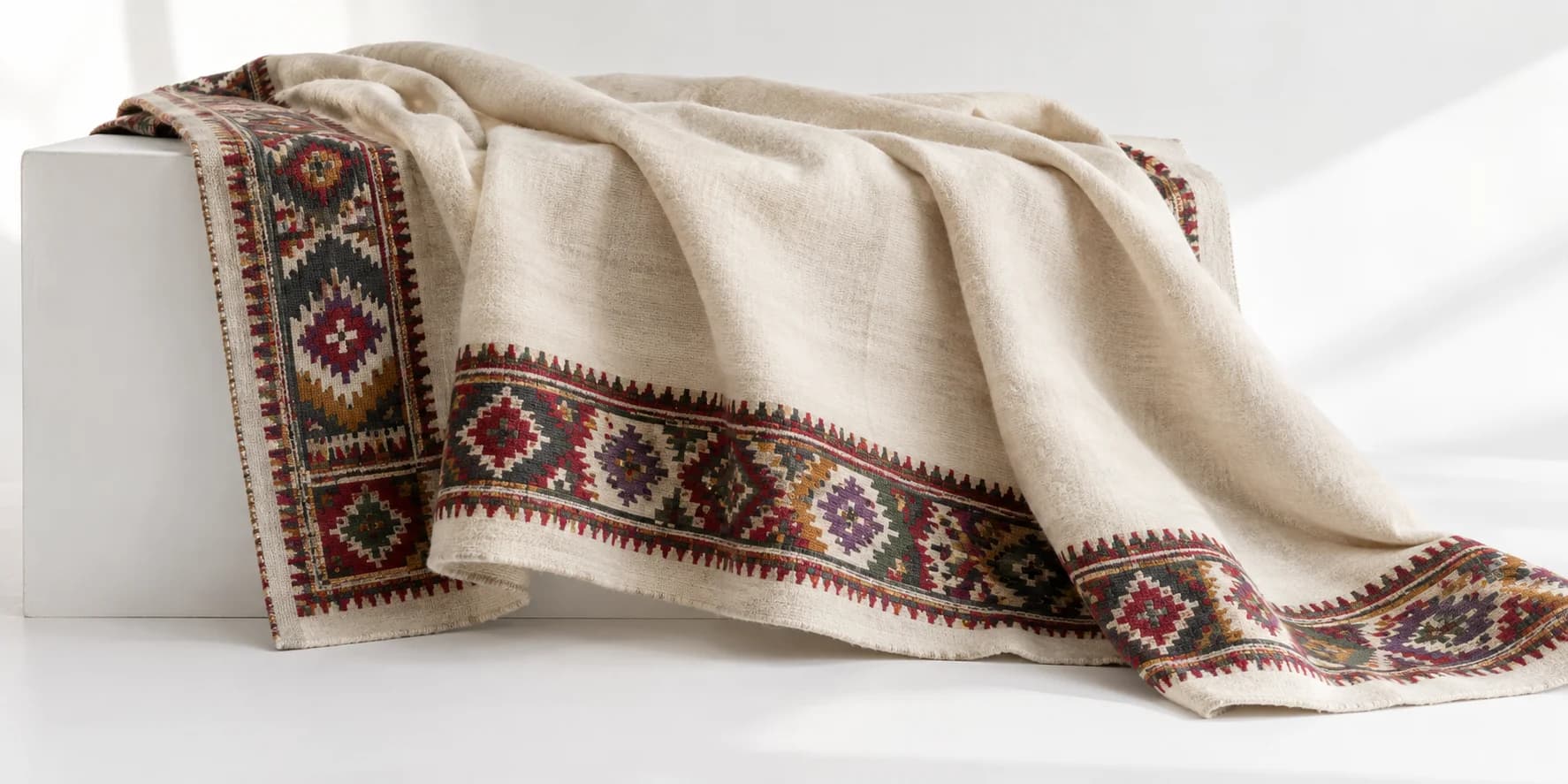
Chamba embroidery is different from the wool weaving used for Kullvi pattu. In a pattu, the coloured border is woven into the garment; in a rumal, stitches form the picture on a base cloth. If you would also like to understand the painting tradition, read about looking at Pahari miniatures in Kangra Art Museum.
Photograph: Cleveland Museum of Art, Gift of William E. Ward in memory of his wife, Evelyn Svec Ward. Original object and image, available under CC0. Resized and converted to WebP for 2050 XP. The full textile appears above; the opening image shows a closer crop.