Seeing Masroor's Temples from the Sacred Pool
By 2050 XP · · 3 min read
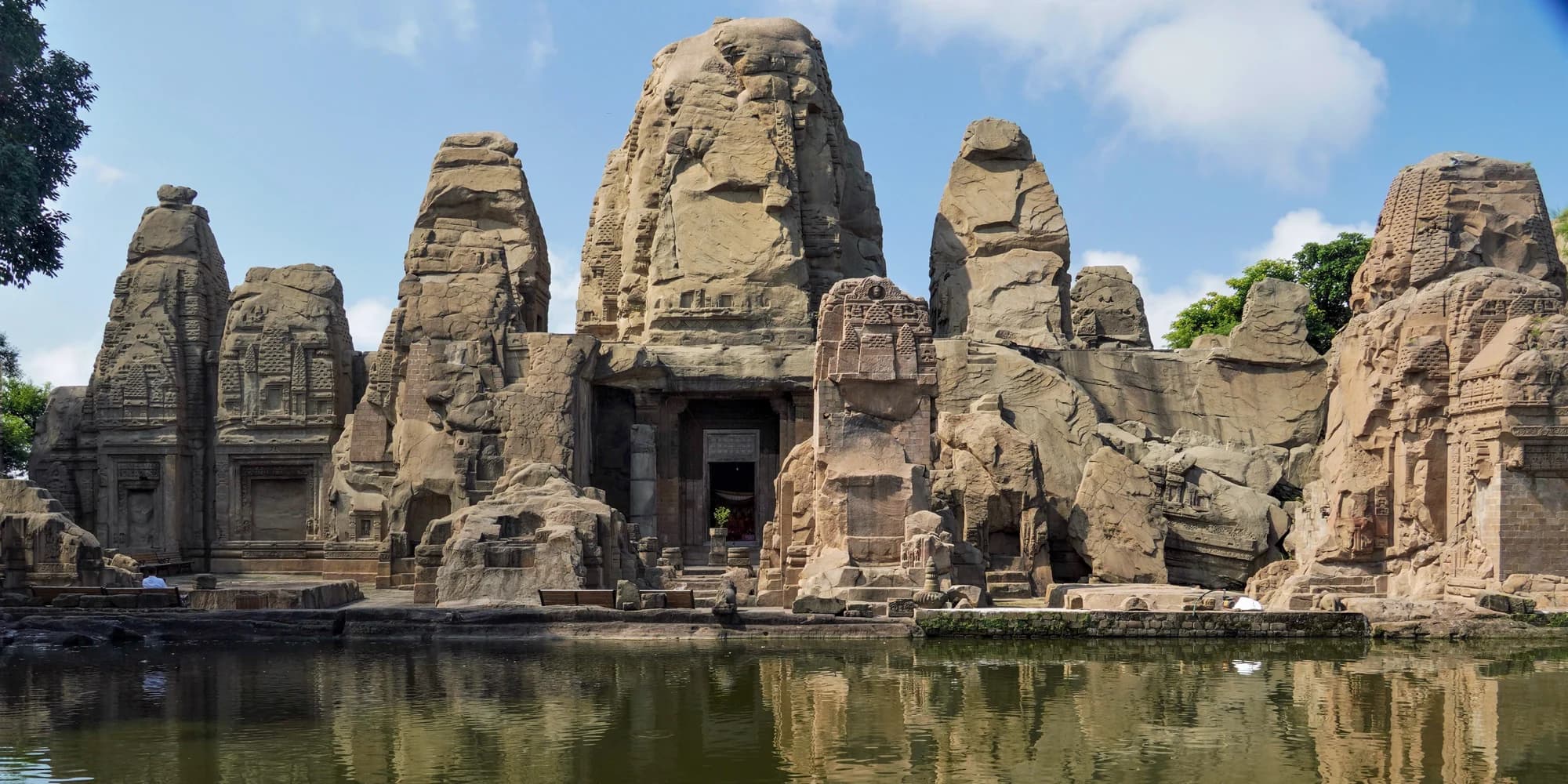
Photograph: Dhruvaeng; edited by UnpetitproleX / CC BY-SA 4.0
The Masroor rock-cut temples are a Hindu temple complex at Masroor village in Himachal Pradesh's Kangra district. Their towers and shrines were carved from a rock outcrop, rather than built entirely by stacking separate blocks. In front is a sacred pool, where the temple towers can be seen in reflection.
The main shrine houses Lord Rama, Goddess Sita and Lord Lakshmana. A visit can bring together prayer and an appreciation of the carving, without treating the shrine merely as a backdrop for photographs.
Look across the pool at the temple towers
From the visitor spaces beside the pool, look first at the tallest tower and then at the smaller towers on either side. The architectural word for a temple tower is shikhara. At Masroor, seeing several together helps you understand the size and arrangement of the complex before looking at individual carvings.
The towers belong to the North Indian Nagara tradition of temple architecture. Notice how the carved surfaces narrow as they rise, and how decorated sections remain beside broader, weathered faces of rock. You do not need to identify every architectural feature to see that contrast.
If the water is still, the reflection gives you a second view of the towers. It need not be a perfect mirror to make the poolside pause worthwhile. The photograph above shows the facade and its reflection in September 2021; water and light may be different when you visit.
The main doorway and the deities within
At the main shrine, look at the carving around the doorway as well as the tower above it. Floral decoration and figures of deities are worked into the entrance. A figure of Lord Shiva appears above the doorway, while the shrine within houses Lord Rama, Goddess Sita and Lord Lakshmana.
These details are a reason to spend time looking rather than trying to name every worn figure. Some sculpture has been lost or damaged, and not every feature is easy to recognise. Avoid guessing a deity's identity from an unclear face or a broken attribute.
Leave the approach clear for people coming to pray. Follow the instructions at the entrance, and ask before photographing inside the shrine or including someone at worship. Only enter areas open to visitors; a visible doorway or stair does not itself mean that you may go through it.
Notice the carving without climbing the remains
Parts of the complex were left unfinished, and other parts have been damaged over time. That is why sharply worked decoration, plain rock and broken sections appear together. Do not assume that every rough surface marks unfinished work or that every missing piece has the same cause.
Look from the permitted paths rather than stepping onto a carved base for a closer view. Please leave reliefs and loose fragments untouched. A camera's zoom is a better way to study a high detail than climbing towards it.
Before setting out, confirm the opening hours and which areas you can enter, particularly if you are coming for darshan. For more about the shrines and their architecture, see Masroor in Kangra district.
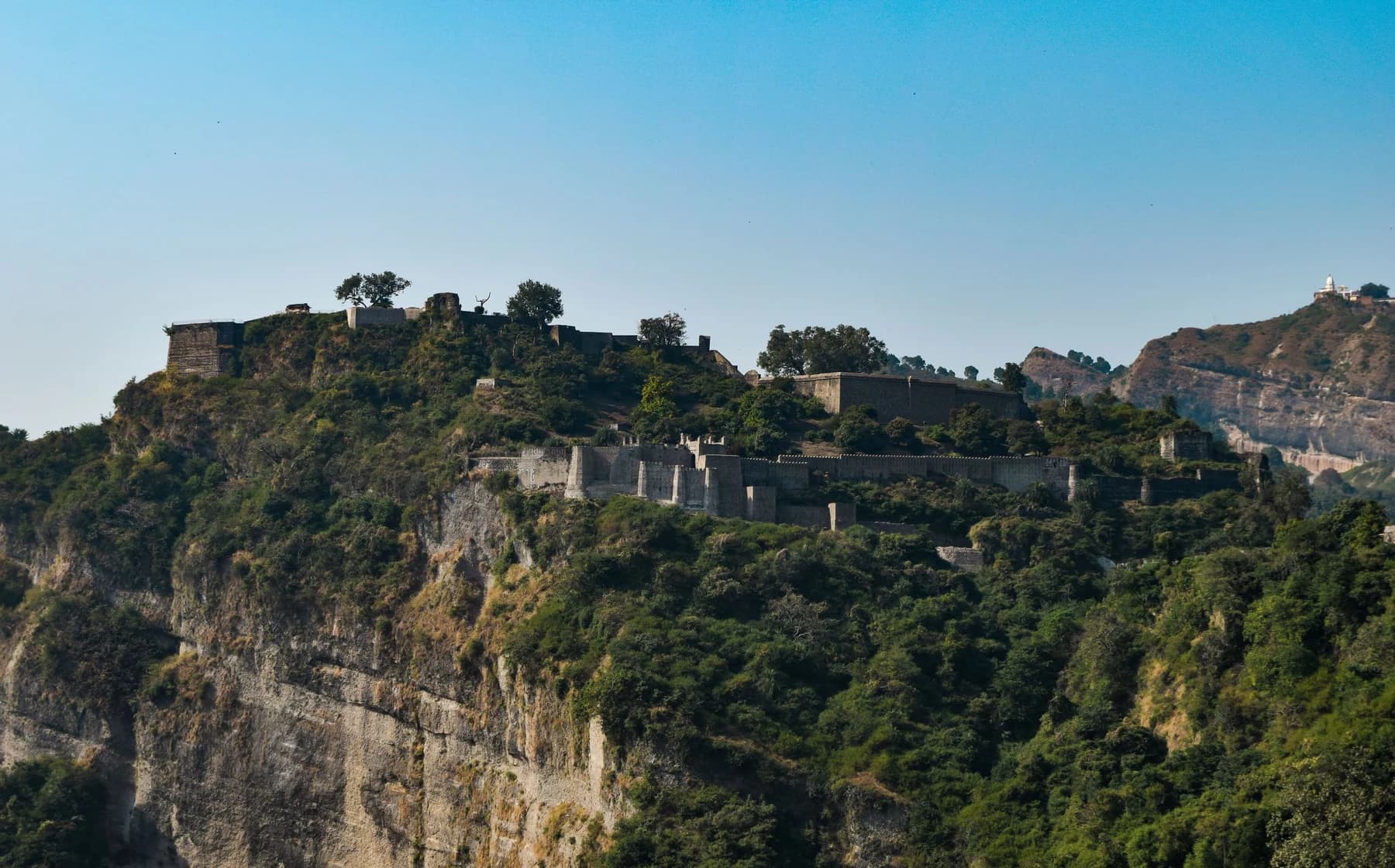
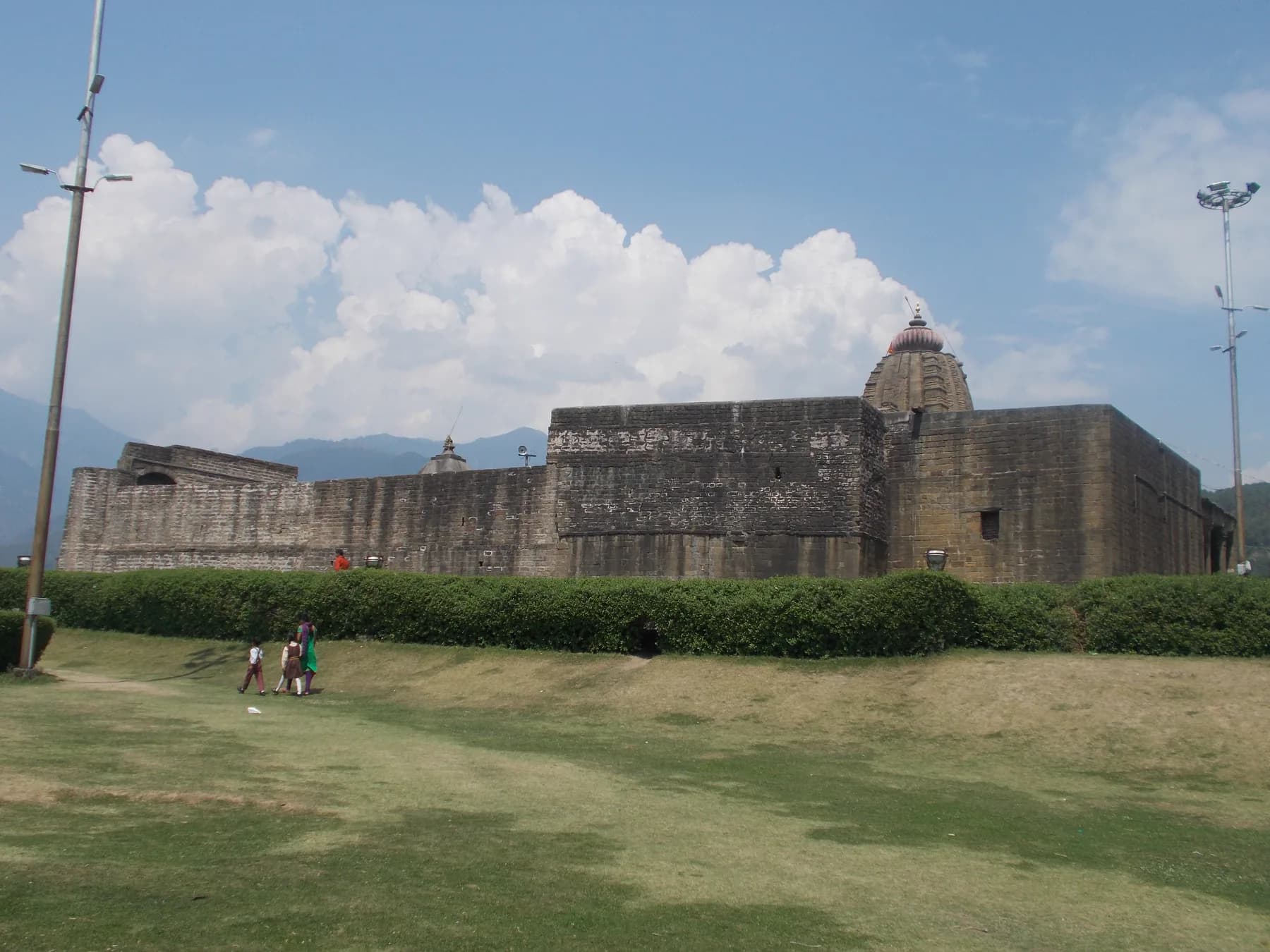
For a separate temple visit during a Kangra stay, Baijnath Shiva Temple has a Nandi shrine, pillared hall and inscriptions to notice. Kangra Fort offers a different visit through fortified gates to a temple courtyard. These are distinct places, not adjoining parts of Masroor or a suggested walking circuit.
Photograph: Full view of Masroor temple by Dhruvaeng, taken on 18 September 2021. UnpetitproleX corrected the tilt and adjusted shadows in the source revision. Resized and converted to WebP for 2050 XP; the opening view is cropped to fit the page. The photograph and this adaptation are shared under CC BY-SA 4.0.