Trying the Pottery Wheel in Andretta
By 2050 XP · · 4 min read
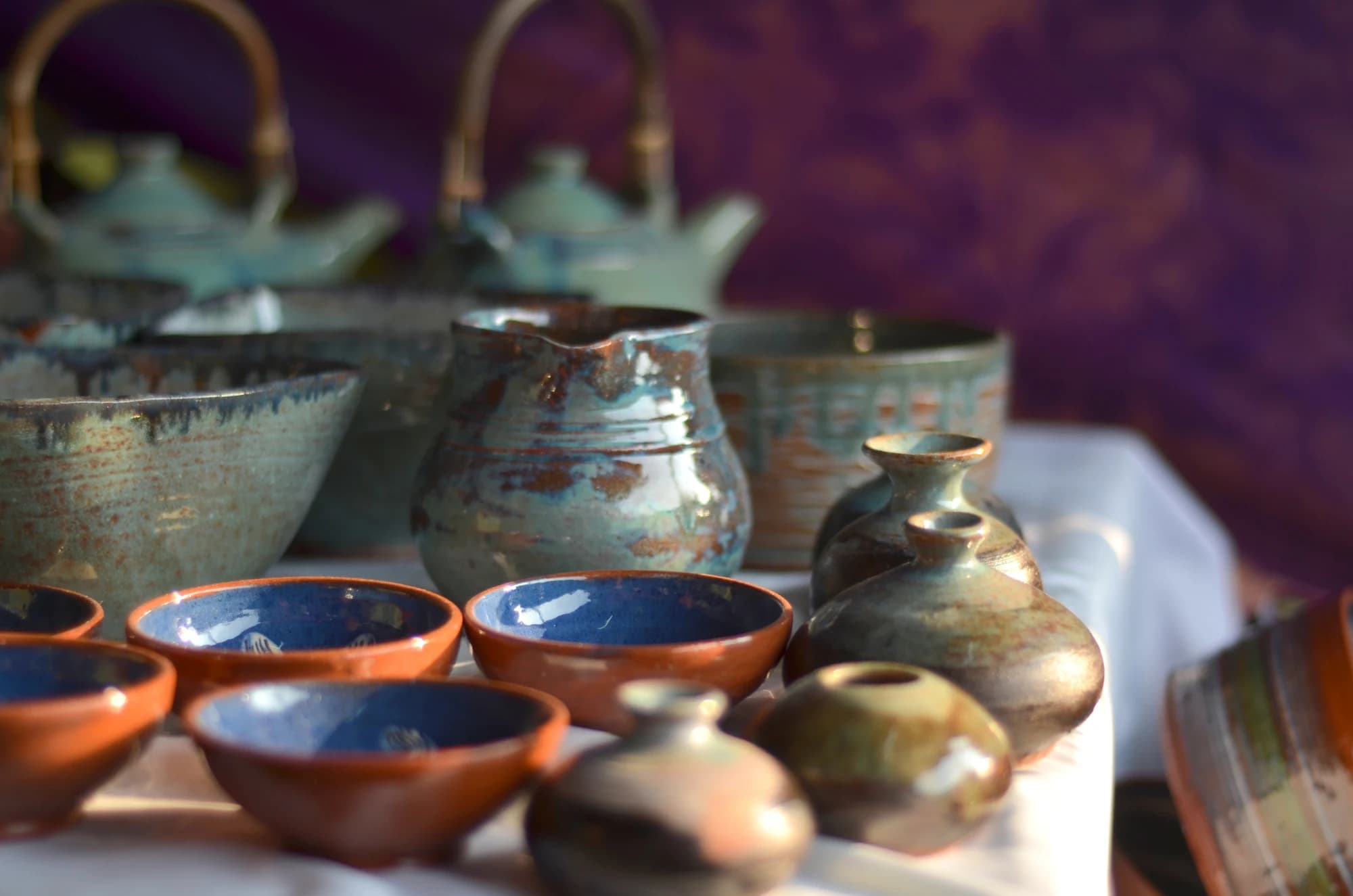
Photograph: Ekabhishek / CC BY-SA 3.0 / Delhi, 2014
At Andretta Pottery, in Andretta village near Palampur, you can try shaping clay on a potter's wheel with help from a potter. The pleasure is in discovering how a lump of clay becomes a hollow form: first it has to turn steadily, then it needs an opening, and only then can the walls rise.
A short introduction gives you a part in that process. The finished bowls and jugs show where it can lead, with coloured surfaces that owe as much to decoration and firing as to the wheel.
Before the walls of the pot can rise
The work begins before a visitor sits at the wheel. Clay needs preparation: refining it, then working it into a consistent mass. Potters call that working of the clay wedging. At Andretta, clay preparation is one of the skills taught alongside throwing, the name for shaping a pot on a wheel.
Watch the difference between a lump that wobbles as it turns and one that stays centred. Centring makes the next movements possible. The potter then opens the clay and draws the walls upwards, controlling the form as it turns.
Height, width and thickness develop through those movements. Looking at a finished bowl afterwards, you can follow the curve from its base towards its rim and think about how much shaping went into that apparently simple outline.
The studio's visitor introduction at Andretta Pottery is a way to try the wheel without committing to a long course. Confirm the current visitor arrangements before setting out. Its intensive teaching also covers other ways of building forms by hand, as well as decoration, glazing and firing; a short wheel session cannot cover all those skills.
Where the surface designs come from
Andretta is known for slip decoration. Slip is liquid clay, which can be coloured and applied to a pot's surface. Glaze is a different part of the finish; the two can contribute to the appearance of the same piece.
In a 2021 interview with Mysticeti, potter Shubham Sankhyan described influences close to home: rangoli and the decoration of doors and window frames during local festivals. He also connected the pottery's colours with the surrounding landscape, including greens, blues, whites and browns.
That gives you something more specific to look for than a favourite colour. Follow the lines and repeating forms across a plate or bowl. The decoration has a connection with designs made around homes, translated onto a curved clay surface.
The photograph above shows Andretta-made pottery at Dastkar Bazaar in Delhi in 2014. Its blue-interior bowls and glazed jugs illustrate finished work; they do not show today's stock or an object made during a brief visitor session.
Why a wet bowl is not finished pottery
Shaping is followed by drying. The pot then needs firing in a kiln, whose heat changes the clay into hard ceramic material. Sun-drying alone does not make usable tableware.
Decoration, glaze and their firings bring further changes. A soft surface you have just shaped is therefore a stage in the making, rather than a ready souvenir. This is also why the finished pieces can look so different from the clay at the wheel.
If keeping your own piece is important, settle that detail when arranging the session: whether the studio can finish it, and whether later collection or delivery is possible. Enjoy the introduction for the making itself, with any finished object treated as a separate arrangement.
Frequently asked questions
Is the visitor session the same as a pottery course?
No. A visitor introduction lets you try the wheel with help. The longer teaching programme includes clay preparation, hand-building, decoration, glazing and firing, skills that take more than a brief session to learn.
Is slip the same as glaze?
No. Slip is liquid clay used on the surface, including for coloured decoration. Glaze forms a different finish during firing. Both can affect how a completed pot looks.
Other outings during a Palampur stay
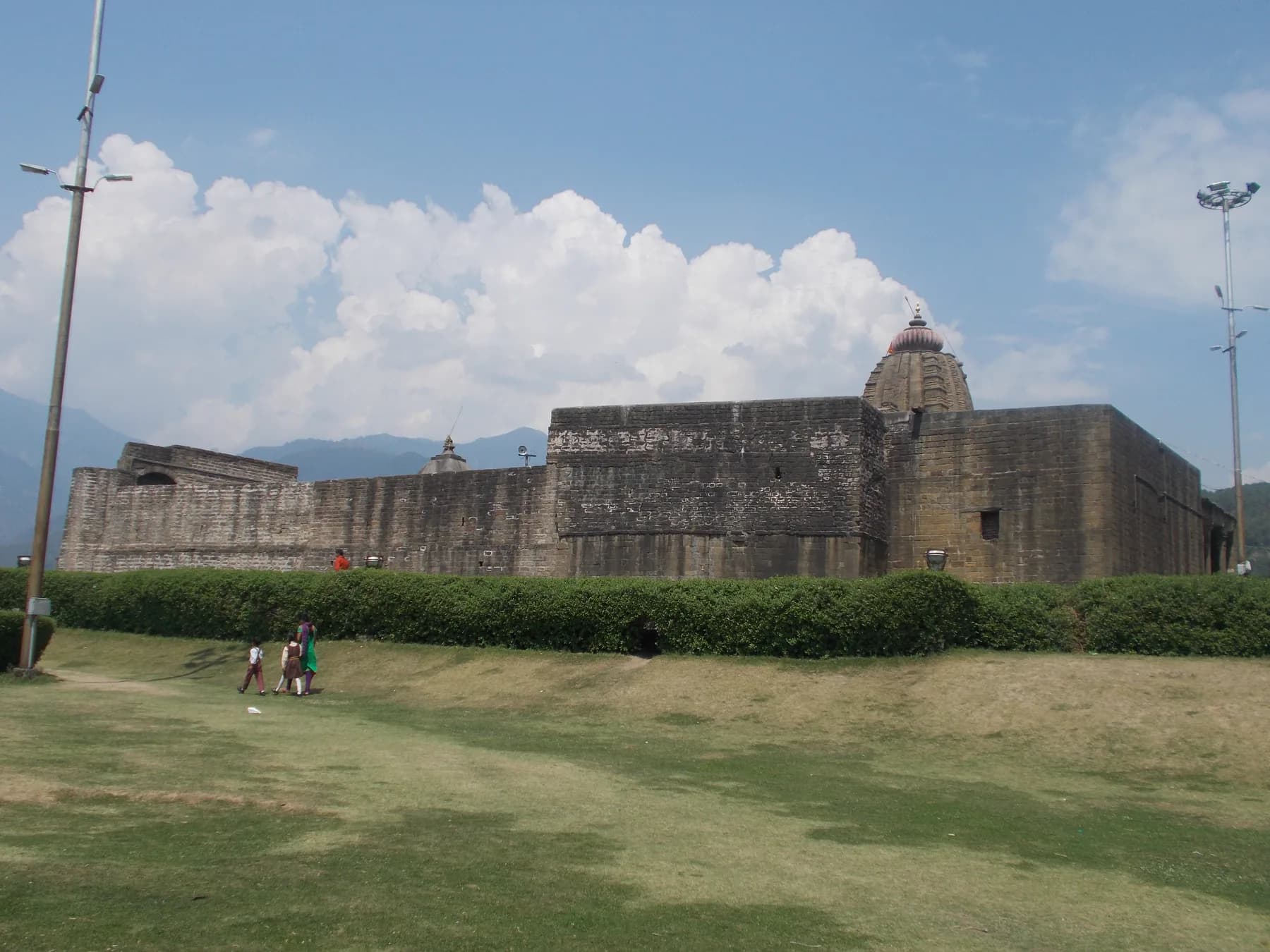
If you want to see the stone temple after trying the wheel, take the road from Andretta Pottery to Baijnath and leave room for both visits.
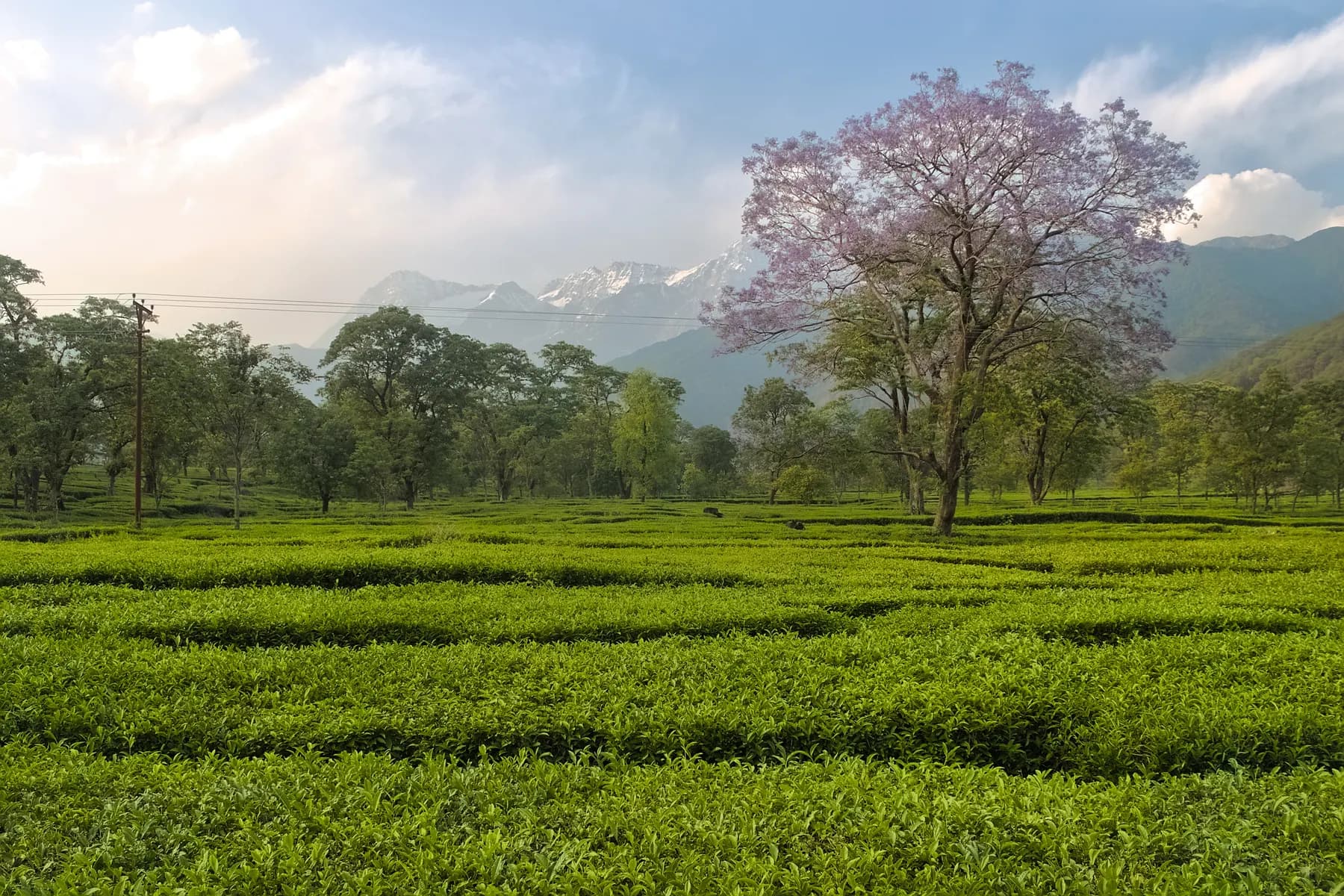
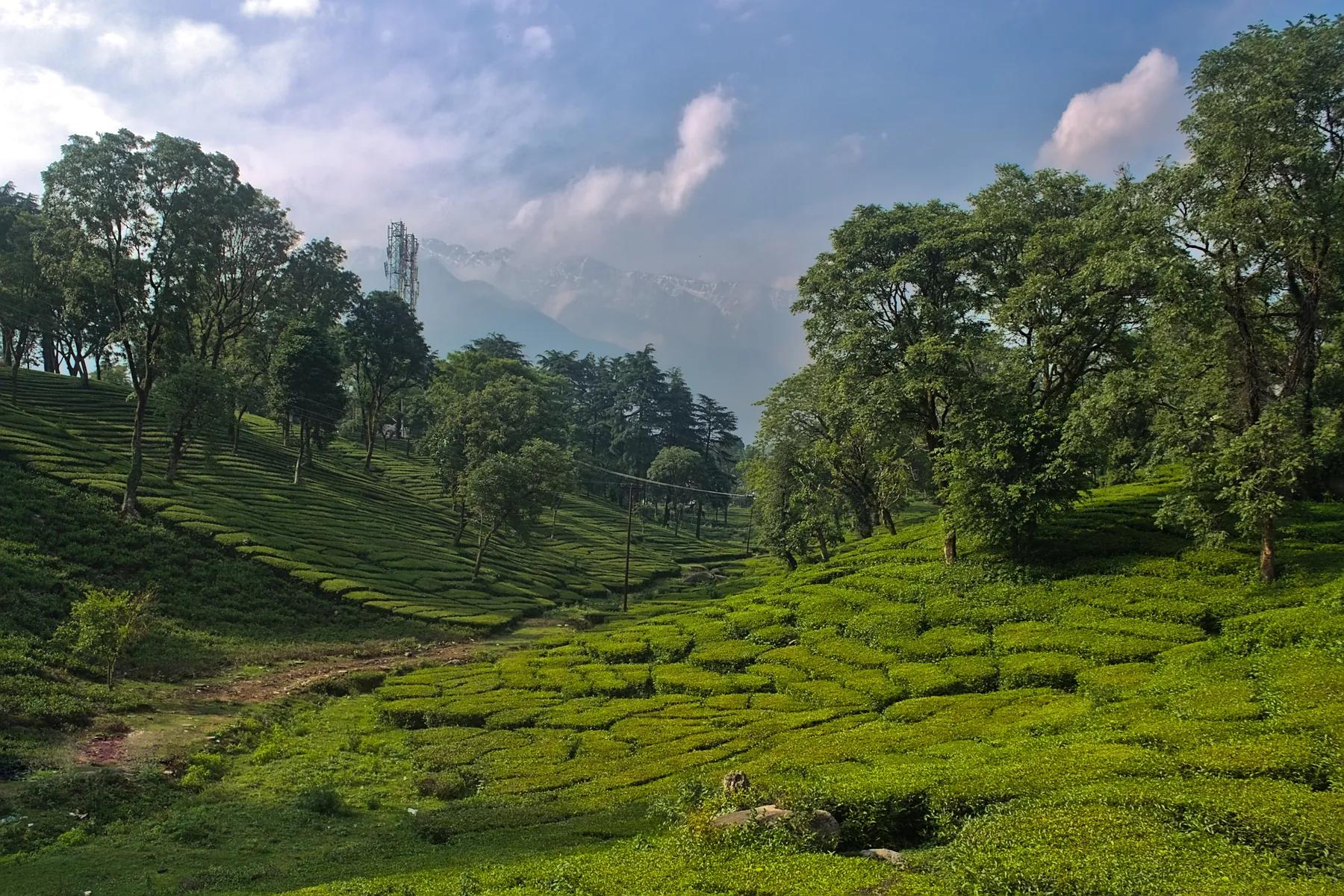
Palampur's tea gardens and nearby outings make the town a useful base for choosing between different interests. A Kangra tea tasting follows another material from its raw state to a finished product, with a chance to compare the cups before buying tea.
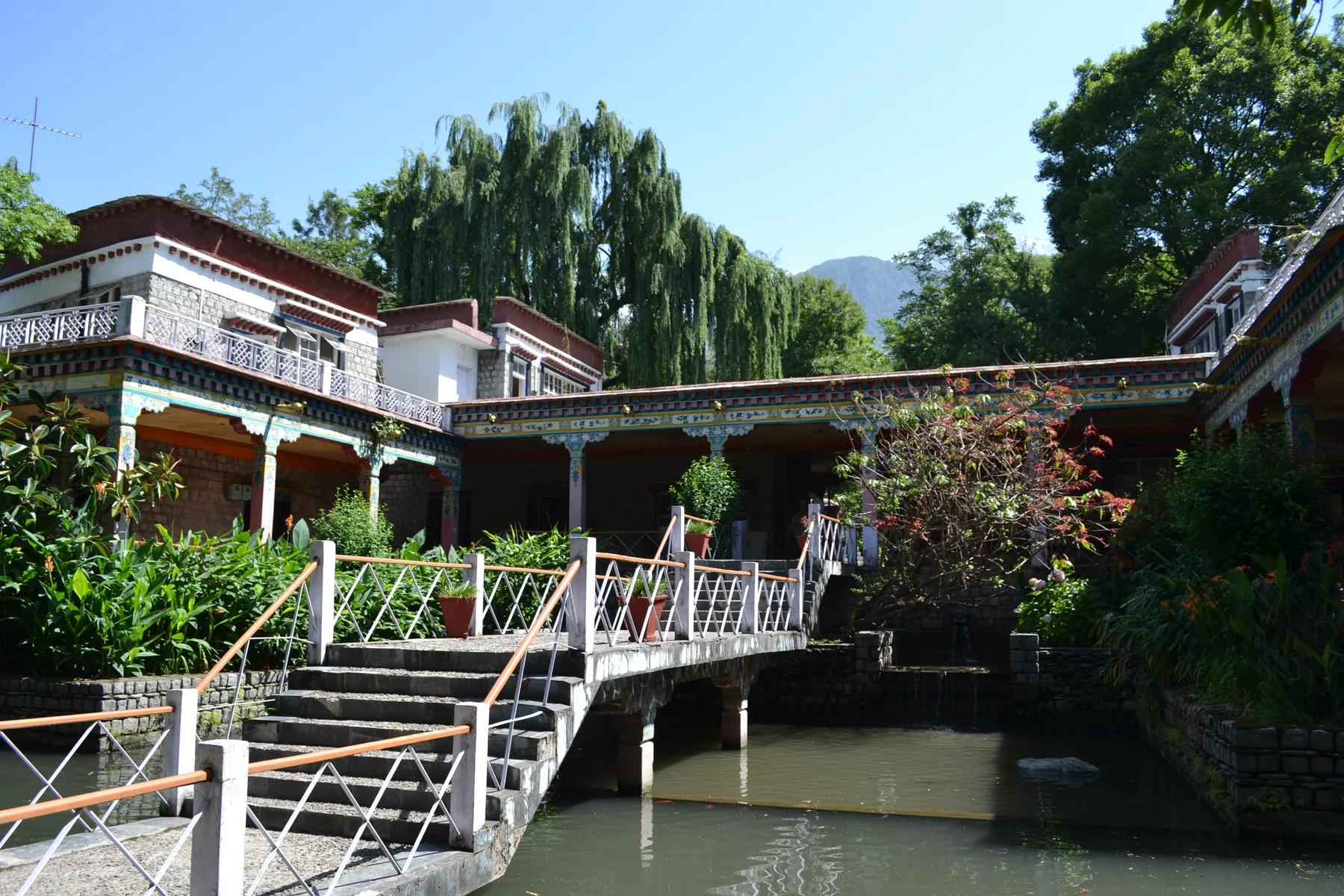
For a separate craft visit in Dharamshala, Norbulingka Institute in Sidhpur introduces Tibetan painting, silk work and carving. Keep it as its own outing rather than treating it as part of the Andretta session.
Photograph: Andretta pottery at Dastkar Bazaar, Delhi by Ekabhishek, taken on 16 February 2014. Resized and converted to WebP for 2050 XP; the opening view is cropped to fit the page. The photograph and this adaptation are shared under CC BY-SA 3.0.