The Forest Life of Great Himalayan National Park
By 2050 XP · · 4 min read
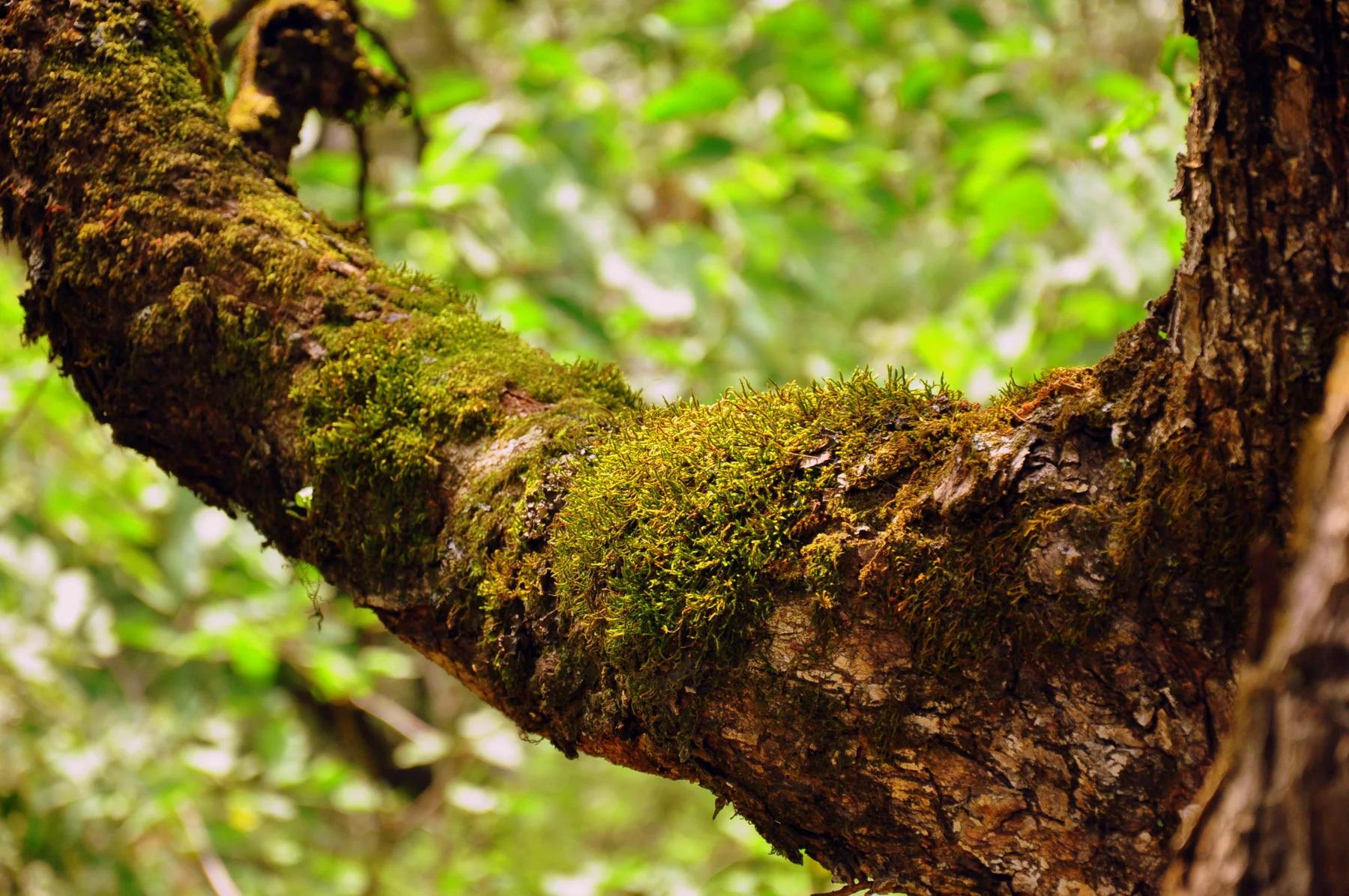
Photograph: Ankitwadhwa10 / GHNP, 2016 / CC BY-SA 4.0; resized and cropped
In Great Himalayan National Park, oak trees feed birds and small animals with their acorns. Fungi grow on the bark, while shrubs and bamboo shelter creatures below. A patch of forest holds much more life than its tall trees first suggest.
These forests spread across the mountains of Himachal's Kullu district. In 2014, UNESCO recognised the park and the adjoining Sainj and Tirthan wildlife sanctuaries as a World Heritage Site. Those protected slopes include forests, high meadows and the beginnings of mountain rivers.
The trees change as the mountains rise
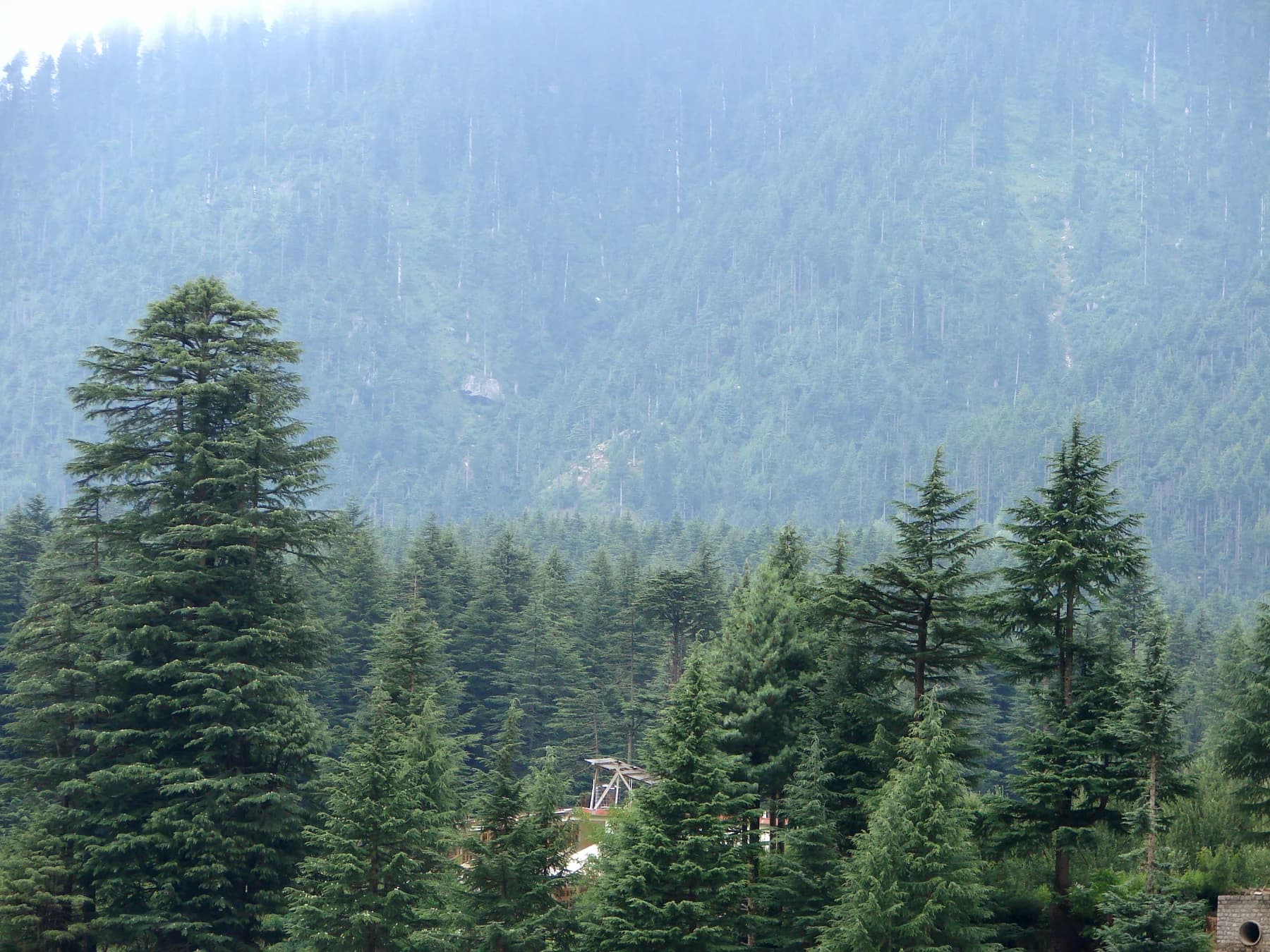
Oak and horse chestnut grow alongside needle-leaved trees such as deodar and spruce. Higher up, fir becomes part of the forest. Near the upper limit of tree growth, birch and rhododendron take over. Above the trees lie meadows, low shrubs and smaller plants.
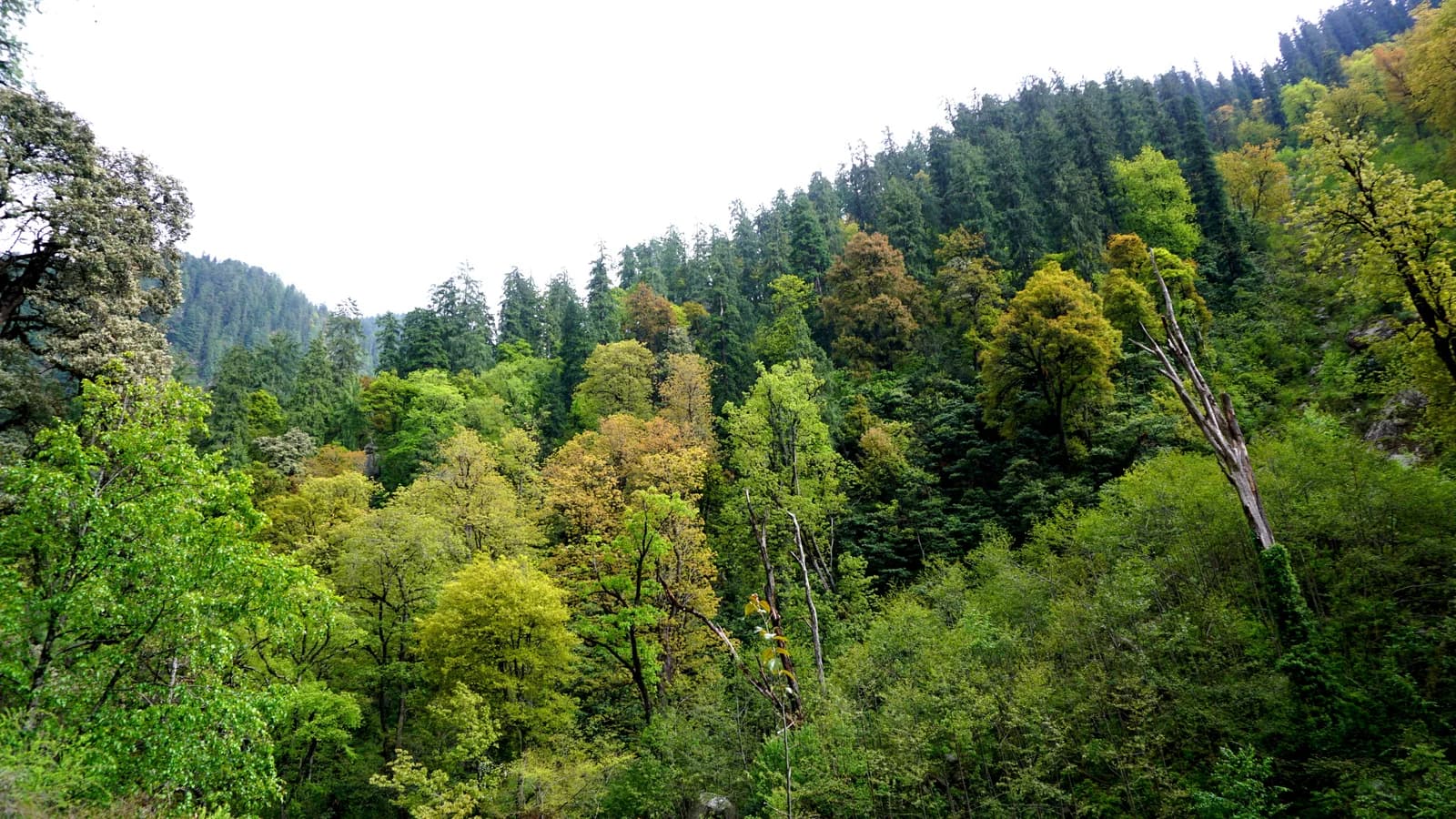
The photograph below shows how varied a wooded slope can be. Tall, pointed trees stand among others with broad, rounded tops. Shrubs fill some of the spaces underneath. That mixture creates different places for birds and animals to feed and shelter.
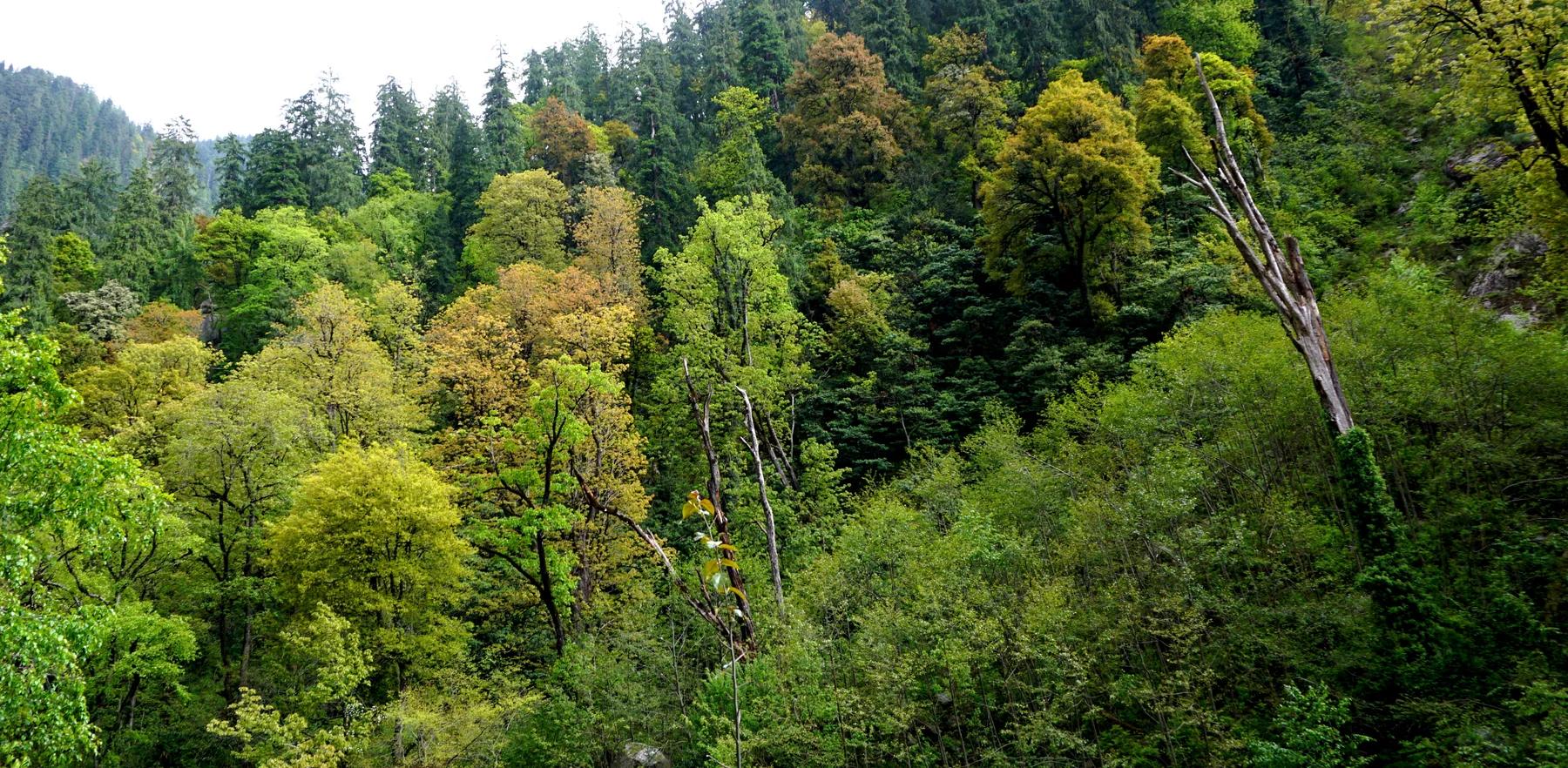
Forest in Great Himalayan National Park, photographed by Vishrutpanday in May 2015.
If you enjoy recognising trees, start with a small detail. Deodar has needles gathered in tufts and cones that stand upright. A twig can help you tell it apart from the other needle-leaved trees more easily than a distant outline.
There is life on the bark, too
The opening photograph brings the forest closer. A thick covering of moss follows the curve of a branch, with rough bark showing through. It is a small detail that is easily missed when looking across the valley.
Below the trees, climbers, shrubs and bamboo add more places for plants and animals to live. These smaller plants are part of what makes a forest a home for wildlife. The bamboo has a particularly close connection with one of the park's best-known birds.
The pheasant that needs the bamboo
The western tragopan, or jujurana, is a pheasant found in the north-western Himalaya. In the park, it lives in dense forest with ringal, a type of hill bamboo, growing beneath the trees.
That bamboo is an important part of its home. Conserving the forest means keeping the thick growth below the trees as well as the tall trunks above it. What can look like a tangled patch of vegetation is useful shelter for a bird.
Other pheasants use different parts of the mountains. Koklass favours forest undergrowth, while Himalayan monal also uses more open grassy slopes and meadows higher up. Knowing those differences makes a wildlife list more meaningful: the names belong to birds with different homes. A visit does not guarantee a sighting of any of them.
Where the mountain rivers begin
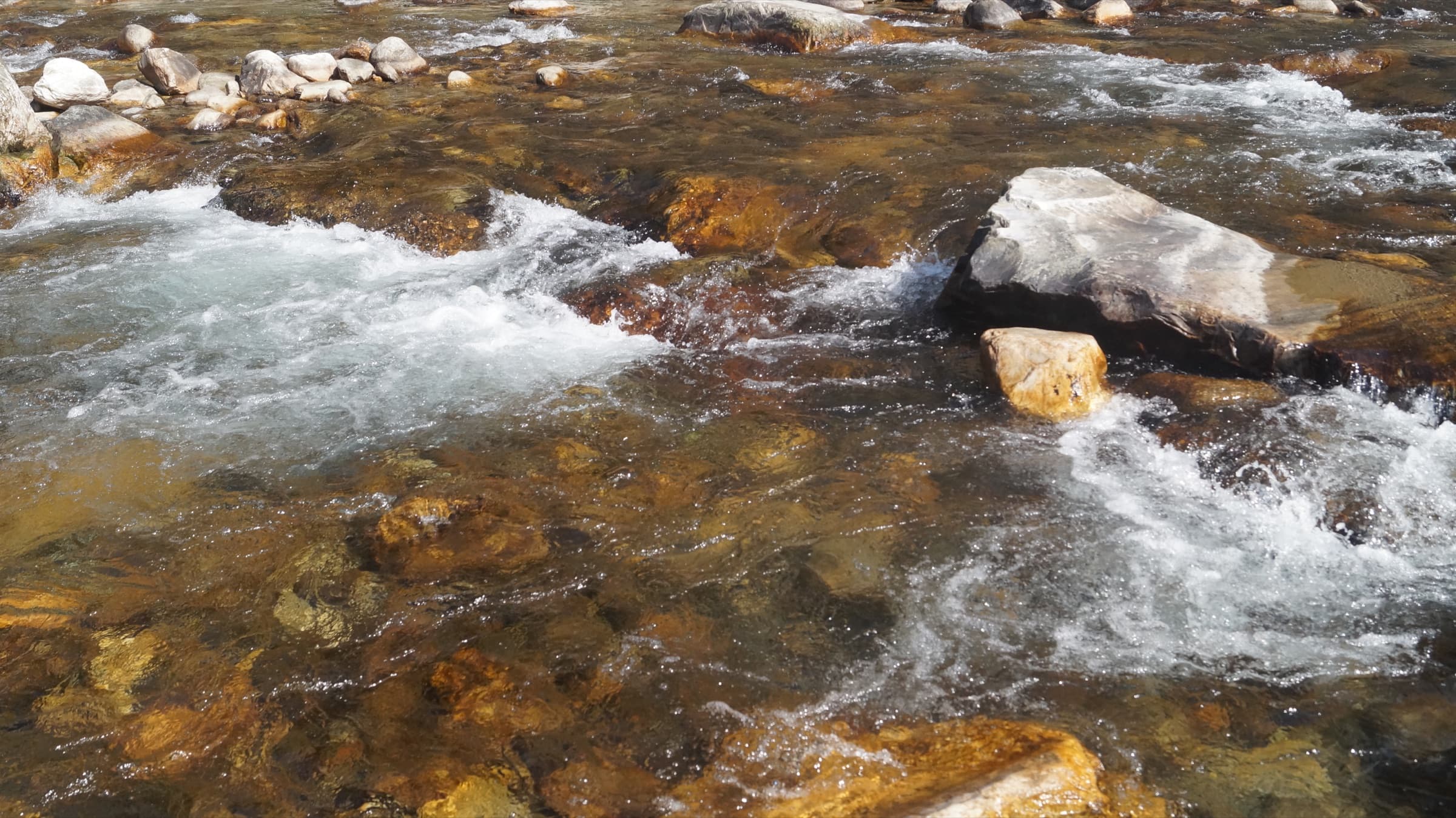
The Tirthan and Sainj rivers begin in the protected mountain landscape and feed the Beas river system. Snow, glaciers, wooded slopes and the water farther down the valleys are connected.
For someone staying beside the river in Tirthan Valley, that connection adds to the view. The river has come from a much larger area of mountains upstream. Protecting that landscape matters to the villages downstream as well as to the wildlife within it.
The riverside villages sit outside the park's interior. They have their own homes, farms and daily life, so a riverside stay and a visit inside the national park are different experiences.
Frequently asked questions
Is Great Himalayan National Park all forest?
No. It also includes high meadows, rocky ground, snow and glaciers. Forests are one part of a landscape that changes as the mountains rise.
What is jujurana?
Jujurana is the local name for the western tragopan, a rare Himalayan pheasant. Dense forest with hill bamboo beneath the trees provides important habitat for it in the park.
Photographs: moss on a tree in GHNP, by Ankitwadhwa10, 27 June 2016; and forest in GHNP, by Vishrutpanday, 2 May 2015. Both are used under CC BY-SA 4.0, resized, cropped and converted to WebP for 2050 XP. The adaptations retain the same licence.