Why Winter Birds Gather at Pong Dam Lake
By 2050 XP · · 4 min read
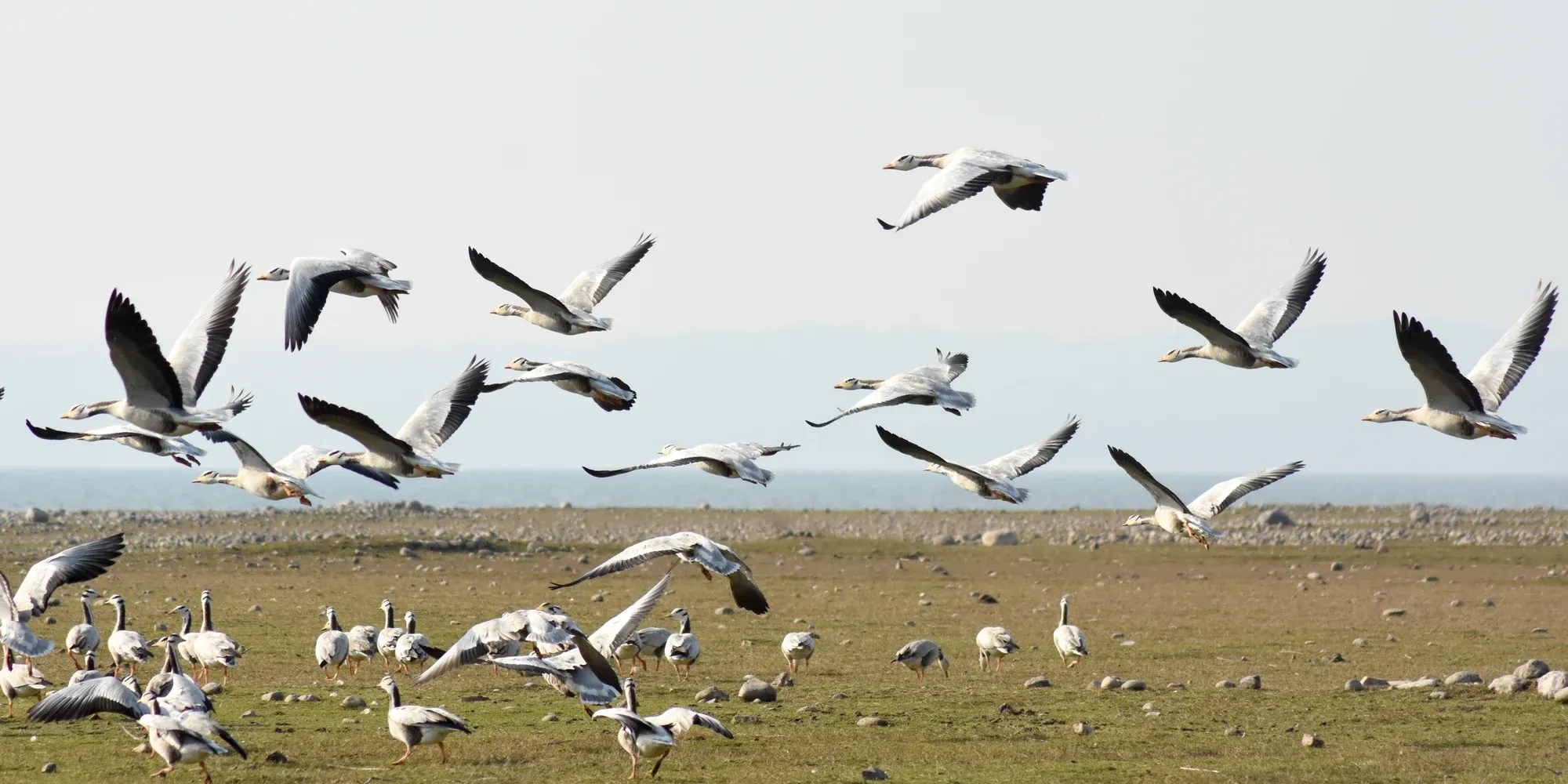
Photograph: Neha Sharma, 25 January 2020 / CC BY-SA 4.0
Winter birds gather at Pong Dam Lake because its grass, mud and shallow water offer different ways to feed. A flock of bar-headed geese may have their heads down on the grass while ducks dip into the water and long-legged birds pick their way through the shallows. Watch what one bird does before trying to name the whole flock.
Falling water makes room for feeding
Pong Dam Lake, also called Maharana Pratap Sagar, is the reservoir made by damming the Beas in Himachal Pradesh's Kangra district. The dam is at the southwestern end. The photographs here were taken near Nagrota Surian, on the northeastern side of the reservoir.
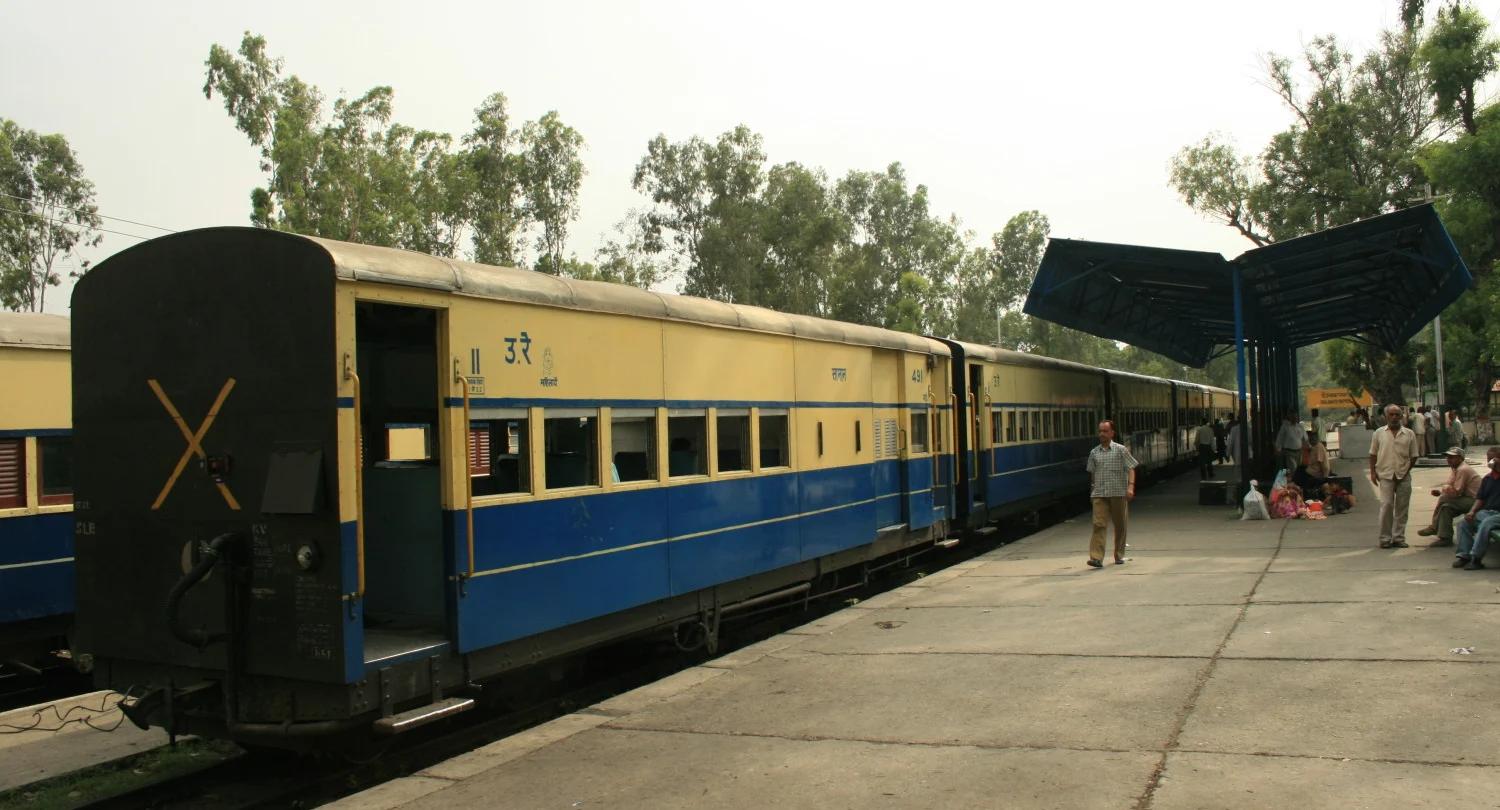
The dam changed more than where the river ran. Part of the Kangra Valley Railway moved uphill when the lake filled between Jawanwala Shahr and Guler.
During the monsoon the reservoir fills. As the water recedes, stretches of the bed are exposed. Grass grows on some of that ground, while flats of wet mud and shallow pools lie nearer the waterline. The position of the shoreline changes, so the places where birds feed can change with it.
Migratory birds use the wetland in winter, when feeding grounds farther north freeze. That seasonal connection helped earn Pong recognition in 2002 as a wetland of international importance under the Ramsar Convention.
Follow the geese from the grass into flight
Look at the open ground in the main photograph. Some geese are flying low while others are still on the grass, heads down. Bar-headed geese graze on shoots and grasses, so a group spread out on the shore can be feeding even when the open water looks empty.
When one turns its head, look for two dark lines across the back of the pale head. In flight, the pale head and long neck can help you follow an individual. The closer photograph makes the bars easier to see. If all you can make out is a distant silhouette, wait for a better angle before settling on a name.
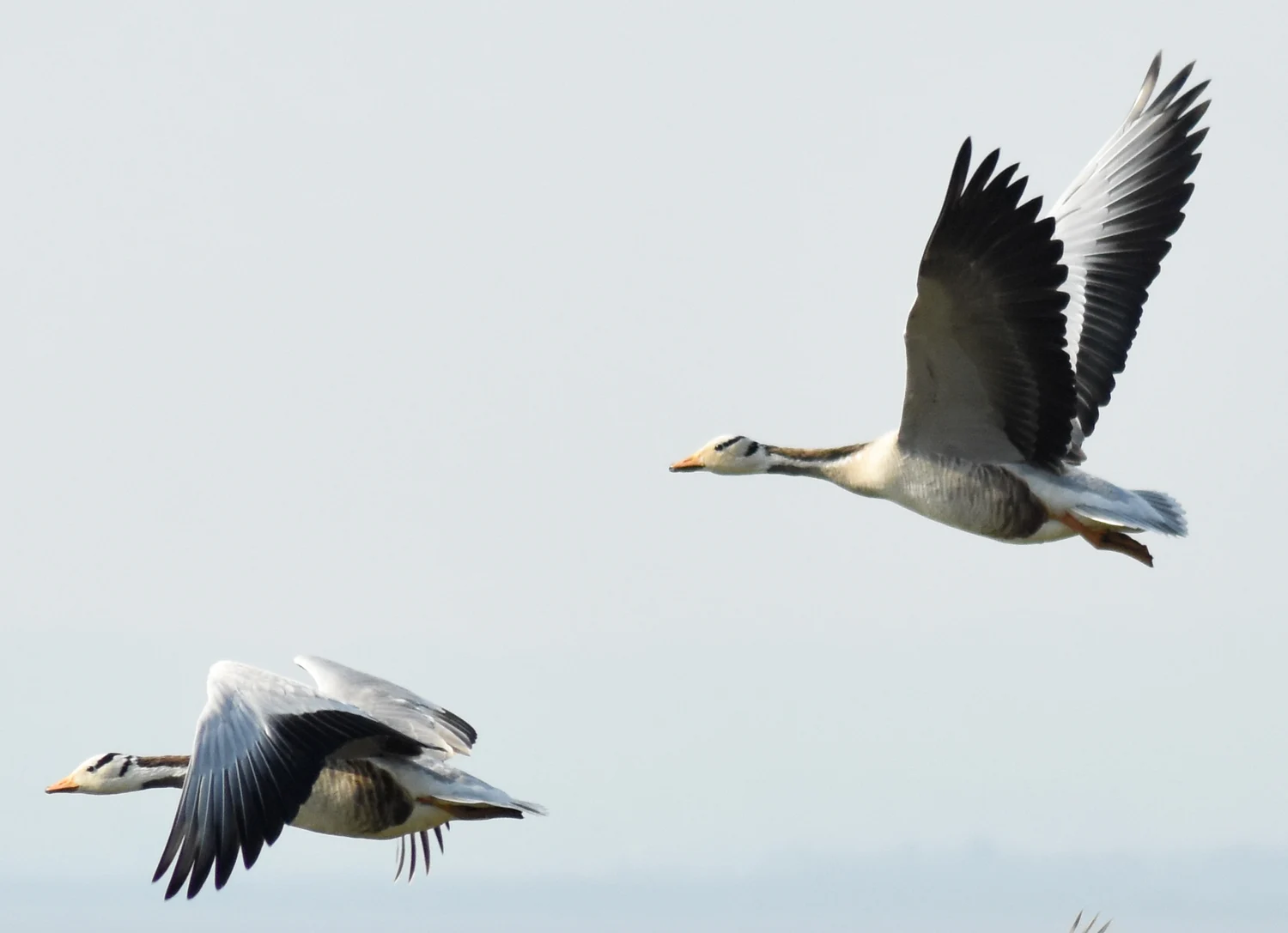
The nearer bird's extended neck and dark head bars are clearer than in the wide view. Neha Sharma photographed the two views at Pong on 25 January 2020.
On the water, wait for a duck to tip forward
A northern pintail has a slim body and a long neck. A male in distinctive plumage has a dark brown head, white coming up the side of his neck and long, pointed tail feathers. The mottled brown female has fewer obvious colour clues, so the slender outline helps.
Watch one duck for a while. A pintail can feed at the surface or tip forward, tail up, to reach below the water. Other ducks feed this way too. The posture tells you how the bird is eating, while the shape and markings help you work out what it is.
At the waterline, look for legs
A black-winged stilt can stand where a duck would float. Its long pink legs carry its black and white body well above the shallows. Watch for the thin bill dipping towards the surface to pick up small insects. Even when the bird is too distant to see its eye or finer markings, those legs and the way it moves give you something to look for.
A view of the water's edge can hold all three kinds of movement: a goose bending its neck to graze, a duck tipping forward and a stilt taking deliberate steps. Stay back if birds stop feeding or turn away. The reason to linger is that their next movement can tell you more than a closer photograph.
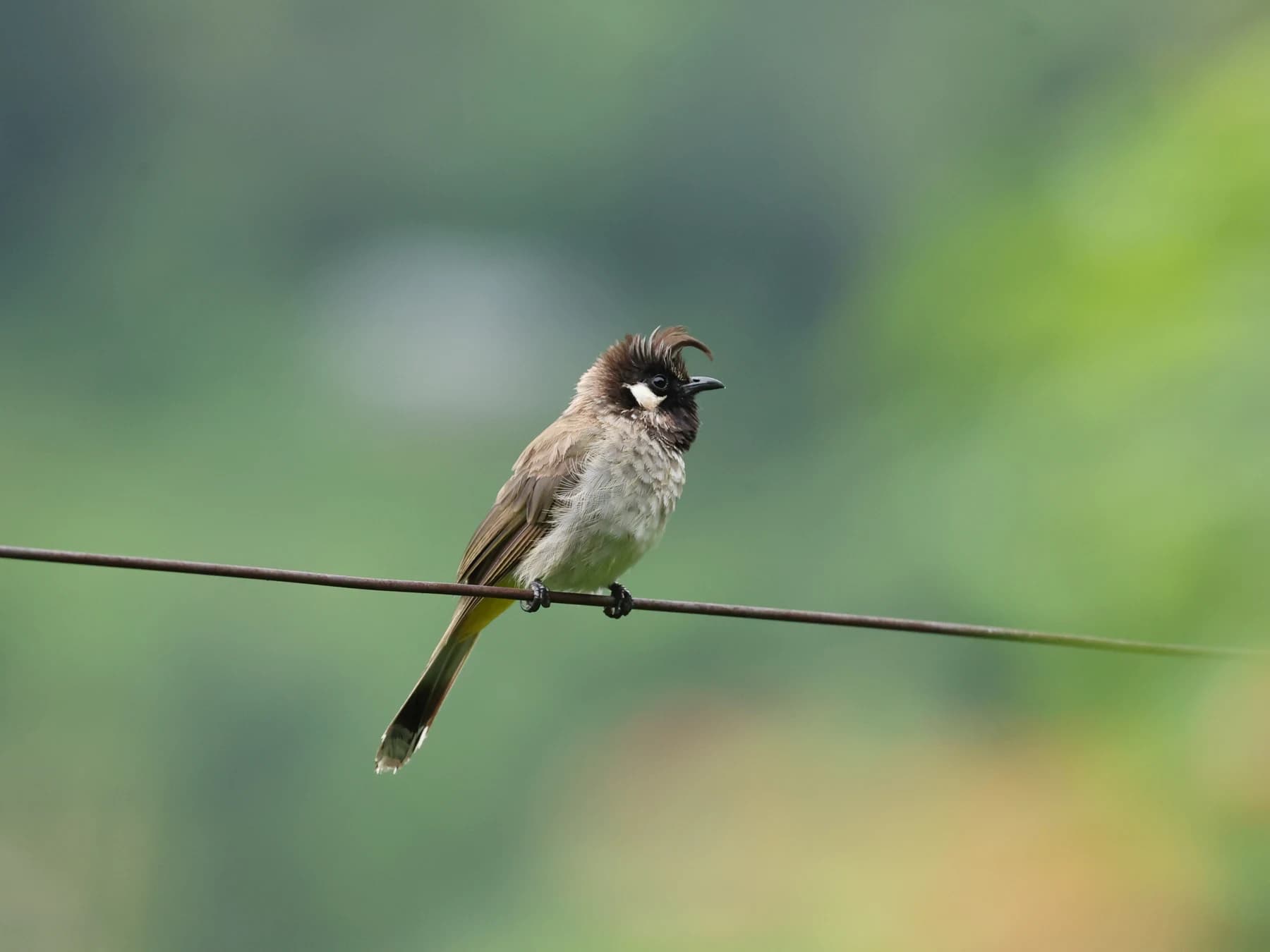
You can use the same patience inland, where a Himalayan bulbul's curved crest and white cheek become clearer when the bird turns on its perch.
Frequently asked questions
Is Maharana Pratap Sagar the same as Pong Dam Lake?
Yes. Both names refer to the reservoir on the Beas. Pong Dam is the structure that holds back the river at one end. Nagrota Surian is a settlement on a different side of the lake.
Are the same birds visible on every winter visit?
No. Winter brings migratory flocks to Pong, and the birds shift between feeding and resting areas. When the shoreline moves, a stretch of mud used by waders on one visit may be under water on another.
Photographs: Flight over the grass and closer view of the geese, both by Neha Sharma at Pong on 25 January 2020. Cropped, resized and converted to WebP. The photographs and these adaptations are shared under CC BY-SA 4.0.