The Mantra on Himalayan Mani Stones
By 2050 XP · · 2 min read
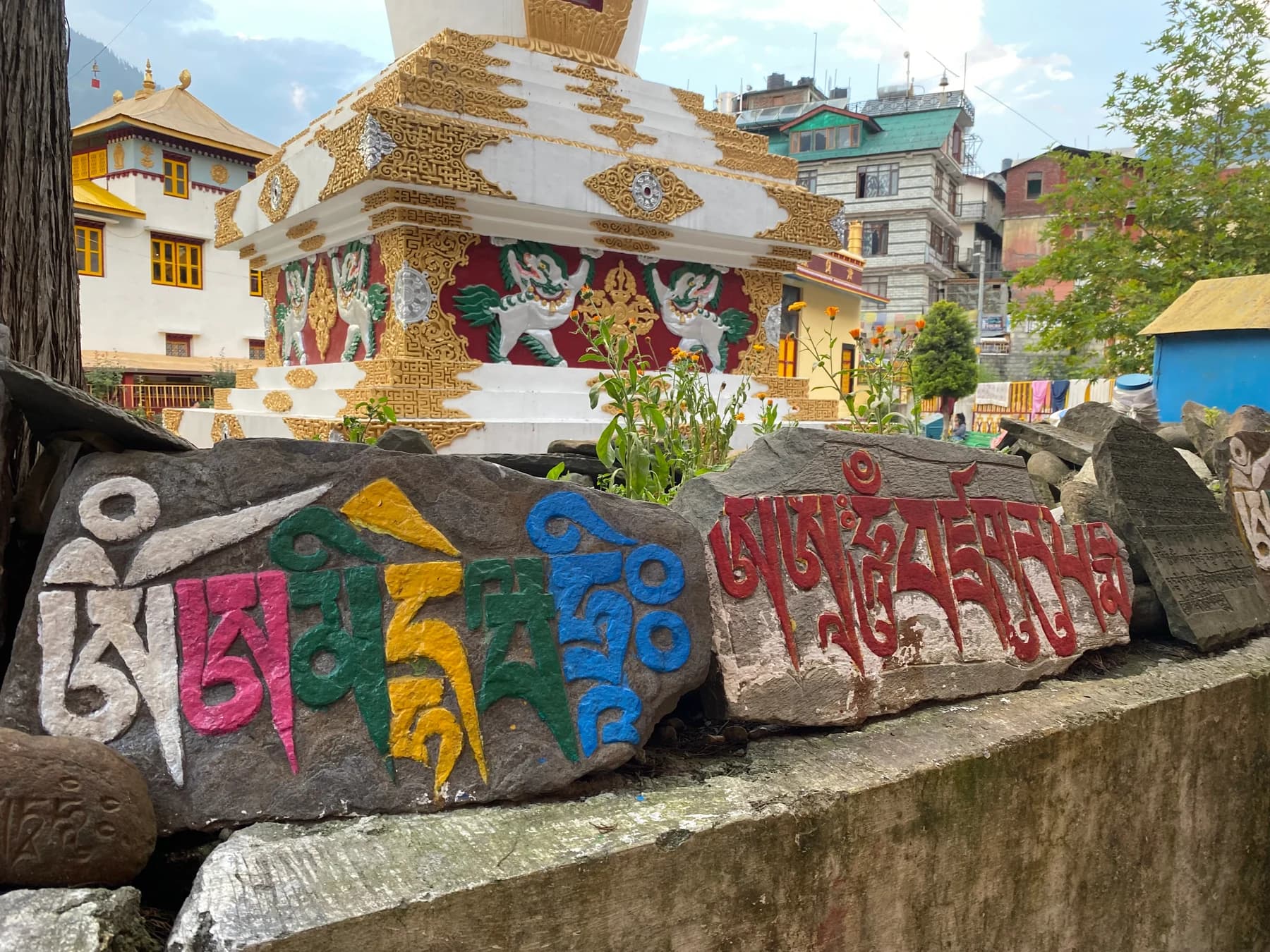
Photograph: Vinayaraj, September 2022 / CC BY-SA 4.0; resized
Mani stones are stones carved with sacred Buddhist inscriptions or images. Across the Himalayas, they appear beside paths, in monastery grounds and in devotional walls or mounds. A common inscription is Om Mani Padme Hum, the six-syllable mantra associated with Avalokiteshvara, known in Tibetan as Chenrezig, the bodhisattva of compassion.
The coloured stones in the photograph were pictured in Manali in September 2022.
What Om Mani Padme Hum Means
The mantra's six syllables are Om, Ma, Ni, Pad, Me, Hum. In Tibetan Buddhist tradition, reciting it is connected with the cultivation of compassion.
In His Holiness the Dalai Lama's explanation of the mantra, mani, meaning jewel, symbolises compassionate intention; padme, meaning lotus, symbolises wisdom. His teaching brings these qualities together within the Buddhist path.
A short translation cannot convey the full religious teaching contained in the mantra.
Look at the Lettering and the Stone Beneath It
In the Manali photograph, the large foreground slab carries lettering picked out in several colours. The neighbouring slab has red letters. Both have raised characters standing above a rough stone surface, so you can follow the shapes even where the paint has worn away.
Notice how the carver has fitted the lettering to each stone's uneven outline.
Other mani stones can carry different sacred texts, images or dedications. Recognising the familiar mantra is a starting point; it does not mean every carved slab has the same inscription. Avoid assigning a fixed meaning to the colours just from looking at them.
Leave the Stones Where They Belong
Carving and placing mani stones are acts of devotion in Tibetan Buddhist tradition. Leave the stones in place, and keep off walls or piles when looking for a photograph. Do not move a smaller stone for a closer view or use the carvings as seating or photo props.
At a place of worship, give people room to pray and follow the guidance of the hosts. You can appreciate the lettering without touching it or interrupting anyone's practice.
For another introduction to Tibetan religious art in Himachal, explore the painting, sewn silk and carved wood at Norbulingka Institute.
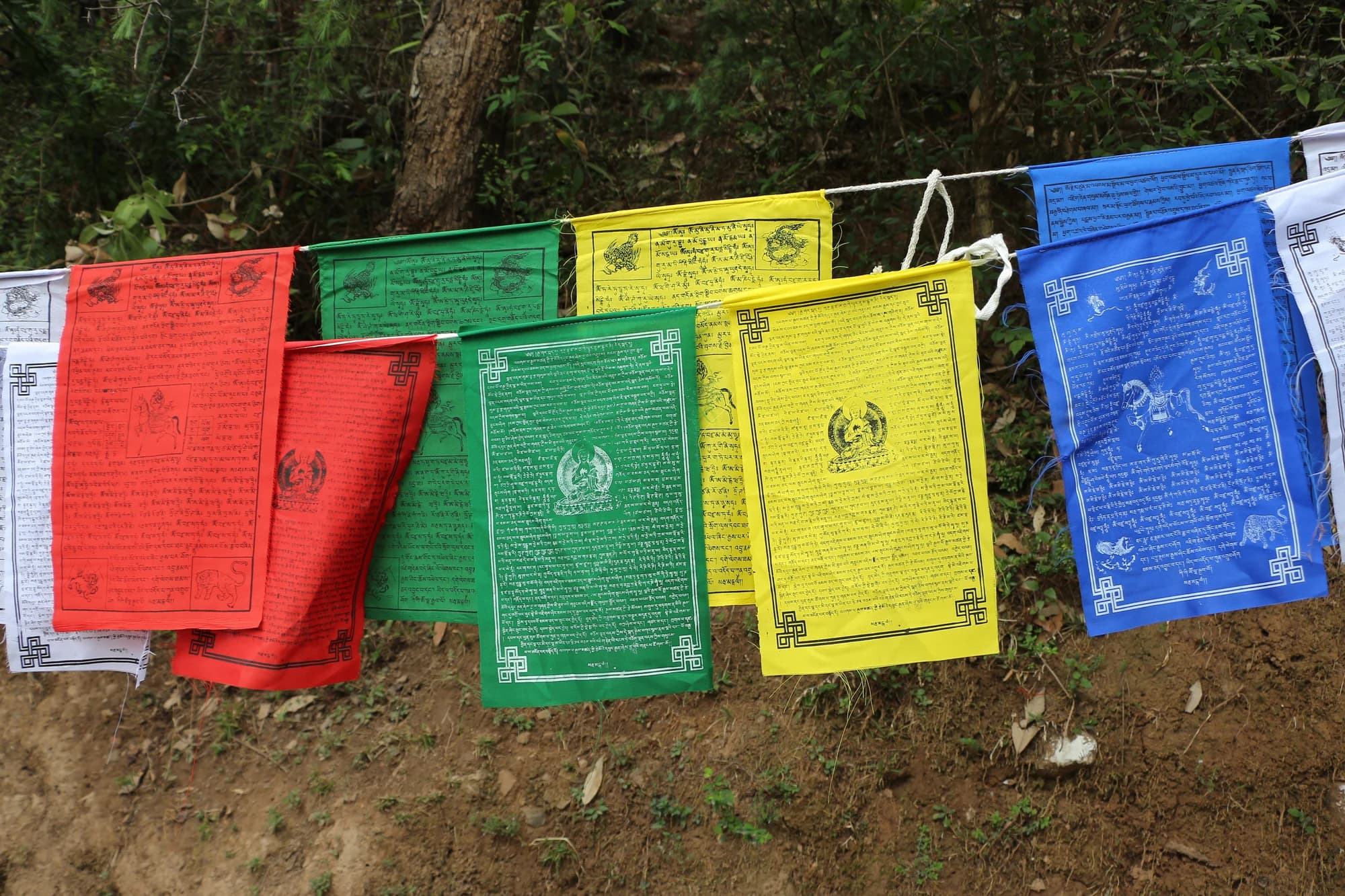
On Tibetan prayer flags, look for the windhorse and other printed designs. The cloths carry sacred words and images, with different designs across a single display.
Photograph: mani stones in Manali, 7 September 2022, by Vinayaraj via Wikimedia Commons. Resized and converted to WebP; image shared under CC BY-SA 4.0.