Tibetan Prayer Flags and the Images Printed on Them
By 2050 XP · · 3 min read
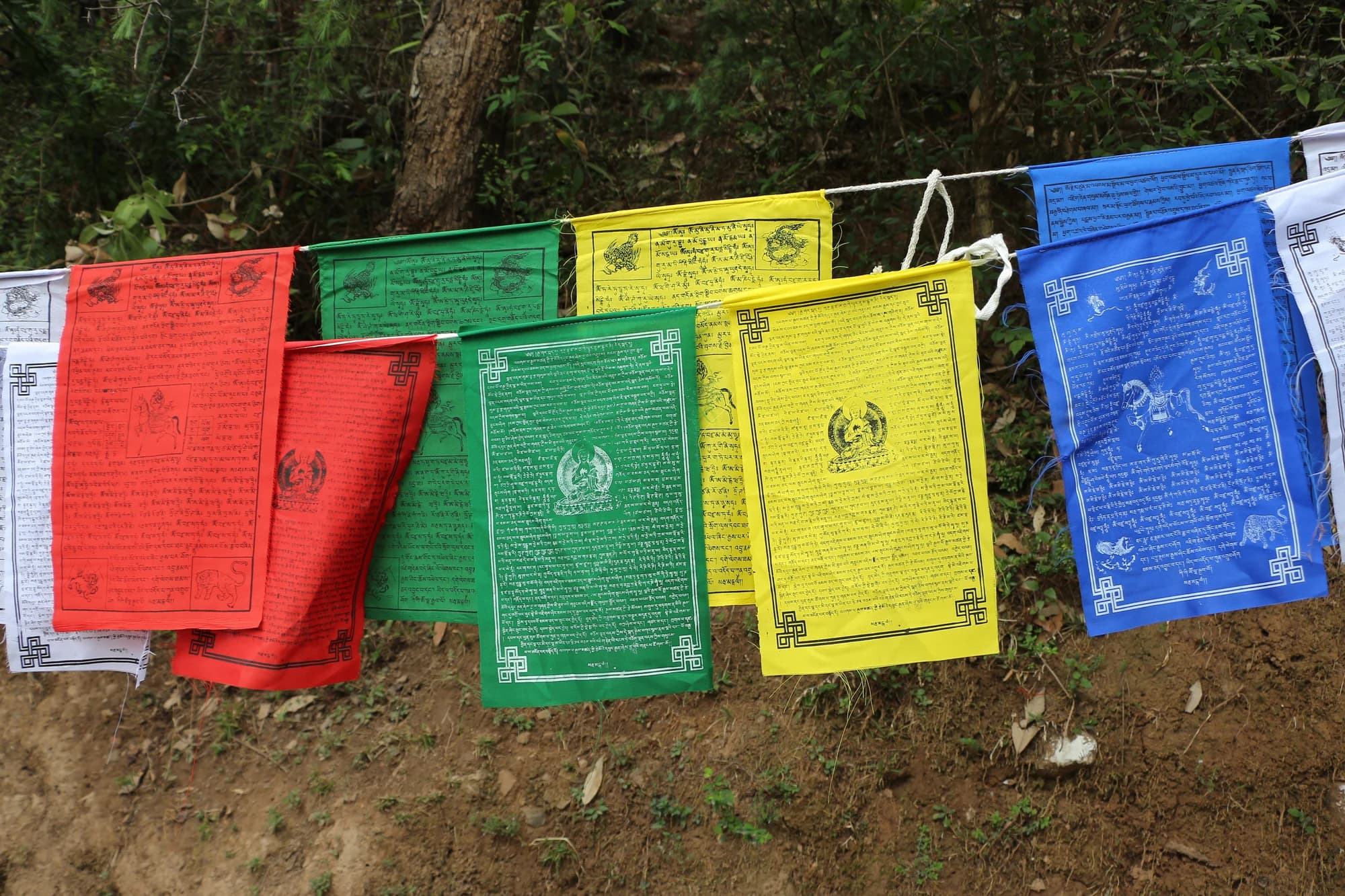
Photograph: Bernard Gagnon, Dharamshala, 2018 / CC BY-SA 4.0; resized and cropped to fit
Tibetan prayer flags are pieces of cloth printed with sacred words and images. In Tibetan Buddhist tradition, the wind that touches them is believed to spread blessings for the benefit of all beings. Their religious purpose is part of what you are seeing, even when the colours catch your attention first.
The flags in the photograph were pictured in Dharamshala in May 2018. Look at the different designs: the red flag towards the left has a horse at its centre, while the green and yellow flags in front carry religious figures surrounded by lettering.
Sacred words printed on cloth
Traditional prayer flags are printed using carved wooden blocks. Ink transfers the lettering and images from the block to the fabric, allowing the design to be repeated.
Many flags are joined along a string and suspended between two points. Others are long, individual flags attached to poles. The shape tells you how a flag is displayed; the print tells you more about its particular religious content.
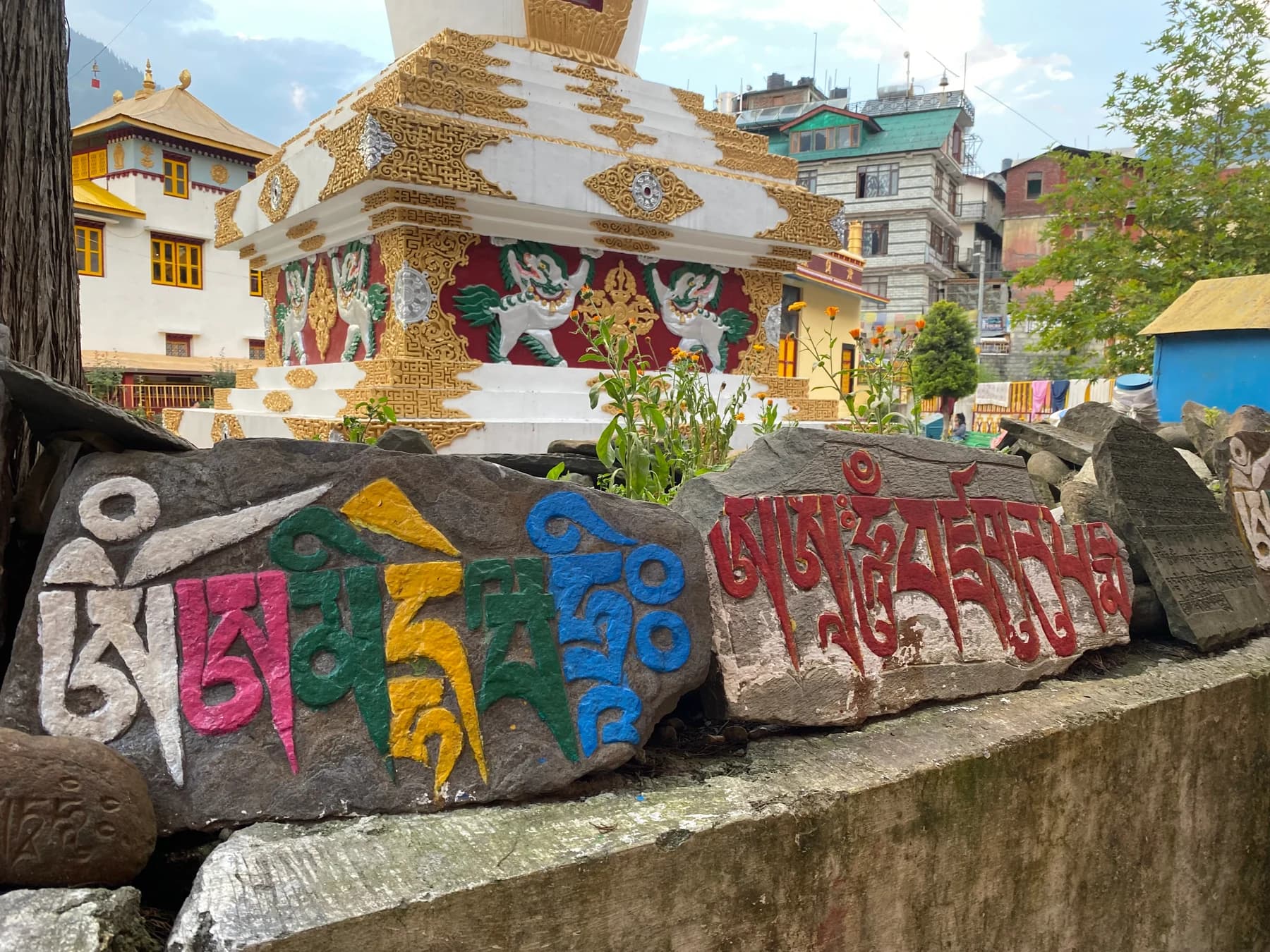
The words can include mantras, sacred syllables used in Buddhist practice. There are different flag designs and texts, so recognising one familiar inscription does not mean every flag carries the same words. The mantra often carved on Himalayan mani stones is one introduction to this wider use of sacred lettering.
Recognising the windhorse
Lung-ta means windhorse. On this familiar design, a horse carries three flaming jewels on its back. The jewels represent the Buddha, the Dharma or teachings, and the Sangha or community of practitioners. Other animals appear around the horse, with sacred text filling the spaces between the images.
In the Dharamshala photograph, compare the horse on the red flag with the figures on the foreground cloths. You can notice those differences without being able to read the script. If you would like to know which prayer a particular flag carries, ask someone familiar with that design rather than identify it from its colour.
Five colours, different designs
Blue, white, red, green and yellow form a familiar five-colour set. Follow the string in the photograph to see how the colours repeat across overlapping rows.
A blue flag and a yellow flag can carry similar prints, while two flags of the same colour can have different images. Look at the lettering and central figure as well as the cloth.
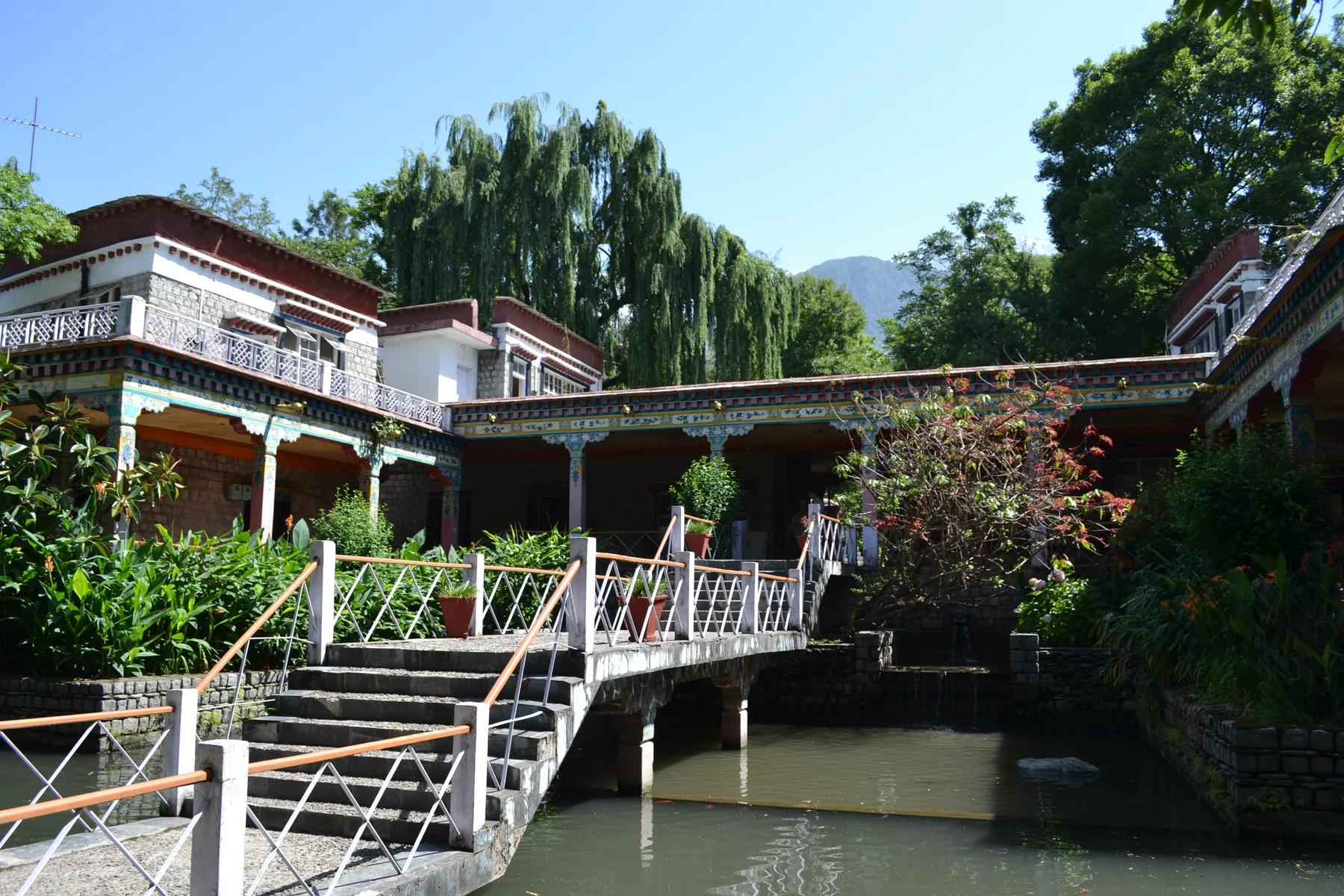
For a closer introduction to other Tibetan religious art during a Dharamshala stay, Norbulingka Institute's painting, silk appliqué and woodcarving offer different ways to explore the relationship between images and craft.
Treating prayer flags with care
Leave flags in place when looking or taking a photograph. Do not pull a string down or rearrange the cloths for a clearer picture, and give worshippers room.
If you have a set of your own, keep the sacred cloth off the ground. Keep the set together rather than cutting out a favourite colour. The Tibetan Nuns Project's explanation of prayer flags is useful reading before deciding how to display or care for them.
Photograph: prayer flags in Dharamshala, 6 May 2018, by Bernard Gagnon via Wikimedia Commons. Resized and converted to WebP; cropped to fit the display. Image shared under CC BY-SA 4.0.