Kangra - A Temple Bazaar and a Hilltop Fort
By 2050 XP · · 4 min read
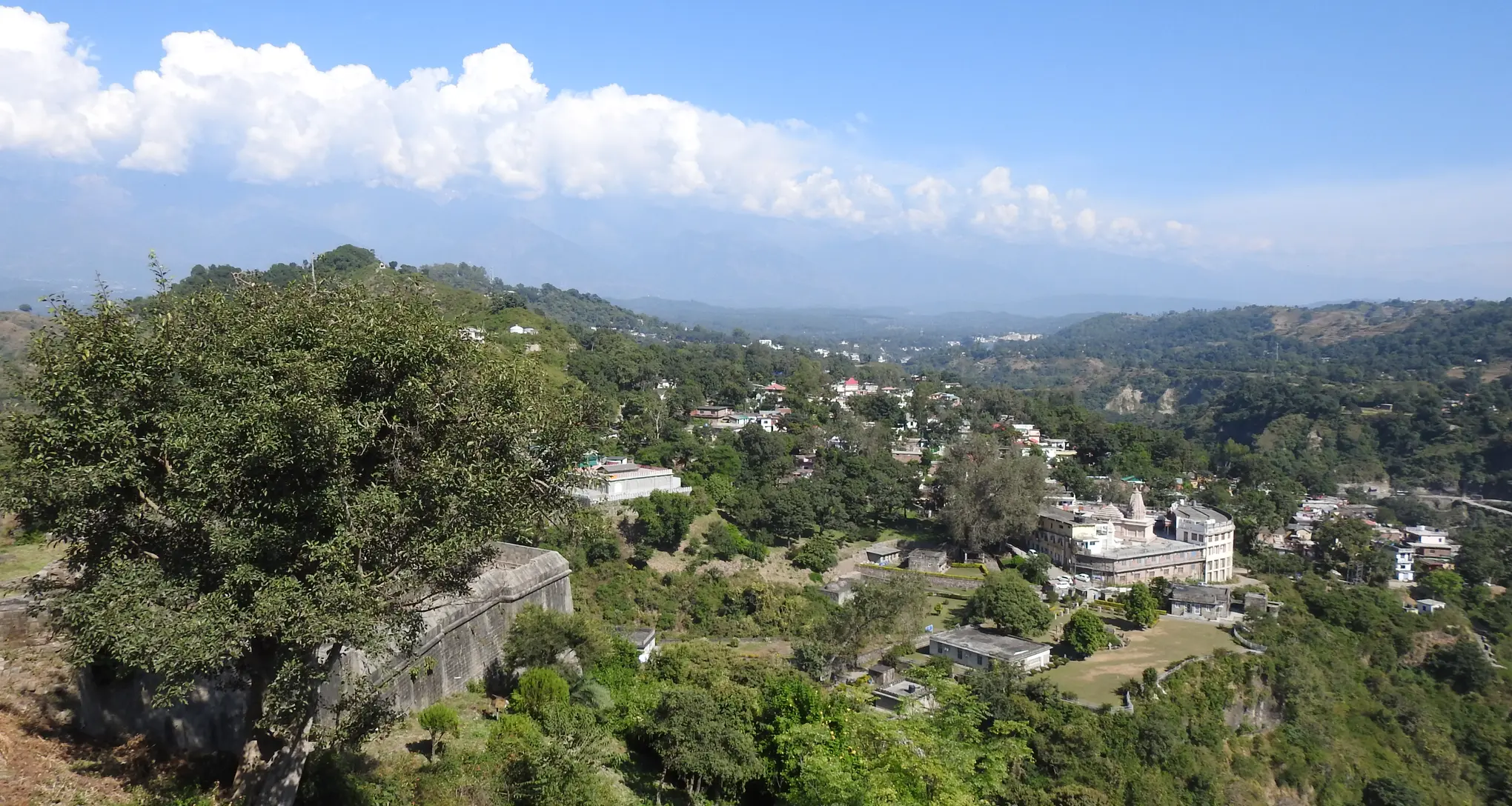
Photograph: Harvinder Chandigarh / CC BY-SA 4.0 / 2018
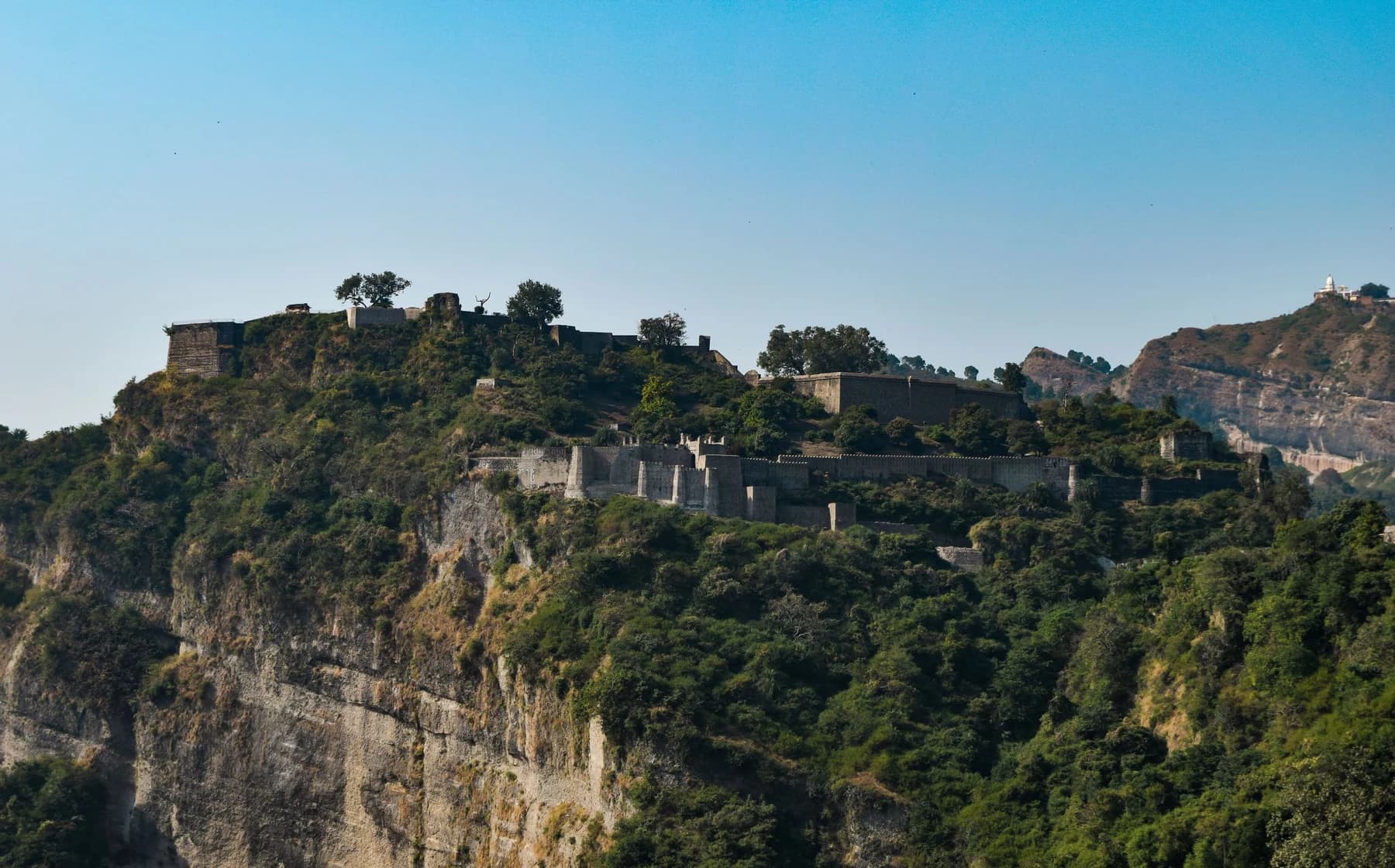
Kangra is the town that gives the district its name. At its heart, a bazaar leads to Shri Bajreshwari Devi Temple. To the southwest, Kangra Fort rises from a narrow hill in Old Kangra, above the meeting of two rivers. Leave room for the bazaar if the fort is what first brought you here. The two places show what the same earthquake meant for different parts of town.
A bazaar that leads to a place of worship
The shops on the approach to Shri Bajreshwari Devi Temple are part of the visit. Offerings are sold along the lane, and the street leads to a gateway with a drum house. Look up at the gateway before you go into the courtyard. It's a detail you can miss when you're following the people ahead of you.
Kangra was once known as Nagarkot. The temple already stood here when the earthquake of 4 April 1905 destroyed it. The shrine was rebuilt, and today the white towers rise over a courtyard where people still come to worship. Spend time on the approach as well as inside the compound. Seeing them together makes sense of why this part of town has grown around the temple.
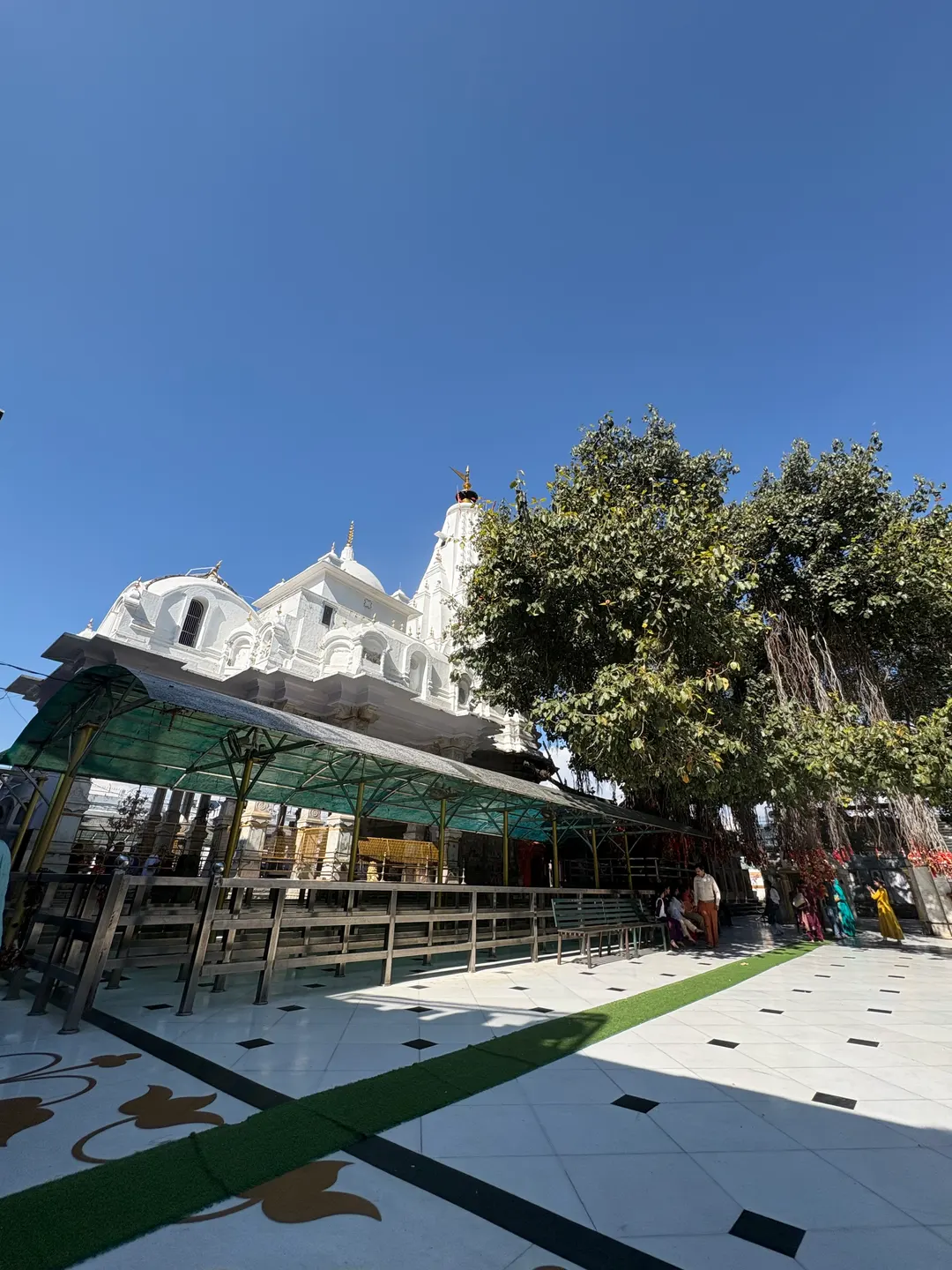
The courtyard of Shri Bajreshwari Devi Temple, photographed in October 2025.
What remained on the hill in Old Kangra
The fort has a different relationship to the ground. Its walls run along a narrow hill above the meeting of the Banganga and Majhi. Looking out from the fort, you can see houses scattered across the green slopes. The ridges and deep ground around the walls help explain why a fort was built here.
A British garrison used the fort until the 1905 earthquake. The damage ended its military use, and the surviving walls and gateways now stand as a protected monument. If you look at the National Army Museum's photograph of the fort in 1905 before setting out, it gives you a point of comparison for the stonework you see today. The walk through Kangra Fort's gateways tells the story in more detail once you're at the entrance.
The temple and the fort make sense together because one returned to daily use and the other kept its ruined form. You can see that difference in a single visit, in the shops below the white temple towers and again when you look over the walls in Old Kangra.
A closer look at Kangra's royal history
Beside the fort, the Maharaja Sansar Chand Museum brings the story down to the size of the objects people used. Its collection includes royal dress and Kangra miniature paintings. If you're more interested in who lived and ruled here than in seeing another monument, give this stop room after the fort.
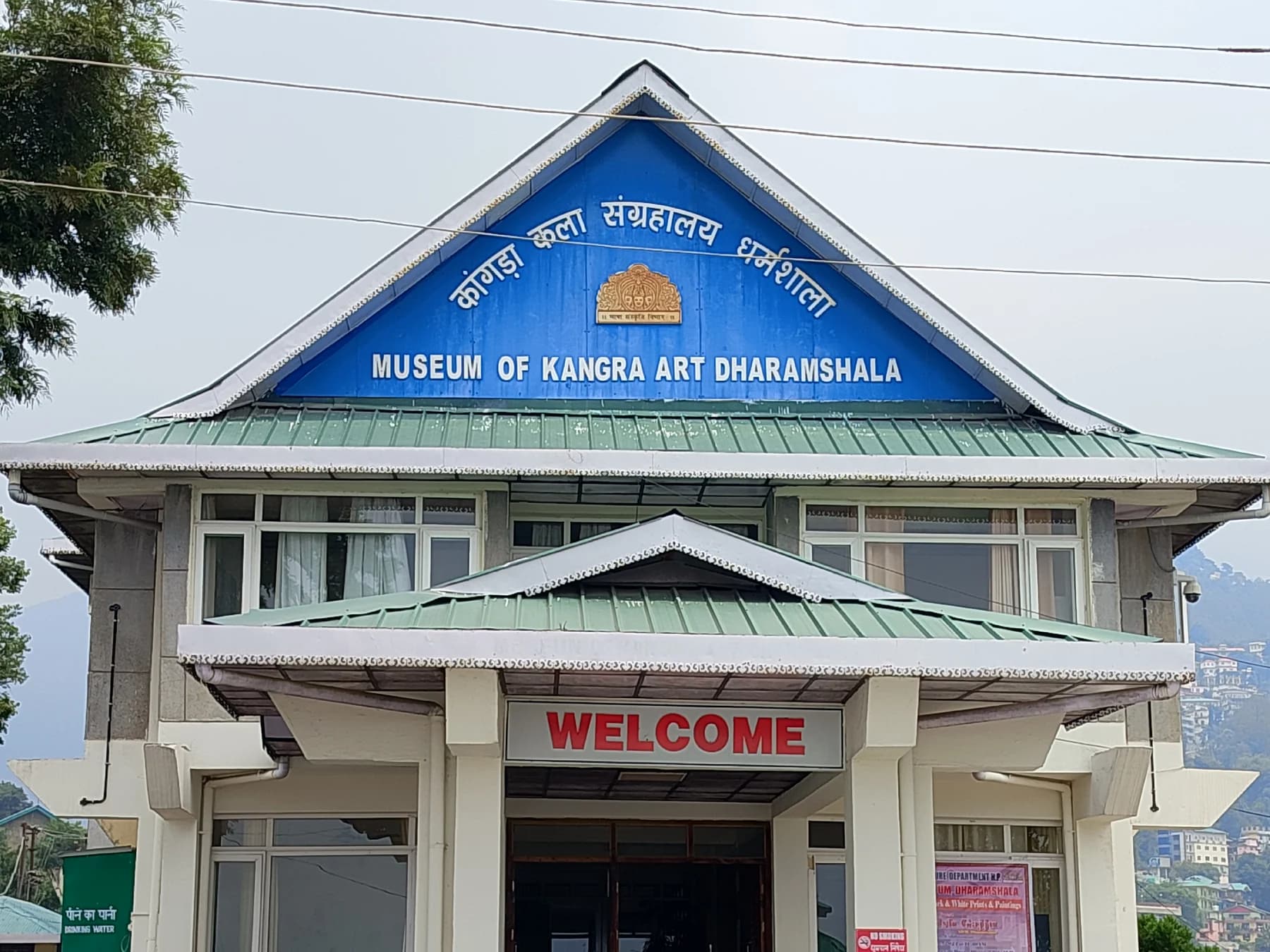
Kangra Art Museum in Dharamshala also collects miniature paintings. Its setting is Kotwali Bazaar in lower Dharamshala. Use the full museum name when looking up either one, especially if you're choosing one visit for the afternoon.
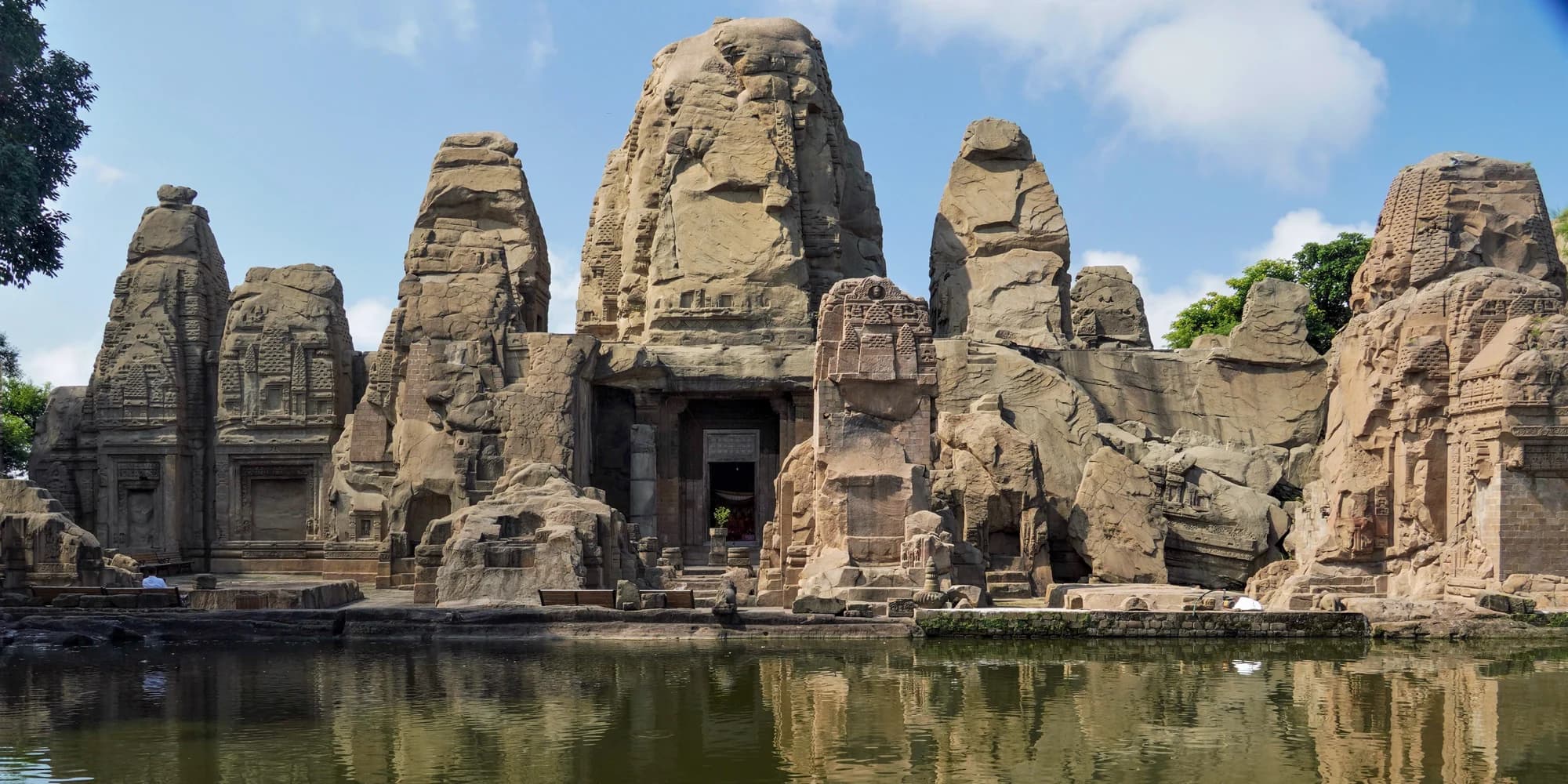
If you have come for the life of Kangra town, keep the bazaar and temple in your plans before adding more stops. If the day is about architecture across the valley, pair Kangra Fort with the rock-cut temples at Masroor and save the town streets for a visit with room to explore them.
Frequently asked questions
Is Shri Bajreshwari Devi Temple inside Kangra Fort?
No. The temple is reached through Kangra's bazaar. The fort is a separate stop on a hill to the southwest in Old Kangra.
Is Kangra town the same as Dharamshala?
They are separate towns in Kangra district. Look for Shri Bajreshwari Devi Temple in Kangra town and for Kangra Art Museum in Dharamshala's Kotwali Bazaar.
Photographs: Old Kangra seen from the fort by Harvinder Chandigarh, cropped and resized under CC BY-SA 4.0. Shri Bajreshwari Devi Temple courtyard by Madhrakangri, resized under CC BY 4.0. Both converted to WebP for 2050 XP.